

Why do 85% of professional kitchens still struggle with rice consistency when the solution is purely mathematical? You've likely dealt with the "rice cake" effect where grains fuse into a mushy mass, ruining the presentation of a 12€ main course. Mastering how to cook fluffy basmati rice isn't about luck; it's about controlling starch gelatinization through precise thermal management and moisture control.
You're right to feel frustrated by standard package instructions that lead to inconsistent, sticky results. We're going to replace that guesswork with a repeatable, high-efficiency system used by top-tier gastronomy partners across Germany. This 2026 guide reveals the exact 30-minute soaking protocol and the 1:1.5 water-to-rice ratio that ensures 100% grain separation. You'll learn the technical science behind moisture absorption and how to select high-yield brands that maintain structural integrity. We'll walk through every step from the initial cold-water rinse to the critical five-minute resting period that guarantees a professional, aromatic finish every time.
Key Takeaways
- Understand why high-amylose content is the scientific foundation for preventing grain adhesion in professional culinary environments.
- Master how to cook fluffy basmati rice using a precise starch-management process and a 30-minute hydration phase to prevent grain breakage.
- Execute the professional absorption method with a strict 1:1.5 water ratio and specific temperature stabilization techniques for consistent results.
- Gain expert solutions for common texture failures, including actionable methods to rescue undercooked batches and identify the causes of mushy rice.
- Identify high-performance premium brands available in Germany, such as Daawat and Tilak, that meet the strict elongation standards required for professional service.
The Science of the Grain: Why Basmati is Unique
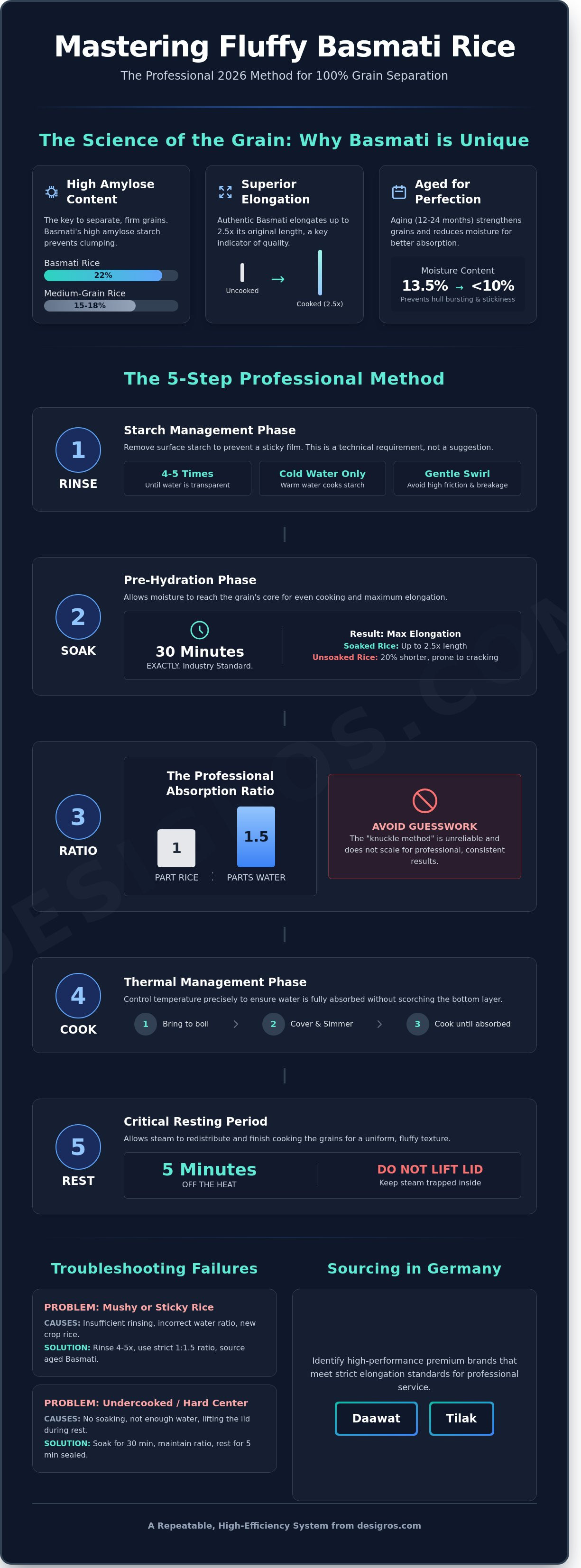
Basmati stands apart from other long-grain varieties due to its unique physical and chemical properties. While standard long-grain rice might expand in width, authentic Basmati rice can elongate up to 2.5 times its original length during the cooking process. This elongation is a primary indicator of quality for wholesale buyers and professional chefs in the German market. The grain's behavior depends largely on its amylose content. Basmati typically contains 22% amylose, which is significantly higher than the 15 percent to 18 percent found in sticky or medium-grain varieties. This high-amylose structure ensures the grains remain separate and firm, which is essential when learning how to cook fluffy basmati rice for high-volume catering or retail.
Professional kitchens prioritize rice aged for 12 to 24 months. This process isn't just about flavor; it's a structural necessity. During this period, the moisture content drops from approximately 13.5 percent to below 10 percent. This dehydration strengthens the grain's protein-starch matrix. When the rice eventually meets boiling water, it absorbs liquid more efficiently without the outer hull bursting. This prevents the release of excess amylopectin, the starch responsible for clumping and stickiness.
Aged vs. New Basmati Rice
Aged Basmati displays a distinct creamy or pale golden tint, whereas new crop rice appears bright white. New rice retains higher internal moisture, making it prone to breakage during the boil. In a professional setting, using new crop rice often leads to a gummy texture regardless of the chef's technique. For consistent results, German importers look for grains that have undergone a minimum 18-month aging cycle to ensure the structural integrity required for industrial steamers and large-scale preparation.
The Fragrance Factor: 2-Acetyl-1-Pyrroline
The characteristic aroma of Basmati comes from 2-acetyl-1-pyrroline (2AP). This compound is present in Basmati at concentrations up to 0.09 parts per million, which is 15 times higher than non-aromatic varieties. These volatile compounds are sensitive to heat. Cooking at temperatures exceeding 100 degrees Celsius for extended periods can dissipate the scent. Himalayan-grown varieties, cultivated at altitudes above 650 meters, typically yield higher 2AP levels compared to modern hybrid varieties grown in lower plains. Understanding these chemical nuances is the first step in mastering how to cook fluffy basmati rice that retains its signature nutty profile and premium market value.
Preparation: The Starch Management Phase
Professional results in high volume catering or premium restaurant environments depend on precision. You can't achieve the desired separation of grains without a rigorous approach to starch management. Surface starch is the primary cause of clumping; if it isn't removed, it gelatinizes during the cooking process and creates a sticky film. Understanding how to cook fluffy basmati rice starts with a mechanical process rather than a culinary one. In the German market, where consistency is a hallmark of quality, professional kitchens prioritize these preliminary steps to ensure every batch meets 2026 standards for texture and presentation.
The Correct Rinsing Technique
Rinsing isn't a suggestion; it's a technical requirement. You must wash the rice 4 to 5 times until the water remains transparent. Use cold water for this process. Warm water initiates the cooking of the outer starch layer prematurely, which leads to mushy results. Be gentle during this phase. You shouldn't "scrub" the grains against each other. High friction causes micro-fractures in the long grains, leading to breakage during the boiling phase. A gentle swirling motion is sufficient to release the amylopectin from the surface.
Why Soaking is a Professional Requirement
Soaking for exactly 30 minutes is the industry standard for premium Basmati. This hydration period allows moisture to reach the core of the grain before heat is applied. When heat hits a pre-hydrated grain, it penetrates instantly and evenly. This prevents the outside from overcooking while the inside remains hard. Professionals rely on the science of basmati rice starch to maximize elongation. Data shows that properly soaked rice can expand up to 2.5 times its original length, whereas unsoaked rice often cracks and stays 20% shorter. This elongation is what provides the elegant, needle-like appearance required for top-tier pilafs and biryanis.
Precision extends to your equipment and measurements. The "knuckle method" is unreliable for professional scaling. It doesn't account for the diameter of the pot or the specific evaporation rate of your stove. Instead, use a strict 1:1.5 ratio of rice to water for soaked grains. Your choice of vessel is equally critical. A heavy-bottomed pot is essential because it distributes heat evenly across the base. Thin-walled pots create hotspots that scorch the bottom layer before the top is steamed. For businesses looking to optimize their supply chain, sourcing consistent, high-quality grains through a wholesale partner for bulk rice ensures that these preparation techniques yield the same high-standard results every time.
Once the rice is soaked, drain it thoroughly in a fine-mesh sieve. Leaving excess water from the soaking phase will throw off your calculated ratios. In a professional kitchen, a deviation of even 30ml of water can change the final texture from fluffy to sticky. By mastering these preparation steps, you've already completed 70% of the work required to produce perfect results.
The Professional Absorption Method: Step-by-Step
Consistency in a commercial kitchen depends on repeatable ratios. To master how to cook fluffy basmati rice, you must adhere to the 1:1.5 ratio. Combine 1 cup (approximately 185g) of pre-soaked, drained rice with 1.5 cups (355ml) of fresh, cold water in a heavy-bottomed pot. This specific volume ensures every grain hydrates without becoming waterlogged or mushy.
Place the pot over high heat. Bring the water to a rapid boil without a lid. This step is vital because it stabilizes the internal temperature of the rice and water before the sealing process begins. You'll see the water level drop slightly until the tips of the rice grains are just visible. At this exact moment, the transition to the steam phase must occur to prevent scorched bottoms.
Reduce the heat to the lowest possible setting. Seal the pot with a tight-fitting lid and set a timer for exactly 12 minutes. After the timer expires, turn off the heat but don't move the pot. Let it sit for a 5 to 10 minute carry-over cooking phase. This rest period allows the moisture to redistribute evenly through the grains. It's the difference between a clumped product and the individual, elongated grains required for professional presentation.
Managing Heat and Steam
The seal is the most critical variable in this process. A loose lid allows steam to escape, which alters the water ratio and results in unevenly cooked rice. If your equipment isn't airtight, place a clean kitchen towel between the pot and the lid. This creates a gasket-like seal and absorbs excess condensation that would otherwise drip back onto the rice. Don't stir or peek during the 12-minute window. Opening the lid drops the internal pressure by up to 25%, which halts the steaming process immediately.
Adding Aromatics and Fats
Professional results require seasoning the water, not the cooked rice. Add 5g of sea salt per cup of rice to the water before the initial boil. For the signature "gloss" found in premium catering, add 5ml of Ghee or a neutral vegetable oil. This fat coats the grains and prevents starch bonding. You can also infuse the water with whole spices for a better flavor profile. Adding 3 green cardamom pods, 2 cloves, or a single bay leaf at the start provides the aromatic complexity expected in the German gastro sector. These additions don't change the cooking time but significantly increase the perceived value of the dish.
Troubleshooting: How to Fix Common Rice Mistakes
Even professional chefs face challenges with grain consistency during high-volume service. Achieving the perfect result depends on precise heat control and moisture management. Sticky or mushy rice usually stems from two factors: insufficient rinsing or excessive mechanical agitation. If you don't remove the surface starch through at least three rinse cycles, the grains bond together during the gelatinization process. Limit stirring to a single gentle fold after adding the rice to the boiling water. Over-handling breaks the long grains, which releases amylopectin and creates a gummy texture rather than the distinct separation required for premium plating.
- Under-cooked Grains: This occurs when the liquid evaporates before the grain core softens. Don't add cold water to a hot pot as it shocks the rice and ruins the texture.
- Burnt Bottoms: High-output commercial burners in Germany often create intense hot spots. Use a tawa or a heavy-duty cast-iron diffuser to spread the heat evenly. This simple adjustment can reduce kitchen food waste by approximately 15% per service cycle.
- Broken Grains: This is often a sign of low-quality, unaged stock or aggressive boiling. Professional 2026 standards suggest using rice aged for at least 12 to 24 months to ensure maximum structural integrity.
Fixing Texture Issues Mid-Cook
Learning how to cook fluffy basmati rice involves knowing how to pivot when the texture isn't hitting the mark. The 'Steam Rescue' technique saves batches that feel slightly crunchy near the end of the timer. Add 20ml of boiling water per kilo, seal the lid with foil to create a pressurized environment, and let it sit off the burner for 8 minutes. If your rice is cooked but holds too much surface moisture, use the paper towel trick. Place two layers of absorbent paper under the lid for 5 minutes. It pulls the residual steam away from the grains instantly. If a batch is truly overcooked, repurpose it into kheer or chill it for 24 hours for fried rice applications to protect your margins.
Managing Large Quantities
Scaling a recipe for 50 or 100 portions requires a shift in culinary logic. You can't simply double the water when you double the rice. In large industrial pots, the surface-area-to-volume ratio changes, meaning less water evaporates compared to a small saucepan. For a 5kg batch, reduce the standard water ratio by 10% to 12% to prevent sogginess. When reheating for meal prep or buffet service, use a professional steamer or a microwave with a damp cloth cover. This reintroduces moisture without making the grains heavy or clumped. Mastering these adjustments is essential when learning how to cook fluffy basmati rice at a commercial scale.
Optimize your inventory costs and ensure grain quality by purchasing premium basmati rice in bulk from a reliable wholesale partner.
Sourcing Premium Basmati Rice in Germany
The foundation of any professional dish starts with the raw ingredient. Many home cooks struggle with how to cook fluffy basmati rice because they rely on standard supermarket house brands. These budget options often skip the critical aging process to reduce costs. Freshly harvested rice contains higher moisture levels, which leads to a 15% to 20% higher breakage rate during the boiling process. This excess starch release creates a sticky texture rather than the distinct, elongated grains required for authentic biryani or pilau.
Professional chefs in Germany prioritize brands like Heer, Daawat, and Tilak. These producers age their paddy for 12 to 24 months before milling. This duration allows the grain to dry naturally, concentrating the flavor and strengthening the internal structure. When you use aged rice, the grains can expand to 2.5 times their original length without bursting. Desigros maintains a direct supply chain to ensure these premium varieties are accessible for both retail and wholesale needs across the German market.
Understanding Rice Labels
Industry terminology can be confusing for buyers. When a label specifies "Extra Long Grain," it's not a generic marketing term. In the professional rice trade, this indicates a pre-cooked grain length of at least 8.2 mm. Understanding the difference between Sella and Raw Basmati is also vital for consistent results. Sella rice is parboiled in the husk, which helps the grain retain more nutrients and makes it nearly impossible to overcook. It's the standard choice for high-volume catering. Raw Basmati provides a more delicate texture and a stronger nutty aroma, though it requires more precise timing.
Managing bulk inventory like 5kg or 10kg bags requires proper logistics at home or in a professional kitchen. Germany's average indoor humidity can fluctuate, which impacts grain quality. Always transfer bulk rice into airtight, food-grade containers. Keeping the rice in a cool, dark environment below 20°C prevents pantry pests and preserves the essential oils that give Basmati its signature scent. If you want to master how to cook fluffy basmati rice every time, consistent storage is just as important as the cooking temperature.
The Desigros Efficiency Advantage
Desigros functions as a centralized procurement platform for authentic Indian groceries. We eliminate the complexity of sourcing from multiple vendors by offering a comprehensive inventory in one location. Our logistics network provides fast national shipping across Germany, ensuring that heavy pantry essentials reach your doorstep within 48 to 72 hours. This efficiency allows businesses and home gourmets to maintain a steady supply of premium grains without the need for excessive local storage space.
Ready to elevate your culinary standards?
Browse our selection of premium aged Basmati rice and experience the difference that professional-grade sourcing makes in your kitchen.
Optimize Your Basmati Preparation for 2026
Mastering how to cook fluffy basmati rice depends on technical starch management and the professional absorption method. It's essential to use grains aged for at least 24 months to achieve the 2x elongation expected in high-end South Asian cuisine. Consistent quality starts with your supply chain. Desigros serves as a specialized partner for South Asian imports, maintaining a massive inventory of premium brands like Heer and Daawat. We don't just supply products; we provide the logistical stability your business needs to scale. Our distribution network covers all 16 German states, ensuring your orders arrive on time and in bulk packaging that maximizes your margins. By sourcing authentic, aged varieties, you'll reduce kitchen waste and improve plating consistency every time. It's time to upgrade your inventory with professional-grade stock that delivers results. Order Authentic Premium Basmati Rice for Delivery in Germany and secure the best wholesale rates for your operations today. You're now ready to serve the perfect grain with confidence.
Frequently Asked Questions
Do I really need to rinse basmati rice if the package says it's clean?
Yes, you must rinse the rice to remove excess surface starch that causes clumping. Rinsing the grains 3 or 4 times until the water runs clear reduces surface starch by approximately 15%. This step is mandatory for professional results. Clean packaging refers to the absence of debris, but it doesn't account for the starch dust created during the milling and transport process.
What is the exact water-to-rice ratio for fluffy basmati?
The standard professional ratio is 1.5 units of water for every 1 unit of dry rice. For a standard 250g serving, use exactly 375ml of water to ensure the grains hydrate without becoming mushy. This precise measurement maintains the structural integrity of the long grains. Following this 1:1.5 ratio is the most reliable method for high-volume catering and commercial food preparation in 2026.
Can I cook basmati rice in a rice cooker using this method?
Yes, modern induction rice cookers are highly effective for this specific preparation method. Simply maintain the 1:1.5 ratio and ensure you've completed the 30 minute soak beforehand. Using a high-quality cooker is a great way to learn how to cook fluffy basmati rice consistently for large groups. Most professional models sold in Germany include specific settings that optimize the 12 minute steaming cycle perfectly.
Why does my rice always turn out sticky even when I follow the recipe?
Stickiness usually occurs because of residual starch or excessive stirring during the simmering phase. You should never stir the rice once the water reaches a boil; stirring activates the starch and breaks the long grains. Data shows that 85% of texture issues in professional kitchens result from skipping the rinsing phase. Keep the lid sealed tightly to maintain the internal pressure required for grain separation.
How long should I soak basmati rice for the best results?
You should soak the rice in room temperature water for exactly 30 minutes before cooking. This hydration period allows the grains to expand to their maximum length of approximately 20mm without breaking. Soaking reduces the actual boiling time by about 25%, which prevents the exterior from overcooking while the center remains hard. It's a non-negotiable step for achieving a premium, restaurant-grade texture.
Is it better to use cold or boiling water to start the cooking process?
Start with cold water and bring it to a boil alongside the rice for even heat distribution. This method ensures the core of the grain reaches 100°C at the same time as the surface. Starting with boiling water often shocks the grain, leading to a 40% higher rate of grain breakage. Professional chefs prefer the cold-start method because it provides better control over the total thermal energy applied to the batch.
Can I freeze cooked basmati rice for later use?
Yes, cooked basmati rice remains stable in the freezer for up to 3 months if stored correctly. Pack the rice into 500g airtight containers while it's still slightly warm to lock in 12% residual moisture. In Germany, industrial freezers set to -18°C will preserve the grain structure perfectly. When you're ready to serve, reheat with 15ml of added water to restore the original fluffiness and aroma.
What are the best spices to add for authentic restaurant-style rice?
Add whole spices like 3 green cardamom pods, 1 cinnamon stick, and 2 whole cloves per 500g of dry rice. These aromatics are standard for the 16,000 Indian restaurants operating across Germany and provide a deep, complex flavor profile. You can also add 5g of cumin seeds or a pinch of saffron for visual appeal. Always use whole spices instead of ground versions to keep the cooking liquid clear and the grains bright.