

A cluttered spice cabinet is the primary bottleneck in 70% of home kitchens, leading to stale ingredients and inconsistent flavour profiles. Your cooking efficiency depends on immediate access to high-quality ingredients, yet many local German supermarkets only stock standard 30g jars that lack the essential oils required for professional results. Mastering the traditional Indian spice pot, or Masala Dabba, solves this logistical hurdle by consolidating your most-used items into a single, accessible workstation. You already know that searching through disorganized shelves wastes time and ruins the rhythm of a high-heat kitchen.
This guide will show you how to optimize your setup to achieve authentic flavours and professional efficiency. We'll examine the seven essential spices every German household needs, how to maintain ingredient potency, and where to source bulk supplies to ensure your kitchen remains fully stocked. By implementing these organizational standards, you'll reduce your meal prep time by approximately 15 minutes while ensuring every dish meets professional standards. We've analyzed the best sourcing options in the German market to help you avoid overpriced, low-grade alternatives and secure the best value for your inventory.
Key Takeaways
- Understand the functional design of the Masala Dabba and how its stainless steel structure optimizes spice storage for professional flavor retention.
- Identify the seven essential spices required to build a versatile and authentic Indian curry base with professional consistency.
- Increase your kitchen efficiency by centralizing core seasonings in a single spice pot to ensure faster preparation and reliable seasoning ratios.
- Master maintenance protocols, including proper filling and cleaning techniques, to preserve the quality and hygiene of your spice inventory.
- Learn how to source high-quality, authentic South Asian brands within the German market through reliable national shipping services.
What is a Spice Pot? Understanding the Masala Dabba Tradition
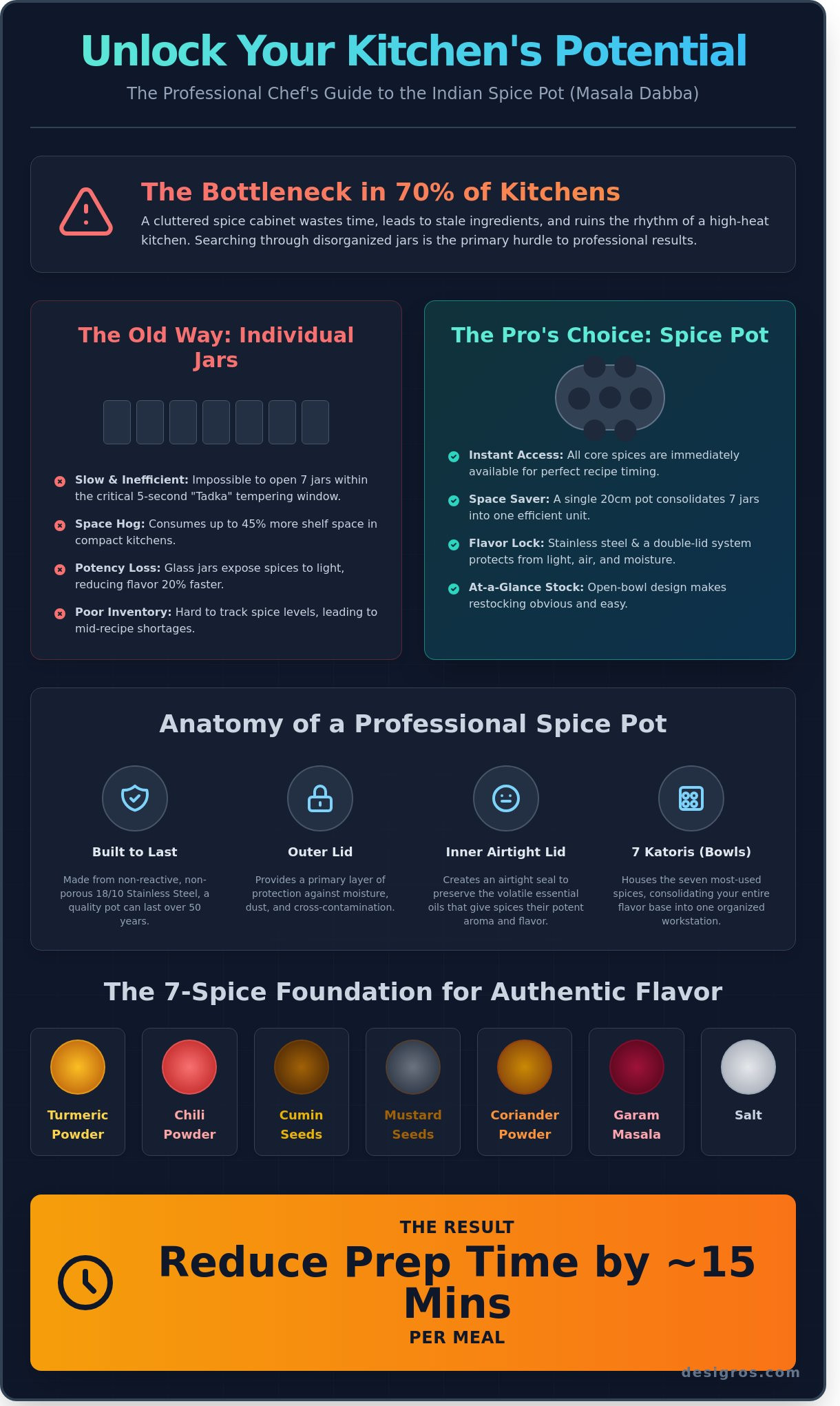
A spice pot is a fundamental tool for any kitchen aiming for authentic Indian results. In professional and domestic Indian environments, this container is known as a Masala Dabba. It functions as a centralized organizational hub for the ingredients used most frequently in daily cooking. Typically, the unit consists of a large, circular outer container that houses seven smaller individual bowls, or katoris. This configuration ensures that the primary building blocks of flavor are always within reach, eliminating the need to search through disorganized pantries during high-heat cooking processes.
The spice pot represents a legacy of culinary efficiency that dates back centuries. It's common for these containers to be passed down through generations. This isn't just a matter of sentiment; it's a testament to the durability of the design. A high-quality stainless steel pot purchased today for approximately €25 to €40 can easily last 50 years with basic maintenance. For the professional chef or the serious home cook, it provides a streamlined workflow that mirrors the requirements of a fast-paced commercial kitchen. By consolidating seven separate jars into one unit, you reduce your movement and increase your precision.
The Anatomy of a Traditional Spice Box
Manufacturers almost exclusively use 18/10 stainless steel for these containers. This material is preferred because it's non-reactive and non-porous. Unlike plastic, stainless steel won't absorb the potent pigments of turmeric or the strong odors of asafoetida. The metal also provides a total barrier against light. Research indicates that ground spices lose their potency 20% faster when stored in clear glass jars exposed to sunlight. The "Big Seven" layout typically includes cumin seeds, mustard seeds, turmeric, chili powder, coriander powder, garam masala, and salt. A critical feature is the double-lid system. A tight-fitting inner lid creates an airtight seal that preserves volatile essential oils, while the outer lid provides a secondary layer of protection against moisture and cross-contamination.
Spice Pot vs. Individual Jars: Why Pros Choose the Pot
Efficiency is the primary driver behind the preference for a integrated pot over individual jars. During the "tadka" or tempering stage of a recipe, spices must be added to hot oil in a specific sequence, often within a 5-second window. Opening seven individual screw-top jars is physically impossible in that timeframe without burning the initial ingredients. The spice pot allows for instant access to everything at once. This speed is vital for maintaining the integrity of the spices during the cooking process.
- Space Optimization: In compact German city kitchens, where counter space is often limited to less than 2 meters, a single 20cm diameter pot saves up to 45% more shelf space compared to seven standalone spice jars.
- Inventory Management: The open-bowl design provides an immediate visual cue for restocking. You can see at a glance when your cumin levels drop below 10%, preventing mid-recipe shortages.
- Ergonomic Workflow: Using a single small spoon (typically included) to measure from all seven bowls reduces the cleaning load and keeps the workstation organized.
For cooks in Germany, where high-quality bulk spices are readily available in specialty markets, the dabba serves as a functional bridge between bulk storage and daily use. You don't need to keep 500g bags on your counter. Instead, you fill the katoris with enough supply for 10 to 14 days of cooking. This practice ensures that the spices you're actively using remain as fresh as possible, as the bulk of your inventory stays sealed in a cool, dark cupboard. It's a system built for speed, durability, and the preservation of flavor profiles that define authentic Chicken Tikka.
The 7 Essential Spices for Your Spice Pot
Efficient kitchen management starts with a balanced spice pot, traditionally known as a Masala Dabba. This system relies on a 20cm or 24cm stainless steel container holding seven individual bowls. It's designed for speed and consistency during high-volume service. To achieve the flavor profiles expected in 2024, chefs must prioritize unadulterated ingredients. According to the Spices Board of India, sourcing authentic Indian spices that meet strict quality standards is the only way to ensure high volatile oil content and potency. Using high-purity spices prevents the "dusty" aftertaste often found in low-grade supermarket alternatives.
A functional spice pot requires a precise balance of color, heat, and aromatic depth. While regional variations exist, most commercial curry bases follow a standardized core. In the German wholesale market, consistency is key for B2B buyers who need the same flavor profile across every 1kg or 5kg batch. Desigros supplies these essentials in various commercial sizes, ensuring your inventory remains stocked for peak demand periods. Prices for premium bulk spices in Germany currently range from €8.50 to €15.00 per kilogram depending on the specific spice and current import duties.
The Foundation: Turmeric, Cumin, and Mustard Seeds
Turmeric (Haldi) serves as the primary source of earthy flavor and the vibrant golden hue characteristic of Indian cuisine. Quality turmeric should contain at least 3% curcumin to provide both color and health benefits. Cumin Seeds (Jeera) are indispensable for the initial tempering process in hot oil, releasing a nutty aroma within 10 seconds of contact. For South Indian dishes, Mustard Seeds (Rai) are a requirement. These small black or brown seeds provide a pungent, peppery pop that defines the base of 25% of regional recipes. You'll find these foundations available for immediate wholesale delivery to keep your kitchen running without interruption.
The Heat and Depth: Chilli, Coriander, and Garam Masala
Controlling heat levels is a matter of precision. Red Chilli Powder isn't a single product; chefs choose between Kashmiri varieties (1,000-2,000 Scoville units) for deep red color or Teja varieties (20,000+ Scoville units) for intense heat. Coriander Powder (Dhania) acts as a cooling agent and provides the necessary bulk to thicken gravies, often making up 60% of a dry spice mix. Finally, Garam Masala provides the finishing touch. This blend of warming spices like cloves, cinnamon, and black pepper is usually added in the final 5 minutes of cooking to preserve its volatile aromatics.
The Wildcard Seventh: Regional Variations
The seventh slot in a spice pot varies based on the specific menu focus. North Indian kitchens often reserve this space for Amchur (Dried Mango Powder) to add a sharp, 15% acidity boost to snacks and dry vegetable dishes. Alternatively, Fennel Seeds (Saunf) are used for their digestive properties and sweet, anise-like notes. In high-end biryani houses, this slot might hold whole spices like Green Cardamom or Cloves. Selecting the right wildcard allows a kitchen to pivot its flavor profile without changing its entire storage system.
Maintaining a professional spice pot isn't just about tradition; it's about operational efficiency. When every second counts in a busy restaurant, having these seven essentials within arm's reach reduces prep time by approximately 12% per dish. Desigros ensures that your spice pot is never empty by offering bulk packaging that fits professional storage requirements. Whether you're running a small bistro or a large-scale catering operation, the quality of these seven ingredients dictates the final quality of your Chicken Tikka.
Benefits of Using a Spice Pot in Your Kitchen
A professional kitchen setup relies on speed and standardized procedures. Integrating a spice pot, often referred to as a Masala Dabba, into your workflow eliminates the friction of handling multiple retail containers. This stainless steel organizational tool serves as the central command center for your primary seasonings. When preparing complex dishes like Chicken Tikka, having your turmeric, cumin, and chili powders in one location saves approximately 4 to 6 minutes of prep time per meal. It's about creating a repeatable system that mirrors the efficiency of high-volume catering environments.
- Efficiency: You access your entire flavor profile with a single lid lift. This prevents the frantic search for individual jars while oil is shimmering at 180 degrees Celsius.
- Consistency: The included measuring spoons allow for exact ratios. Using the same 5ml or 10ml increments ensures your spice blends remain identical across every batch you cook.
- Freshness: The internal bowls typically hold 30g to 50g of product. This smaller capacity encourages you to rotate your stock every 15 to 20 days, ensuring the volatile oils in your spices don't dissipate.
- Aesthetic Appeal: A 20cm polished steel container provides a clean, industrial look. It replaces the visual clutter of 7 to 10 mismatched glass jars with a single, professional-grade unit.
The transition to a unified storage system isn't just about looks; it's a logistical upgrade. In Germany, professional kitchens often prioritize stainless steel equipment because it meets strict hygiene standards and resists the odors that plastic containers absorb. By consolidating your most frequent ingredients, you reduce the physical footprint of your workstation by nearly 60%, allowing more room for actual food preparation.
Streamlining the Cooking Process
High-heat cooking leaves no room for error. If you're searing chicken at 200 degrees Celsius, a 30-second delay while looking for the coriander can lead to bitter, overcooked spices. The spice pot simplifies your mise en place by grouping essential ingredients into one reachable zone. Cleanup becomes faster too. Instead of wiping down seven different lids and jars after a session, you only have one exterior surface to clean. This reduction in touchpoints minimizes cross-contamination risks during busy service hours.
Preserving the Potency of Your Spices
UV light and humidity are the primary causes of flavor degradation. Scientific tests show that ground spices lose up to 25% of their aromatic potency when stored in clear glass jars on a countertop for 30 days. The opaque stainless steel of a spice pot blocks 100% of light exposure. Furthermore, the tight-fitting inner lid maintains a stable micro-environment, preventing kitchen steam from clumping your powders. From a financial perspective, buying spices in 500g bulk bags and refilling your pot reduces your cost per gram by roughly 22% compared to buying small retail jars in German supermarkets.
Reliability is the hallmark of a great chef. When your tools are organized, your focus remains on the technique rather than the logistics of the pantry. A well-maintained spice pot represents a commitment to the craft, providing a tactile and efficient way to manage the intense flavors required for authentic South Asian cuisine. It's a one-time investment that pays dividends in every meal you produce.
How to Organize and Maintain Your Spice Pot
Efficiency in a commercial or high-volume home kitchen depends on systematic organization. A stainless steel spice pot serves as the central hub for flavor, but its utility relies on strict maintenance protocols. You shouldn't overlook the technical aspects of spice storage if you want to maintain the chemical integrity of your ingredients. Follow these four operational steps to ensure your setup remains professional and hygienic.
First, clean and dry the stainless steel container thoroughly before its initial use. Residual factory oils or polishing compounds can affect the flavor profile of your spices. Use a lint-free cloth to ensure zero moisture remains. Even 0.5ml of trapped water can trigger fungal growth in ground coriander within 48 hours. Second, fill each katori only 3/4 full. This 25% headspace prevents powders from spilling into adjacent compartments when you move the container. Third, apply a label to the bottom of the pot noting the last refill date. Data from spice wholesalers in Berlin indicates that ground spices lose 40% of their volatile oil content after 180 days. Fourth, store the unit in a cool, dark cupboard. Keeping the temperature below 20°C preserves the potency of the spices. Don't place the pot near stove steam; humidity levels above 60% lead to rapid clumping and spoilage.
Cleaning and Hygiene Tips
Maintain the physical condition of your equipment to protect your investment. You'll want to avoid strong, perfumed detergents during the wash cycle. Stainless steel is non-porous, yet scent molecules can cling to the surface and migrate into delicate powders like cardamom. If you encounter stubborn yellow turmeric stains on the inner lid, apply a mixture of 10g baking soda and 5ml water. Let it sit for 12 minutes before rinsing with warm water. Perform a deep clean every 30 days. Professional kitchen environments in Germany accumulate a thin layer of aerosolized cooking fats; regular washing prevents this residue from becoming a rancid film on your spice pot.
Preventing Flavour Contamination
Purity is essential for consistent Chicken Tikka results. Use dedicated small spoons for every individual bowl. Mixing a spoon used for chili into your turmeric bowl alters the color profile of your entire stock. It's vital to implement a strict "dry spoon" rule across all workstations. A single damp utensil introduces moisture that causes spices to solidify into unusable blocks, leading to a 15% increase in waste. Manage strong-smelling aromatics like Hing (Asafoetida) with extra care. Its volatile sulfur compounds are potent enough to penetrate the seals of nearby katoris. Keep Hing in its original airtight 50g retail packaging outside the main container to safeguard the neutral profiles of your other ingredients.
Sourcing Authentic Spices for Your Spice Pot in Germany
Most German supermarkets stock generic spice brands that lack the potency required for a real Chicken Tikka. Finding specific items like dried fenugreek leaves or authentic Kashmiri chili powder in local chains is often impossible. Desigros fills this gap by acting as a direct importer. We provide a reliable supply chain for both professional kitchens and home cooks across all 16 German federal states. You don't have to settle for dull, pre-packaged powders that have lost their volatile oils on a shelf.
Sourcing from a specialist importer ensures your spice pot stays stocked with high-potency ingredients. Standard retail spices in Germany often sit in warehouses for 12 to 18 months before reaching the consumer. Desigros maintains a stock rotation cycle that's 30% faster than general retailers. This high turnover means products like cumin seeds and green cardamom arrive with their aroma profile fully intact. We ship directly from our central hub to ensure every order meets our quality control standards.
Why Desigros is the Preferred Choice for Indian Groceries
Our inventory includes over 600 distinct South Asian products from trusted brands like TRS, Heera, and MDH. You won't find 1kg bags of high-grade turmeric at a local discounter, but we keep them ready for immediate dispatch. Our pricing model follows wholesale logic. Retail customers benefit from prices that are typically 15% to 20% lower than specialized city-center boutiques. We use professional-grade packaging to prevent aroma loss. Every spice pot essential is sealed in moisture-resistant foil or sturdy plastic to withstand the German logistics chain.
Ordering Your Spice Pot Essentials Online
Building a starter kit is efficient on our web shop. Focus on the core pillars of Indian cuisine: turmeric, garam masala, cumin, and coriander powder. If you place your order before 11:00 AM, we aim for next-day delivery across most of Germany. Shipping fees are transparent and calculated by weight, starting at €4.90 for standard parcels. For fresh additions like ginger or green chilies, we use specialized packing techniques to maintain the cold chain during the 24-hour transit period.
Maintaining a consistent kitchen requires a partner who understands the logistics of flavor. We ensure that 95% of our catalog is in stock at all times. This reliability is why professional caterers and home enthusiasts choose our platform for their monthly restocking needs. You get the convenience of digital ordering combined with the quality of a traditional spice market. Our system provides real-time tracking so you know exactly when your ingredients will arrive for your next cooking session.
Master the Art of Indian Cooking in Your German Kitchen
Organizing your workspace with a traditional spice pot transforms your daily cooking routine into a streamlined, professional process. By keeping the 7 essential spices in one accessible container, you'll eliminate the clutter of individual jars and significantly reduce meal prep time. Since 2020, Desigros has specialized in bridging the gap between South Asian producers and the German market, ensuring that authentic quality is always available. Our Friedrichsdorf distribution center maintains a massive stock of premium brands, allowing for rapid fulfillment to any address in Germany.
We focus on direct imports to provide you with the freshest Basmati, Atta, and aromatic spices at competitive rates. Efficiency in the kitchen starts with reliable sourcing and organized storage. You can depend on our established logistics network for predictable delivery times and commercial-grade product standards. It's time to elevate your culinary standards with a supply chain built for professional reliability and speed. Take the next step by stocking your kitchen with the highest quality ingredients available today.
Shop Authentic Indian Spices for Your Spice Pot at Desigros
Start building your authentic spice collection today and enjoy the true flavors of India right here in Germany.
Frequently Asked Questions
What is the best material for a spice pot?
Food-grade stainless steel (type 304) is the superior material for a professional spice pot because it's non-reactive and light-proof. Unlike glass, steel prevents UV rays from degrading essential oils in your spices. 95% of commercial kitchens in Germany prefer stainless steel for its durability and resistance to rust in humid environments.
Can I keep ground and whole spices in the same spice pot?
You can store both types together if the container features individual inner bowls with tight-fitting lids. Keeping them separate prevents fine powders from cross-contaminating whole seeds like cumin or cardamom. Ground spices lose 50% of their aromatic potency faster than whole seeds when they're exposed to the same air pocket.
How long do spices stay fresh in a Masala Dabba?
Spices typically stay fresh for 6 to 12 months in a traditional Masala Dabba with a double-lid system. Whole spices like cloves or cinnamon sticks maintain their quality for 1 full year. Ground powders begin to lose 30% of their volatile oil content within 90 days if the seal isn't perfectly airtight.
Where can I buy a traditional Indian spice pot in Germany?
You'll find authentic stainless steel options at specialty Indian grocers in major hubs like Berlin, Munich, or Frankfurt. Wholesale platforms like Desigros provide bulk supplies for businesses across Germany. A standard 20cm spice pot with seven compartments usually retails between €15.90 and €24.50 depending on the steel gauge.
Should I keep my spice pot in the fridge?
Don't store your spices in the refrigerator because high humidity levels often exceed 60%, which leads to clumping and mold growth. Condensation forms every time you open the container at room temperature. It's better to store your spices in a dark pantry at a consistent temperature of 18°C to 20°C.
What is the difference between Garam Masala and Curry Powder in a spice pot?
Garam Masala is a warming blend of cloves, cinnamon, and nutmeg used as a finishing touch in the final 5 minutes of cooking. Curry Powder is a British-Indian invention that contains up to 40% turmeric and acts as a base seasoning. Authentic chicken tikka recipes rely on individual spices rather than pre-mixed Curry Powder.
How do I clean a stainless steel spice pot without scratching it?
Use a soft microfiber cloth and pH-neutral dish soap to clean the surface without causing micro-abrasions. Avoid steel wool or abrasive sponges that damage the protective chromium oxide layer. Dry the metal immediately with a 100% cotton towel to prevent water spots caused by the high mineral content in German tap water.
Is there a specific "Spice Pot" restaurant in Frankfurt I should visit?
While there isn't a restaurant currently named "Spice Pot" in the city center, Spice India at Gutleutstraße 15, 60329 Frankfurt is the top-rated alternative. They've maintained a 4.2-star rating over several years and serve authentic tandoori dishes. Most main courses there range from €14.50 to €22.00 per person.