

Achieving the true flavor profile of South Asian cuisine in Germany is often hindered by the muted potency of standard supermarket offerings. For professional kitchens and culinary enthusiasts, the search for authentic indian spices from india frequently involves navigating high international shipping fees and the confusion of translating technical spice names between Hindi, English, and German. These barriers often result in compromised taste and inefficient sourcing for those who require consistent, high-volume quality without the logistical headache of cross-border customs or unreliable delivery times.
This guide serves as a functional resource for sourcing, using, and storing premium spices delivered directly to your doorstep in Germany. We outline the essential spices required for a professional-grade pantry and provide a clear framework for understanding regional nomenclature to eliminate ordering errors. By partnering with a reliable, German-based supplier, you can secure the "everything from one source" advantage, ensuring competitive pricing in Euro and rapid local delivery. Discover how to elevate your inventory with authentic ingredients while optimizing your procurement process for maximum efficiency and superior, reliable taste.
Key Takeaways
- Understand how India’s diverse micro-climates produce spices with higher essential oil content and superior pungency compared to standard supermarket grades.
- Identify the five essential indian spices from india required to build an authentic flavor foundation for professional and home kitchens in Germany.
- Master the "Tadka" technique to correctly bloom spices in hot oil, ensuring maximum aroma extraction while avoiding common cooking errors.
- Learn the functional differences between whole spices and blended masalas to achieve the right balance of infusion and flavor complexity.
- Discover the logistical advantages of sourcing authentic imports through high-turnover online platforms to ensure freshness and competitive pricing.
What Makes Indian Spices from India Unique?
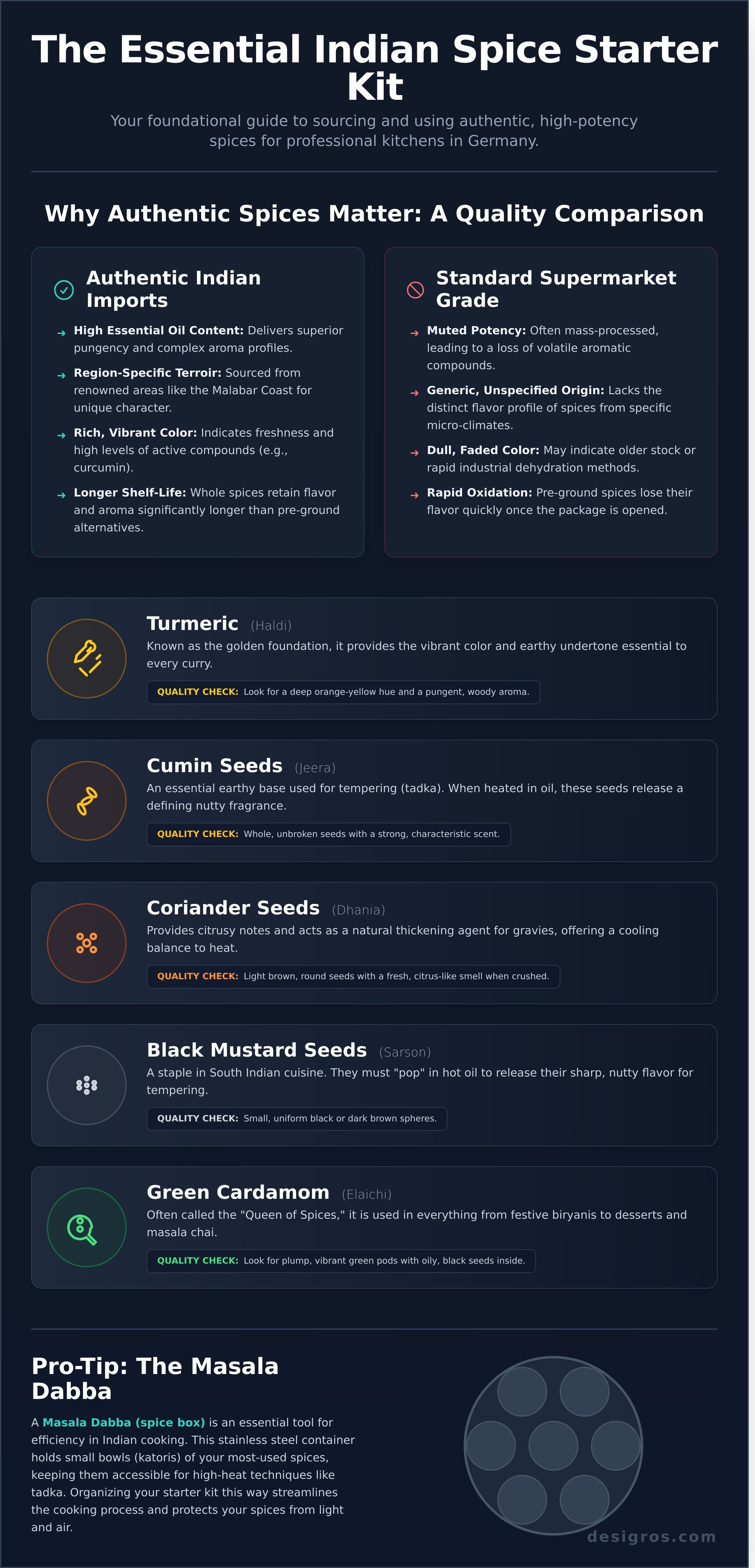
The superior quality of indian spices from india is a direct result of the country’s diverse micro-climates, which allow for the development of high essential oil content. Unlike "supermarket grade" spices often found in European retail chains-which are frequently mass-processed and lack pungency-authentic imports retain their volatile compounds. For businesses in Germany, sourcing these products means accessing the cultural heritage of regions like Kerala and Rajasthan. Desigros optimizes the supply chain from Indian farms directly to our wholesale inventory, ensuring that retailers receive high-potency products with maximum shelf life.
The Science of Flavor: Essential Oils and Potency
The chemical profile of a spice is dictated by its growth environment. Soil composition in specific Indian regions significantly affects curcumin levels in turmeric, often reaching concentrations far higher than those found in generic varieties. Processing also plays a critical role; traditional sun-drying methods preserve the integrity of the spice better than rapid industrial dehydration. To maintain professional standards, we emphasize the following:
- Whole Spices: These retain flavor and aroma significantly longer than pre-ground versions, which oxidize rapidly.
- Curcumin & Piperine Levels: High concentrations of these active compounds define the "grade" of the spice.
- Moisture Content: Strictly controlled levels ensure the product remains stable during transit to the German market.
Regional Specialties: From Malabar Pepper to Guntur Chillies
In the wholesale sector, origin-specific sourcing is essential for authenticity. The Malabar Coast is globally recognized for premium black pepper, characterized by a complex heat profile. Similarly, Andhra Pradesh produces Guntur chillies, which are prized for their specific heat units and deep red pigmentation. When reviewing a comprehensive list of Indian spices, it is evident that regional terroir is the primary differentiator in quality. By importing indian spices from india directly from these specialized regions, Desigros provides German businesses with the raw materials necessary for authentic culinary results and high-margin retail performance.
The Essential Starter Kit: 5 Must-Have Spices from India
When sourcing authentic indian spices from india, five specific varieties form the backbone of any professional or home kitchen. These staples are selected for their versatility and their ability to create the foundational flavor profiles required for traditional South Asian cuisine. For the German market, where climate-controlled storage is essential, starting with these high-turnover items ensures freshness and inventory efficiency.
- Turmeric (Haldi): Known as the golden foundation, this spice provides the vibrant color and earthy undertone essential to every curry. High-quality turmeric is identified by a deep orange-yellow hue and a pungent, woody aroma.
- Cumin Seeds (Jeera): An essential earthy base used primarily for tempering (tadka). When heated in oil, these seeds release a nutty fragrance that defines the aromatic start of most Indian dishes.
- Coriander Seeds (Dhania): These provide citrusy notes and act as a natural thickening agent for gravies. They offer a cooling balance to the heat of peppers and turmeric.
- Black Mustard Seeds (Sarson): A staple in South Indian cuisine, these seeds must "pop" in hot oil to release their sharp, nutty flavor. They are vital for chutneys and tempering lentils.
- Green Cardamom (Elaichi): Often called the "Queen of Spices," it is used in everything from festive biryanis to desserts and masala chai. Look for plump, vibrant green pods with oily, black seeds inside.
Building Your Masala Dabba (Spice Box)
The Masala Dabba is a functional stainless steel container typically holding seven small bowls. This arrangement promotes efficiency during high-heat cooking. For businesses stocking indian spices from india, quality identification is paramount, especially following recent global safety concerns regarding pesticide residues in certain export batches. Professional buyers should look for bright, consistent colors and strong, characteristic scents that indicate recent harvest and proper processing.
Whole vs. Ground Spices: When to Buy Which?
Buying whole seeds and pods offers superior shelf-life and flavor retention, as the essential oils remain trapped within the spice's structure until ground. However, the convenience of pre-ground powders from established brands like MDH or TRS is often preferred for high-volume commercial kitchens where speed is a priority. Whole spices maintain their peak potency for up to two years, while ground powders should ideally be consumed within six months to ensure flavor integrity.
Whole Spices vs. Blended Masalas: A Professional Comparison
For culinary professionals and retailers in Germany, distinguishing between whole spices (Sabut Masala) and blended masalas is essential for inventory management and flavor consistency. Whole spices represent the raw, unadulterated form of the plant, used primarily for infusion and foundational flavoring. In contrast, blended masalas are precision-engineered mixtures designed to provide complex, repeatable flavor profiles. Understanding the global history of Indian spices reveals that while whole spices were the original currency of trade, modern blends have become the standard for operational efficiency.
When sourcing indian spices from india, professionals must weigh the aromatic potency of whole seeds against the convenience of pre-ground mixtures. While whole spices retain their essential oils longer, blended masalas reduce labor costs and ensure dish uniformity across multiple kitchen shifts.
The Power of Whole Spices in Slow Cooking
Whole spices are the backbone of slow-cooked dishes and aromatic bases. Utilizing cinnamon sticks, green cardamom, and cloves is the professional standard to perfume premium Basmati rice, providing a delicate fragrance that ground alternatives cannot replicate. In professional German catering, the "tadka" or tempering technique is critical; whole cumin or mustard seeds are flashed in hot oil to release volatile oils before the primary ingredients are added. For a refined presentation, these whole elements are typically strained or removed before serving to maintain texture.
Understanding Popular Blends: Garam Masala and Beyond
Blended masalas are functional tools for high-volume environments. A standard Garam Masala is a "warming" blend typically featuring black pepper, cloves, and cinnamon, added near the end of cooking to preserve its volatile aromatics. Other regional blends serve specific logistical purposes:
- Sambar Powder: A complex mix of lentils and spices for South Indian stews.
- Meat Masala: A robust blend designed to penetrate dense proteins.
- Kitchen King: A versatile, all-purpose flavor enhancer.
In the German market, where labor costs are high, using high-quality indian spices from india in pre-blended forms allows businesses to maintain authenticity without the time-intensive process of manual grinding. Professional chefs often combine both: starting with whole spices for depth and finishing with a blend for immediate impact, creating a multi-layered flavor profile that meets commercial standards.
Maximizing Flavor: How to Use and Store Spices in Germany
Utilizing high-quality indian spices from india requires precise handling to maintain their chemical integrity and aromatic profile. In the German climate, where indoor humidity levels fluctuate significantly between seasons due to central heating and external dampness, professional storage and preparation techniques are vital for cost-efficiency and flavor consistency.
Mastering the Art of Tempering (Tadka)
Tempering, or Tadka, is the process of blooming spices in hot fat to release fat-soluble essential oils. This technique is essential for extracting the full value of your inventory. Follow these professional steps for optimal results:
- Step 1: Fat Selection: Use Ghee for a high smoke point and rich flavor, or Mustard Oil for pungent depth. Ensure the fat is heated but not smoking.
- Step 2: The Sizzle Test: Identify the correct temperature by dropping a single cumin seed into the oil; it should sizzle and move immediately. If it turns black instantly, the oil is too hot.
- Step 3: Sequencing: Always add whole seeds (mustard, cumin, cardamom) first as they require more heat. Add ground powders only at the final stage or after removing the pan from heat to prevent scorching.
Storage Secrets for Long-Lasting Freshness
Germany’s modern kitchens often face high humidity from cooking and temperature shifts. To protect indian spices from india, avoid plastic containers which can absorb oils and allow oxygen permeation. Airtight glass jars are the professional standard for maintaining potency and preventing cross-contamination of aromas.
- The "Cool, Dark, and Dry" Rule: Store spices away from the stovetop and direct sunlight. UV light degrades volatile compounds rapidly.
- Potency Check: Rub a small amount of the spice between your fingers. If the aroma is faint or "dusty," the essential oils have evaporated, and the spice has lost its commercial value.
- Reviving Spices: If whole spices have become slightly damp or "tired," a brief dry-roasting in a heavy-bottomed pan over medium heat can reactivate remaining oils.
For businesses looking to secure consistent, high-volume inventory, sourcing through a reliable partner like desigros.com ensures you receive products with maximum shelf-life and professional-grade packaging. Efficiency in storage directly impacts your bottom line by reducing waste and ensuring flavor standardized results.
Where to Buy Authentic Indian Spices in Germany
Finding high-quality indian spices from india in Germany requires a reliable supply chain that understands both traditional requirements and modern logistical standards. While local supermarkets often carry a limited selection of generic powders, sourcing authentic, regional varieties is most efficiently done through specialized online platforms. Online shopping provides the advantage of access to niche ingredients-such as stone flower (kalpasi) or high-grade hing-that are rarely found in physical retail locations.
Desigros operates from a central logistics hub in Friedrichsdorf, strategically positioned to facilitate rapid distribution across all German states. Our operational model is built on high inventory turnover. By moving large volumes of stock quickly, we ensure that the indian spices from india delivered to your door have not spent months on a warehouse shelf. This speed is critical for maintaining the volatile oils and aromatic compounds that define the quality of premium spices.
Why Desigros is the Preferred Choice for Desi Groceries
- Direct Sourcing: We work directly with trusted Indian brands to ensure product authenticity and eliminate unnecessary intermediaries, keeping costs competitive.
- Logistical Efficiency: We offer next-day shipping for national orders, providing a reliable solution for both household kitchens and commercial food services.
- Wholesale Availability: Our platform supports bulk buying options, making it the ideal partner for professional caterers and restaurants requiring consistent, large-scale supply.
Completing Your Shopping List
An authentic meal requires more than just high-quality seasoning. To achieve the best results, we recommend pairing your spices with our premium Basmati rice selection, chosen for its superior grain length and fragrance. Additionally, we provide the fresh perishables essential for tempering, such as fresh curry leaves and green chillies. These items are handled with the same logistical precision as our dry goods, ensuring they arrive fresh at your kitchen.
Ready to restock your pantry with professional-grade ingredients? Browse our full spice collection at Desigros.com and experience the efficiency of Germany's leading Indian grocery wholesaler.
Reliable Supply of Authentic Indian Spices for the German Market
Sourcing high-quality indian spices from india is the essential foundation for achieving professional culinary results in any German kitchen. This guide has detailed the functional advantages of choosing between whole spices and blended masalas, alongside the critical role of proper storage to maintain flavor integrity in the European climate. Utilizing established brands such as TRS, MDH, and Everest ensures that every product meets the highest standards of authenticity and consistency required for commercial and domestic use.
Desigros serves as a professional partner for retailers and kitchens across Germany, offering a streamlined procurement process for premium ingredients. Our German-based warehouse facilitates rapid dispatch and efficient delivery, significantly reducing lead times for your operations. By maintaining a high-turnover inventory, we guarantee that all stock remains fresh and potent. Our wholesale-focused platform prioritizes volume and reliability, providing the stability needed for effective inventory management and competitive pricing.
Shop Authentic Indian Spices at Desigros - Fast Delivery Across Germany
Optimize your spice inventory today with a partner committed to logistical excellence and premium product standards.
Frequently Asked Questions
Where can I find authentic Indian spices from India in Germany?
Authentic indian spices from india are primarily available through specialized B2B wholesale platforms like Desigros, which supply retailers and catering businesses across Germany. These platforms ensure direct imports, maintaining high quality and competitive wholesale pricing. For individual consumers, local Asian grocery stores in major hubs like Berlin, Frankfurt, or Munich carry a variety of brands, though professional distributors offer more consistent stock and documented food safety standards.
What is the difference between Garam Masala and Curry Powder?
Garam Masala is a traditional blend of warming spices, including cinnamon, cloves, and cardamom, designed to be added toward the end of cooking to preserve its intense aroma. In contrast, Curry Powder is a Western-style spice blend that typically uses turmeric as a base for color and cumin for flavor. While Garam Masala focuses on depth and heat, Curry Powder provides a standardized flavor profile common in many international commercial recipes.
How long do whole Indian spices stay fresh?
Whole spices generally maintain their potency for 24 to 36 months when stored in airtight containers away from direct sunlight. In Germany’s climate, managing indoor humidity is crucial to prevent spoilage and mold. Ground spices lose their essential oils and flavor much faster, typically within 6 to 12 months. For commercial efficiency, purchasing whole spices in bulk and grinding them as needed ensures the highest flavor quality and cost-effectiveness.
Do I need to wash whole spices before using them?
You should not wash whole spices, as moisture introduces the risk of mold and degrades the essential oils responsible for flavor. Instead, spices are traditionally dry-roasted in a pan or tempered in hot oil (tadka) before use. This heat treatment effectively eliminates surface bacteria while activating the aromatic compounds. Professional kitchens should always source from suppliers that adhere to strict EU hygiene regulations to ensure product safety from the point of origin.
Which Indian spices are best for boosting immunity?
Turmeric, ginger, and black pepper are highly regarded for their immunity-boosting properties. Turmeric contains curcumin, a potent anti-inflammatory agent, while black pepper significantly enhances its absorption in the body. Incorporating these indian spices from india into food production or daily diets provides functional health benefits. In the German market, there is a growing demand for these spices in the health and wellness sector, particularly in organic and supplement-grade formats.
Can I buy Indian spices in bulk online in Germany?
Yes, businesses can source Indian spices in bulk through online B2B marketplaces. Platforms like Desigros offer various packaging sizes, from 1kg bags to full master cartons, with pricing displayed in Euro (€). Buying in bulk online allows for better inventory management, real-time stock tracking, and significant cost savings compared to retail prices. This is the most efficient procurement method for restaurants, specialty shops, and food manufacturers operating within the EU.
What are the most common spices used in everyday Indian cooking?
The foundation of everyday Indian cuisine relies on a core set of spices: turmeric, cumin seeds, coriander powder, mustard seeds, and red chili powder. These "pantry essentials" are used in almost every savory dish. For retailers, maintaining a consistent supply of these high-volume items is essential for meeting consumer demand. Professional wholesalers focus on high-turnover stock of these specific spices to ensure freshness and competitive pricing for the German market.
How do I know if the Turmeric I am buying is pure?
Pure turmeric has a deep, vibrant orange-yellow color and a pungent, earthy scent. A common test for purity involves adding a spoonful to warm water; pure turmeric will settle at the bottom while leaving the water clear. If the water becomes cloudy or shows bright yellow streaks, it may contain fillers or artificial dyes. For commercial procurement, always request laboratory analysis certificates and ensure the product meets EU-regulated purity standards to avoid adulterated stock.