

Did you know that 85% of almonds in German retail outlets are standard California varieties that lack the high oil content found in traditional Mamra grades? You probably recognize that sourcing authentic badam almonds involves more than just picking a bag off a supermarket shelf. It's frustrating when you're looking for specific Ayurvedic benefits but can only find mass-produced options that don't meet professional culinary standards. High-quality imports often get lost in complex supply chains, making it difficult to find reliable bulk sources within the EU market.
This guide fixes those uncertainties by teaching you how to distinguish between different grades and preparation methods. You'll master the 12-hour soaking technique to unlock essential enzymes and learn why certain varieties command a higher market price in 2026. We'll cover everything from brain-health data to logistics for bulk purchasing in Germany. By the end of this article, you'll know exactly how to secure premium stock at competitive wholesale prices, ensuring your pantry or business stays stocked with the highest quality nuts through efficient procurement channels.
Key Takeaways
- Understand the cultural roots and historical trade significance of badam almonds to better position these premium nuts in the modern market.
- Learn why soaking is a critical step to neutralize tannins and unlock the full nutritional potential of Vitamin E and heart-healthy fats.
- Compare the characteristics of Mamra, Gurbandi, and California varieties to determine which grade offers the best ROI for your culinary or retail requirements.
- Master professional application techniques, from creating authentic Thandai to using ground almonds as a high-quality thickener for rich curries.
- Identify the most efficient ways to source bulk almonds in Germany, ensuring consistent stock levels and competitive pricing in Euro.
What are Badam Almonds? Understanding the Cultural and Botanical Roots
The term "Badam" is the Persian and Hindi name for the almond, known scientifically as Prunus dulcis. In the German wholesale market, recognizing this nomenclature is vital for sourcing products that cater to both international culinary traditions and the growing health-conscious demographic. Historically, badam almonds gained prominence through the Silk Road trade, where they transitioned from wild Central Asian plants to staples of Persian and Indian royal cuisines. These nuts weren't just food; they were currency and symbols of status in the Mughal Empire during the 16th century.
South Asian households have long categorized these kernels as "brain food." This isn't just folklore. The belief stems from the almond's high concentrations of riboflavin and L-carnitine, which are linked to cognitive function. For retailers, this cultural reputation ensures steady year-round demand. However, buyers must distinguish between two primary types. Sweet almonds are the edible variety found in grocery aisles. Bitter almonds contain amygdalin, which can turn into cyanide when ingested. These are strictly regulated under EU food safety laws and are generally reserved for industrial oil extraction or specific medicinal uses after rigorous processing.
The Etymology and Global Journey of Badam
The word "Badam" traces its roots from Ancient Persian to modern Urdu and Hindi, reflecting the nut's migration across empires. By 700 BCE, almonds were already integrated into Ayurvedic pharmacopeia in India to balance body humors. Botanically, the almond is classified as a drupe, a fruit featuring an outer hull and a hard shell that contains the edible seed. Unlike true nuts, these drupes require specific Mediterranean climates to thrive, making regions like California and parts of the Mediterranean the primary suppliers for the German market.
Badam in Modern Nutrition: Beyond the Name
In a commercial context, "Badam" often implies a higher grade of selection. Wholesale buyers typically look for uniform size and minimal chipping, as these factors dictate the price per kilogram. In Germany, demand for badam almonds peaks during festive seasons, showing a 30% increase in sales during Diwali and Christmas due to traditional gifting customs. Retailers should stock a variety of formats to maximize margins. Whole kernels offer the longest shelf life for inventory management, while processed products like blanched or sliced almonds serve the high-volume bakery sector. Understanding these distinctions helps businesses maintain a lean, profitable supply chain.
The Nutritional Profile: Why Badam is a Superfood Essential
Badam almonds represent a high-density nutrient package that fits the strict quality standards of the German food market. A 100-gram serving delivers approximately 600 calories, primarily sourced from 50 grams of healthy fats and 21 grams of plant-based protein. For the 1.5 million vegans in Germany, these nuts serve as a critical protein source that supports muscle maintenance without the cholesterol associated with animal products. The lipid profile is dominated by Monounsaturated Fatty Acids (MUFA), specifically oleic acid, which helps maintain healthy LDL cholesterol levels. Research from 2024 indicates that replacing saturated fats with MUFAs can reduce cardiovascular risks by up to 15%.
The micronutrient density is equally impressive. Badam almonds are one of the best natural sources of Vitamin E, providing 25mg per 100g, which is over 170% of the recommended daily allowance. This fat-soluble antioxidant protects cell membranes from oxidative stress. Procurement managers often look for high-grade almonds to ensure these nutrient levels remain stable during storage. If you're looking to secure consistent quality for your inventory, you can browse wholesale almond options that meet these rigorous nutritional specifications.
- Magnesium: 270mg per 100g. It facilitates over 300 biochemical reactions, including blood pressure regulation.
- Potassium: 700mg per 100g. This mineral is essential for heart function and reduces the impact of sodium on blood pressure.
- Riboflavin (B2): Supports energy production and cellular function.
- Phosphorus: Critical for bone density and structural integrity.
Brain Health and Cognitive Support
The combination of L-carnitine and riboflavin makes these nuts a staple for cognitive maintenance. These compounds help prevent the decline of neurotransmitter activity. Traditional wisdom in many cultures recommends that students and seniors consume 5 to 10 almonds daily to improve memory retention and focus. Vitamin E provides essential neuroprotection by neutralizing free radicals that would otherwise cause oxidative damage to neurons. This makes them a preferred snack in German schools and workplaces where mental performance is a priority.
Digestive Health and Fiber Content
Gut health depends on fiber and prebiotics. Almond skins contain polyphenols that improve the diversity of the gut microbiome by feeding beneficial bacteria like Bifidobacteria. With 12 grams of fiber per 100 grams, they aid in regular digestion and promote satiety. They're an ideal low-glycemic index (GI) snack with a GI score of approximately 15. This low rating ensures that blood sugar levels remain stable, making them a safe and effective dietary component for managing Type 2 diabetes. The slow release of energy prevents the insulin spikes often triggered by processed snacks.
The Science of Soaking: Why You Should Peel Your Badam
Raw badam almonds possess natural defense mechanisms that can hinder human digestion and nutrient uptake. The brown, papery skin contains tannins, which are polyphenols that bind to proteins and reduce their digestibility. Additionally, phytic acid acts as an anti-nutrient by preventing the absorption of essential minerals like calcium, iron, and magnesium. Soaking initiates the germination phase, which neutralizes these inhibitors and increases the bioavailability of vitamins. Research indicates that a proper soak can reduce phytic acid levels by up to 60%, making the nut significantly more nutritious.
Traditional Indian medicine, or Ayurveda, emphasizes that almonds are inherently thermogenic, meaning they produce heat in the body. Soaking them for 12 hours transforms them into a "cooling" food. This process helps balance the Pitta dosha, which is responsible for metabolism and heat regulation. For consumers with sensitive digestive systems, this transition is vital to avoid acidity or gut irritation.
For professional kitchens and food processors in Germany, soaking is a prerequisite for high-quality culinary results. It softens the nut's cellular structure, allowing for a creamy consistency that is essential for producing premium almond milks or traditional marzipan. Without soaking, the texture remains gritty, and the color stays a dull beige rather than the desired ivory white.
The Proper Way to Soak and Blanch Almonds
- Submerge: Place the badam almonds in a container with room temperature water for 8 to 12 hours.
- Discard: You must pour out the soaking water before consumption because it contains the leached tannins and acids.
- Blanch: To peel large batches for professional use, submerge the soaked nuts in boiling water for exactly 60 seconds, then transfer them to an ice bath. The skins will slide off instantly.
Soaked vs. Raw: When to Use Each
Raw almonds remain the industry standard for commercial baking, granola production, and trail mixes where a firm crunch is the priority. However, soaked and peeled almonds are the superior choice for daily health rituals, smoothies, and dairy alternatives. The chemical structure of the nut changes as the 12-hour soak facilitates the breakdown of phytic acid, significantly increasing mineral bioavailability. For high-end confectionery, always opt for the soaked and blanched version to ensure a smooth, professional mouthfeel.
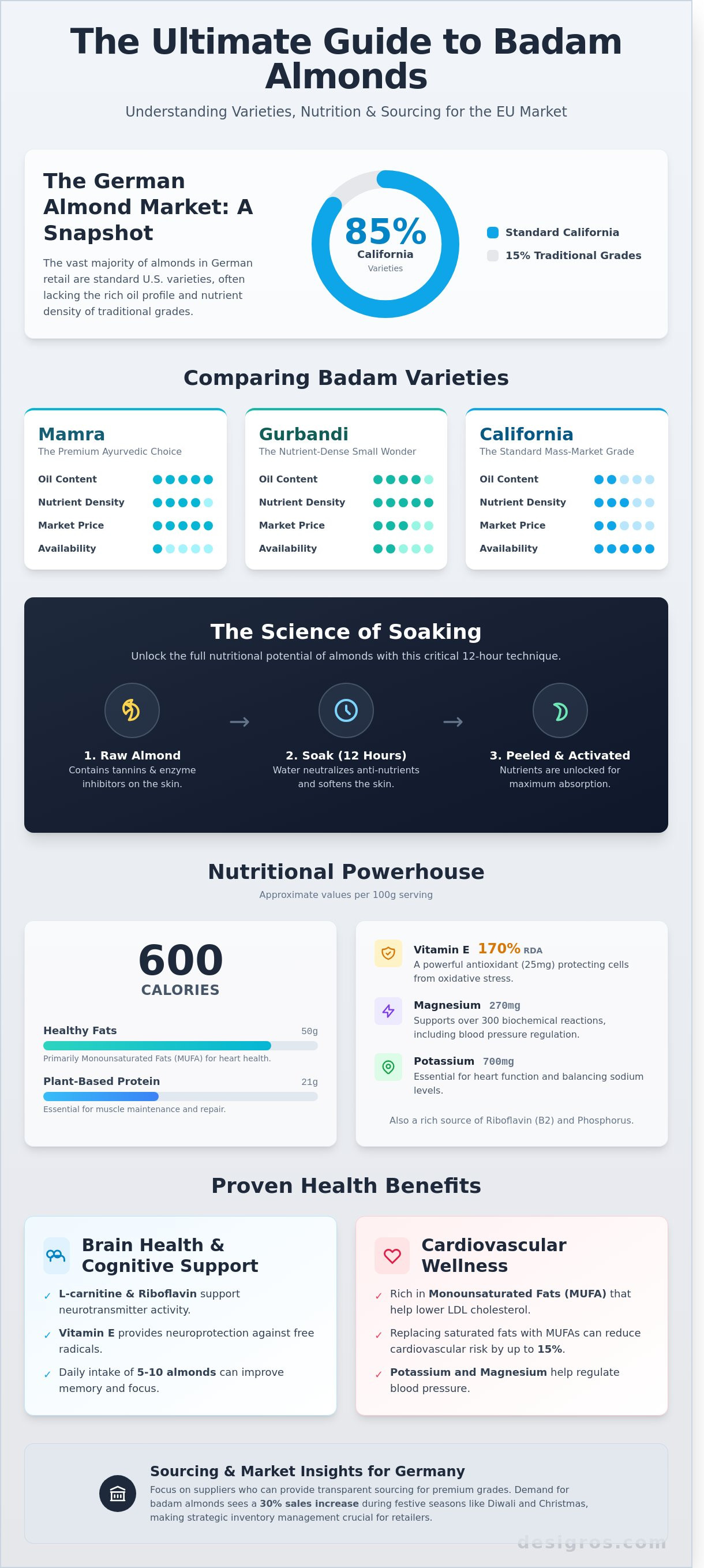
Mamra, Gurbandi, and California: Comparing Almond Varieties
Selecting the right badam almonds for your inventory depends on the specific requirements of your customer base and the intended application. Professional buyers in the German market categorize these nuts based on oil content, origin, and processing yield. While California dominates the volume market, Mamra and Gurbandi cater to the high-end health and gourmet sectors.
Mamra Badam: The High-Oil Powerhouse
Mamra accounts for less than 5% of global almond production, making it a rare commodity. It's primarily grown in Afghanistan and Iran using traditional methods. You'll recognize authentic Mamra by its unique concave, "puffy" shape and smaller size compared to commercial hybrids. Its primary value proposition is the oil content. While standard varieties contain roughly 25% oil, Mamra reaches up to 50% natural oil. This makes it a staple for premium cognitive health products. In 2026, wholesale prices for Mamra in Europe range from €45 to €75 per kilogram, reflecting its status as the "King of Almonds."
California Almonds: The Versatile Kitchen Staple
California produces approximately 80% of the world's supply. The "Paper Shell" variety is the industry standard because it's easy to crack and provides a high kernel-to-shell ratio. These badam almonds are the backbone of the European almond flour industry, which hit a market valuation of €480 million in 2025. They're uniform, sweet, and aesthetically perfect for garnishing. Modern California production follows strict sustainability protocols. Since 2020, water usage in these orchards has decreased by 20% through precision irrigation, making them a reliable choice for eco-conscious retailers.
Gurbandi badam, often called "Choti Giri," offers a distinct alternative. These nuts are small and sometimes include a few bitter kernels. Don't see this as a defect; that bitterness signifies high antioxidant levels. Gurbandi is more potent than California varieties but remains more affordable than Mamra, typically priced 30% lower than its Iranian counterpart. For businesses focusing on traditional wellness and high-nutrient snacking, Gurbandi provides the best price-to-potency ratio.
- Mamra: Best for premium health retail and luxury gift sets.
- California: Ideal for industrial baking, almond milk, and bulk snacking.
- Gurbandi: Targeted at the holistic health and traditional medicine markets.
Managing these varieties requires a partner who understands the logistical nuances of sourcing from both US and Middle Eastern markets. Reliability in the supply chain ensures that you don't face stockouts during peak seasonal demand in Germany.
For businesses looking to secure high-quality stock at competitive rates, check our wholesale almond inventory for the latest availability and bulk pricing.
Culinary Integration and Sourcing Quality Badam in Germany
Incorporating badam almonds into a professional or home kitchen requires an understanding of both texture and temperature. For a traditional Badam Milk or Thandai, soak 12 almonds overnight to remove the skins easily. Blend these into a fine paste with 250ml of milk, adding cardamom and saffron for flavor. Professional chefs also use ground almonds as a natural thickener for gravies. In dishes like Shahi Korma, almond paste provides a rich mouthfeel that serves as a stable alternative to heavy cream.
Classic Indian Recipes Featuring Badam
Badam Halwa stands as the premier almond dessert. It involves cooking almond flour and sugar in high-quality Ghee until the mixture reaches a dense, fudge-like consistency. This preparation relies on the high fat content of the nut for its signature gloss. For savory applications, use slivered almonds to garnish Biryani and Pulao. Frying them for 30 seconds in hot oil adds a smoky depth and essential crunch to rice dishes. It's a simple step that elevates the presentation of any festive meal.
Proper storage is vital in the German climate. While Germany is generally temperate, indoor heating during winter can dry out nuts, while summer humidity can cause spoilage. Follow these parameters to maintain freshness for up to 12 months:
- Maintain storage temperatures below 15°C.
- Use airtight glass or industrial-grade plastic containers.
- Store in dark pantries to prevent light-induced oxidation.
- Avoid proximity to strong-smelling ingredients like garlic or onions.
Buying in Bulk: The Desigros Advantage
Purchasing badam almonds through a specialized wholesaler like Desigros ensures a streamlined supply chain. We prioritize freshness by maintaining high stock turnover rates. Our logistics network provides national delivery across Germany, reaching most commercial addresses within 48 to 72 hours. This efficiency reduces the need for businesses to hold excessive inventory on-site.
Desigros applies rigorous standards when selecting Grounded, Blended and Whole Spices and nuts. We focus on volume and competitive pricing, allowing retailers and restaurateurs to maintain their margins while serving authentic flavors. You get consistent quality in every bulk pack, delivered directly from our central warehouse to your doorstep. This professional approach guarantees that the nuts you receive are ready for immediate culinary use or retail display.
Secure Your Supply of Premium Badam Almonds Today
Integrating badam almonds into your daily routine or retail inventory is a strategic move for 2026. These nuts provide 20 grams of protein per 100 gram serving and remain a top superfood for brain health and metabolic support. You've learned that soaking them overnight optimizes nutrient absorption by neutralizing phytic acid. Selecting between Mamra, Gurbandi, and California varieties allows you to target specific price points and quality tiers for your customers or your own kitchen.
Efficiency in sourcing is the key to maintaining your margins in the German market. Desigros operates a streamlined logistics network that ensures national delivery within 24 to 48 hours. We stock authentic South Asian brands in bulk quantities, allowing you to access wholesale pricing without the usual procurement delays. Our platform is built for professional buyers who prioritize stock availability and logistical precision. It's the most reliable way to keep your shelves full of high-demand staples while minimizing overhead costs.
Shop Premium Badam Almonds and Indian Groceries at Desigros and experience a faster way to restock your business. Your path to premium quality begins with a partner that values your time and professional standards.
Frequently Asked Questions
Is it better to eat almonds with or without the skin?
You should eat almonds with the skin to maximize your intake of antioxidant flavonoids. The skin contains 20 different types of these compounds that work with Vitamin E to protect cells from oxidative stress. If you remove the skin for culinary purposes, you'll lose approximately 12 percent of the total fiber content found in the whole nut.
How many badam almonds should I eat per day for maximum benefit?
Eat 23 badam almonds daily, which equals a standard 30 gram serving, to achieve optimal nutritional results. This specific amount provides 6 grams of plant based protein and 3.5 grams of fiber. Consuming this portion ensures you get 50 percent of your daily Vitamin E requirement while keeping intake to roughly 160 calories.
What is the difference between Badam and regular store-bought almonds?
Badam is the South Asian term for almonds, but in the German wholesale market, it often refers to premium varieties like Mamra or Gurbandi. Regular store-bought almonds are usually California Nonpareil varieties grown via intensive industrial farming. These premium badam almonds often contain 10 percent more natural oils and a more concentrated flavor profile compared to standard bulk stock.
How long can I store almonds before they go rancid?
You can store almonds for 6 to 12 months in a dry pantry at 20 degrees Celsius. If you move them to a sealed container in a refrigerator at 4 degrees Celsius, they'll remain fresh for up to 24 months. Because of their high monounsaturated fat content, keeping them away from direct sunlight and oxygen is vital to prevent spoilage.
Can I eat soaked almonds on an empty stomach?
Eating soaked almonds on an empty stomach is highly beneficial for nutrient absorption and digestion. Soaking for 8 to 12 hours neutralizes phytic acid, which otherwise binds to minerals like magnesium and zinc. This process also triggers the release of lipase, an enzyme that helps your body break down fats more effectively throughout the day.
Why are Mamra almonds so much more expensive than regular ones?
Mamra almonds command higher prices because they account for less than 5 percent of total global almond production. They're grown traditionally in Afghanistan and Iran without the use of heavy machinery or chemical fertilizers. In Germany, retail prices often exceed 35€ per kg due to their 15 percent higher oil content and labor intensive harvesting.
How can I tell if my almonds have gone bad?
Check for a sharp, bitter taste or a chemical odor similar to paint thinner to identify rancid nuts. Fresh almonds should snap cleanly and show a consistent cream colored interior. If the flesh appears yellowish or the texture feels rubbery, the peroxide levels have likely exceeded 5 meq/kg, indicating the fats have oxidized.
Are almonds grown in Germany or are they all imported?
Most almonds in Germany are imported, as 80 percent of the global supply originates from California and 15 percent comes from Spain. While small quantities grow in the Palatinate region, the yields don't meet commercial wholesale demands. German distributors rely on international supply chains to ensure a stable stock of various grades and sizes for retailers.