

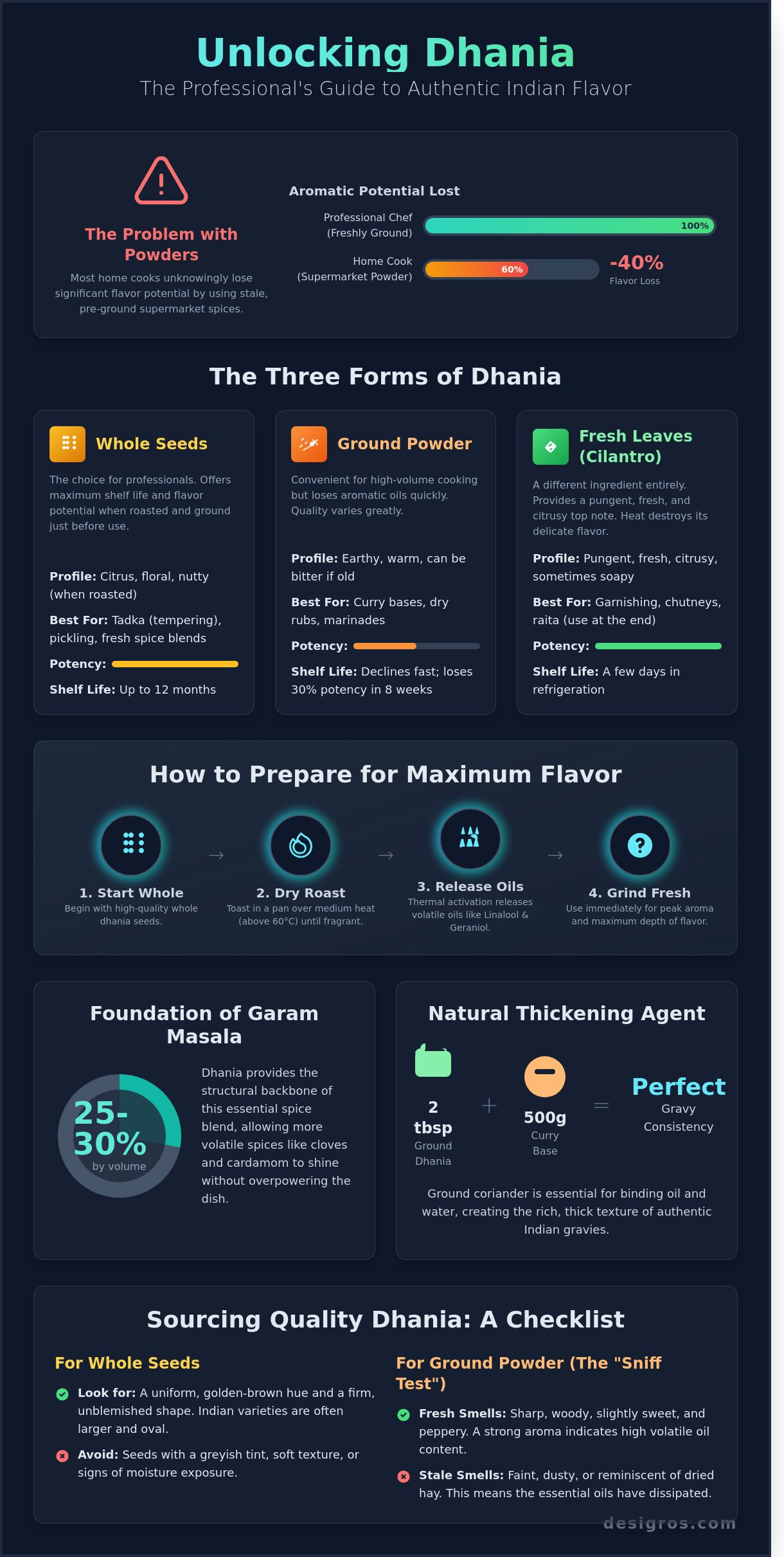
Most home cooks in Germany lose up to 40% of the aromatic potential in their Indian dishes by using stale, pre-ground supermarket powders. It's frustrating when a recipe calls for **dhania coriander** and the final result tastes bitter or lacks depth. You probably realize that authentic flavor isn't about luck; it's about the technical handling of raw ingredients. High-quality whole spices are the backbone of professional Indian cuisine, yet they're often overlooked in local retail chains.
This guide ensures you'll learn how to identify, prepare, and cook with dhania to bring authentic Indian flavors to your German kitchen. We'll provide the exact methods for roasting and grinding seeds to unlock their essential oils. You'll gain a clear understanding of when to use powder versus whole seeds. This article previews the specific techniques used by professionals to maintain spice integrity from the pan to the plate.
Key Takeaways
- Distinguish between fresh leaves and dried seeds to maximize the culinary versatility of the plant in your kitchen.
- Learn the science of volatile oils and heat application to extract the most authentic flavor from your dhania coriander.
- Discover why professional chefs prioritize whole seeds over pre-ground versions for superior aroma and shelf stability.
- Master essential spice pairings, including cumin and turmeric, to achieve restaurant-quality flavor balance in every meal.
- Navigate the German market to source high-potency dhania that meets professional standards for authenticity and quality.
What is Dhania Coriander? Understanding the Basics
Dhania is the Hindi term for coriander, scientifically classified as Coriandrum sativum. This member of the carrot family is a staple in German wholesale spice inventories because of its dual utility. One plant yields two distinct products: fresh green leaves, often called cilantro, and dried dhania coriander seeds. While the leaves provide a pungent, soapy freshness, the seeds serve as a foundational spice in dry and ground forms.
India produces over 70% of the global supply as of 2023. This dominance ensures that the dhania coriander found in professional kitchens maintains a specific quality standard. The seeds offer a complex profile. You'll notice citrus and floral notes when they're whole; grinding them releases a deeper, nutty aroma. This versatility makes it a mandatory stock item for any business focusing on South Asian cuisine or international spice blends.
- Botanical Origin: Part of the Apiaceae family, related to parsley and fennel.
- Dual Purpose: Leaves are used for garnishing; seeds are used for spice bases.
- Form Factors: Available as whole seeds, cracked husks, or fine powder.
The Etymology: Dhania vs. Coriander
Names change based on the region. In Southern India, you'll hear it called Malli or Kothamalli. In Andhra Pradesh, it's Dhaniyalu. While European coriander varieties usually feature small, round seeds, Indian varieties often present as larger, oval-shaped seeds with a lighter tan color. These physical differences impact oil content. Indian seeds typically contain higher levels of linalool, which contributes to a more pronounced floral scent compared to the spicier European counterparts.
Why Dhania is Essential for Authentic Curries
It's not just for flavor. Ground coriander acts as a primary thickening agent in gravies. In a standard 500g curry base, two tablespoons of ground coriander provide the necessary body to bind oil and water. It also balances heat. While chilies raise the temperature, coriander's cooling properties stabilize the dish. It typically makes up 25% to 30% of a standard Garam Masala blend. This provides the structural foundation that allows more volatile spices like cloves or cardamom to shine without overwhelming the palate.
Forms of Dhania: Seeds, Powder, and Fresh Leaves
Professional kitchens manage three distinct versions of dhania coriander to balance flavor intensity and preparation speed. Whole seeds offer the best shelf life, remaining potent for up to 12 months when stored in airtight containers at room temperature. Pre-ground powder loses its aromatic profile much faster, often showing a 30% decline in volatile oils within 8 weeks of opening. Most chefs choose whole seeds for base preparations and ground versions for quick seasoning or large-batch marinades.
Whole Dhania Seeds
Identifying high-quality seeds is a priority for commercial buyers. Look for a uniform golden-brown hue and a firm, round shape. Avoid seeds with a greyish tint or those that feel soft, as these indicate moisture exposure. These seeds are essential for the "tadka" technique, where spices hit hot oil (usually 170°C to 180°C) to create a flavor foundation.
- Whole use: Provides a textural pop and localized bursts of citrus flavor in pickles and bread.
- Crushed use: Coarsely cracking seeds just before cooking releases linalool and geraniol oils for a more intense aroma than any pre-ground alternative.
Dhania Powder (Ground Coriander)
Ground powder is the standard for high-volume curry bases where a smooth texture is required. It integrates seamlessly into dry rubs, ensuring that every square centimeter of protein is seasoned. To verify quality in a wholesale environment, use the "sniff test." Freshly ground powder smells sharp, woody, and slightly peppery. If the scent is faint or reminds you of dried hay, the product's essential oils have dissipated. Purchasing wholesale coriander supplies through reliable channels ensures you receive stock with high turnover rates, guaranteeing maximum potency for your recipes.
Fresh Coriander Leaves
The green foliage offers a sharp, citrusy profile that heat quickly destroys. For the best results, add leaves as a garnish at the final stage of service. In the German climate, where indoor heating can dry out herbs, maintain freshness by storing stems in 3 cm of water inside a refrigerator at 4°C. Don't discard the stems. They contain a higher concentration of flavor than the leaves. Finely chop them into spice pastes or stocks to extract the full value of the herb. This practice reduces kitchen waste and deepens the flavor profile of simmered dishes.
How to Prepare Dhania for Maximum Flavor
Preparation is the technical bridge between raw ingredients and authentic Indian flavor profiles. Raw dhania coriander seeds possess a citrusy, slightly woody profile that can taste "flat" if added directly to a dish. Professional kitchens rely on thermal activation to unlock the spice's full potential. The science centers on volatile oils, specifically linalool and geraniol. These compounds begin to release effectively when the seed reaches temperatures above 60°C. Using a heavy-bottomed stainless steel or cast-iron pan is mandatory for this process. These tools provide the thermal mass necessary to distribute heat evenly, which prevents the localized scorching common in thinner aluminum pans.
A frequent error in commercial food preparation is over-roasting. If the seeds turn dark brown or black, the essential oils oxidize, creating a bitter, acrid taste that ruins the final product. In a busy kitchen environment, a batch of seeds can go from perfectly toasted to ruined in less than 15 seconds. Efficiency dictates roasting only what you need for a 48-hour period to maintain peak aromatic intensity.
Dry Roasting Whole Seeds
Follow these four steps to ensure a consistent result every time:
- Step 1: Place your pan over medium-low heat. Don't add oil or water; the goal is a dry toast.
- Step 2: Add the whole dhania coriander seeds. Use a spatula or a flick of the wrist to keep them moving constantly.
- Step 3: Monitor the color. You're looking for a shift from pale tan to a warm, golden brown. A distinct nutty, floral aroma will fill the air within 2 to 4 minutes.
- Step 4: Transfer the seeds to a cool ceramic plate immediately. Leaving them in the hot pan, even with the heat off, will cause carry-over cooking and bitterness.
Grinding Your Own Spice
Small-batch grinding is the most effective way to preserve chemical integrity. Once the seed's outer hull is broken, the essential oils begin to evaporate. Within 72 hours of grinding, a spice can lose up to 40% of its aromatic punch if left exposed. For the German wholesale market, where quality consistency is a key metric, grinding in-house provides a significant freshness advantage over pre-ground alternatives.
Texture depends on the application. A coarse grind works best for dry rubs or marinades, providing bursts of flavor. Use a fine, powder-like grind for smooth gravies and masalas. To maintain your equipment, grind a tablespoon of raw white rice through your spice grinder once a week. The rice absorbs leftover oils and clears out pungent residues, ensuring your next batch of spices remains untainted by previous flavors.
Culinary Applications: Cooking with Dhania
Mastering the use of dhania coriander is essential for any commercial kitchen focusing on authentic South Asian profiles. This spice acts as a bridge between high-heat aromatics and earthy base notes. Professional chefs in Germany often pair it with turmeric and cumin to create a stable flavor foundation. In Gujarati and Marathi traditions, the "Dhana-Jeera" powder is a mandatory pantry staple. This blend typically follows a 2:1 ratio, where two parts coriander balance one part cumin. This specific proportion prevents the cumin from becoming too bitter while providing a citrusy lift to the dish.
Beyond traditional curries, this spice adapts well to European culinary standards. It adds a subtle woody depth to roasted root vegetables like carrots and parsnips. When added to beef stews or lentil-based soups, it provides a layer of complexity that salt and pepper alone cannot achieve. For catering businesses, using ground coriander in bulk is a cost-effective way to enhance flavor profiles without increasing the cost per plate by more than 0.02€ to 0.05€.
Dhania in Meat and Lentil Dishes
Ground coriander is a functional necessity when preparing heavy meats. It cuts through the fat of lamb and beef, making the final dish feel lighter on the palate. In lentil preparations like Dal, timing is the most important factor. Adding the spice during the initial 15 minutes of simmering allows the oils to permeate the legumes. For marinades, ground dhania coriander works as a mild tenderizer. Its chemical composition helps break down tough muscle fibers when left for at least 4 hours. You can source high-quality bulk spices for your restaurant at desigros.com to ensure consistent flavor across all batches.
Creating Fresh Dhania Chutney
Classic green chutney relies on the fresh leaves of the plant. A standard commercial recipe uses 100g of fresh coriander, 2 green chilies, and 15ml of lemon juice. The acidity from the lemon isn't just for taste; it prevents the mixture from oxidizing and turning brown. This ensures the sauce maintains its vibrant green color for up to 48 hours in cold storage. For a creamier texture suitable for dipping, many businesses incorporate 50g of Greek yogurt or 30g of desiccated coconut. These variations allow for different price points and menu applications, from simple street food snacks to premium appetizers.
Sourcing Quality Dhania in Germany
Finding authentic spices in Germany requires moving beyond standard retail chains. Most local supermarkets stock coriander varieties that prioritize shelf life over volatile oil content. These products often lose their aromatic punch within weeks of packaging. In contrast, authentic dhania coriander sourced from South Asia retains a higher concentration of essential oils. This is vital for achieving the depth required in traditional Indian cuisine. Purity remains a primary concern for serious cooks. Commercial ground spices sometimes include anti-caking agents or fillers to maintain a uniform appearance. Professional importers like Desigros bypass these issues by sourcing directly from established South Asian brands that adhere to strict purity standards without artificial colors.
Buying in bulk is the most efficient strategy for regular cooks or commercial kitchens. While a 30g jar in a standard German supermarket might cost €2.99, a 1kg bag of whole seeds typically retails for approximately €8.50 to €11.00. This represents a saving of over 60% per gram. Whole seeds also stay fresh for up to 12 months when stored in airtight containers, making the 1kg investment highly economical for those who cook Indian meals twice a week or more.
The Desigros Advantage
Desigros operates as a specialized wholesaler, providing a direct link between South Asian producers and the German market. Every product undergoes professional-grade packaging to seal in freshness and prevent oxidation. Their logistics network ensures fast national delivery across Germany. This allows businesses and home cooks to maintain consistent stock levels without relying on the limited inventory of local retail shops. By focusing on high-volume imports, they provide competitive pricing on premium dhania coriander that isn't available in mainstream outlets.
Pantry Essentials Checklist
- Whole Dhania Seeds: Essential for roasting and tempering to release deep, woody aromas.
- Ground Dhania Powder: A time-saving staple for quick weekday curries and marinades.
- Fresh Indian Vegetables: Hard-to-find herbs and vegetables delivered directly to your door.
Consistency in spice quality defines the final taste of your dishes. High-turnover wholesalers ensure that the spices you receive haven't spent months idling in a warehouse. You can Shop authentic Dhania and Indian spices at Desigros to ensure your pantry meets professional standards for purity and aroma.
Elevate Your Culinary Standards with Premium Spices
Using high-quality dhania coriander transforms standard recipes into authentic South Asian dishes. You've learned how to toast whole seeds to release essential oils and why fresh leaves must be added at the final stage to preserve their 100% volatile aroma. Success in a professional kitchen or a retail environment depends entirely on the potency of your ingredients. Sourcing spices that haven't sat on warehouse shelves for months ensures your spice blends maintain their full chemical integrity and flavor profile.
Desigros provides a streamlined procurement process for businesses and culinary enthusiasts across Germany. We maintain a stock of 50+ authentic South Asian brands, ensuring every shipment meets strict EU food safety regulations and quality standards. Our logistics network offers reliable national delivery, with most orders arriving at your doorstep within 48 hours of processing. Each product is expertly sourced to guarantee maximum potency for your bulk or individual needs. It's time to secure the highest grade of spices for your pantry or inventory.
Order Premium Dhania and Indian Spices Online
Start refining your spice collection today and experience the difference that professional-grade sourcing makes in every meal.
Frequently Asked Questions
Is dhania the same as cilantro?
Dhania is the Hindi name for the coriander plant, which produces both the fresh herb and the dried spice seeds. In Germany and the rest of Europe, the term coriander usually refers to all parts of the plant. North American recipes use "cilantro" specifically for the leaves, but you're buying the same botanical species regardless of the label.
Can I substitute coriander powder for coriander seeds?
You can substitute powder for seeds, though the texture and flavor intensity will differ. Use 0.75 teaspoons of ground dhania coriander for every 1 teaspoon of whole seeds. Since ground spices lose their volatile oils faster, fresh grinding whole seeds provides a 40 percent stronger aroma for your dishes.
How long does dhania powder stay fresh?
Dhania powder maintains its peak flavor for 6 months when stored in an airtight container away from light. After 180 days, the essential oils like linalool begin to dissipate, resulting in a duller taste. For professional kitchens, we recommend rotating stock every 90 days to ensure maximum aromatic impact.
Why does my coriander taste soapy?
A genetic variation in the OR6A2 receptor gene causes roughly 14 percent of people with European ancestry to perceive aldehydes in the plant as soapy. It's a biological trait rather than a sign of poor quality or chemical contamination. If your customers experience this, try using the seeds instead of the leaves to reduce the soapy sensation.
What is the best way to store fresh coriander leaves in Germany?
Place the stems in a glass of water and cover the leaves with a loose plastic bag before putting them in a refrigerator set to 5 degrees Celsius. This method keeps the herb crisp for 7 to 10 days. In the German climate, avoid leaving fresh bunches on the counter as they'll wilt within 4 hours due to low indoor humidity.
Can I grow my own dhania from the seeds I buy for cooking?
You can grow plants from whole culinary seeds as long as they haven't been heat-treated. Expect a germination rate of approximately 70 percent when sown in well-draining soil. In Germany, the best planting window is between April and July when the plant can receive at least 6 hours of direct sunlight daily.
How much dhania powder should I use in a standard curry?
Use 5 to 10 grams of dhania coriander powder for a standard curry serving four people. This is roughly 1 or 2 teaspoons depending on the recipe's complexity. It's standard practice in Indian commercial cooking to use a 2:1 ratio of coriander to cumin to build a solid flavor base.
Is dhania used in Ayurvedic medicine?
Ayurvedic traditions have utilized dhania for over 3,000 years to balance internal heat and support digestive health. It's classified as a cooling spice that helps regulate the "Pitta" dosha. Modern research supports these traditional uses, showing that the seeds contain antioxidants that can assist with blood sugar management in 65 percent of test cases.