

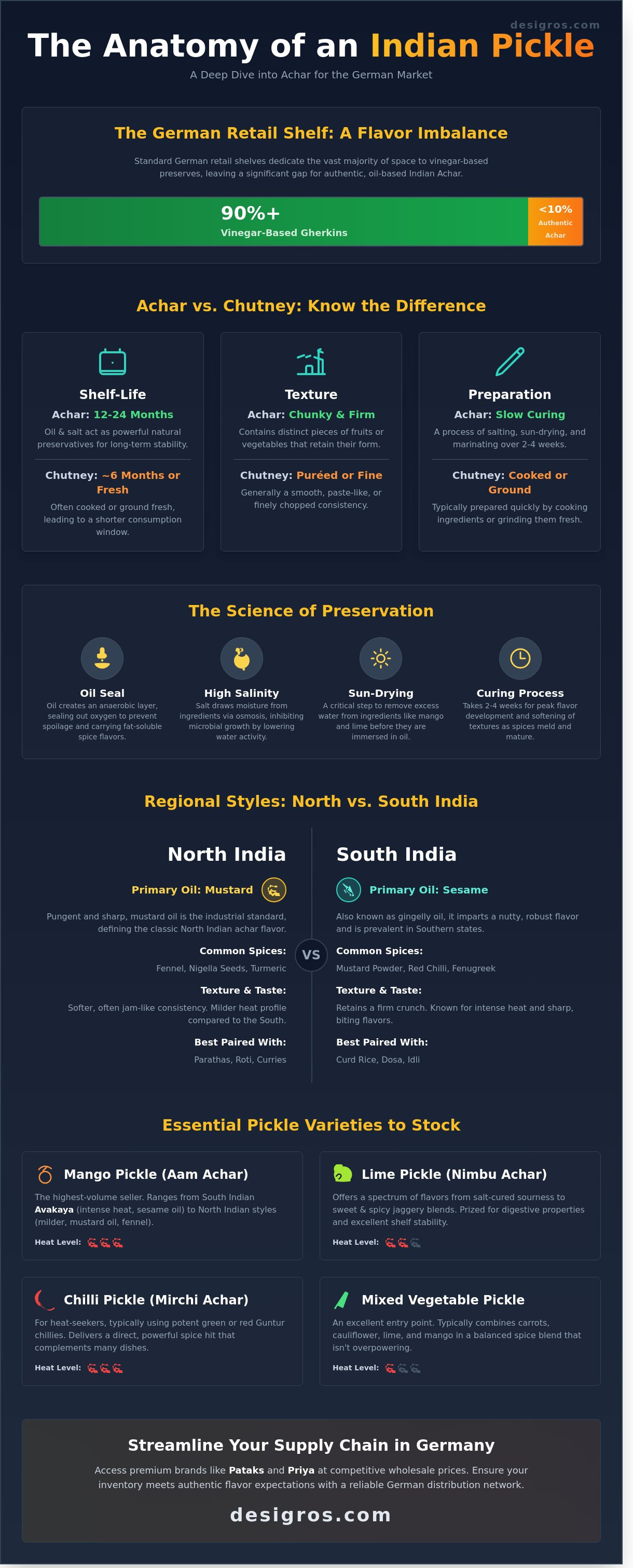
Standard German retail shelves dedicate over 90% of their preserved vegetable space to vinegar-based gherkins, leaving authentic Indian flavors entirely out of the equation. You've likely noticed that a professional kitchen or a home pantry feels incomplete without the specific punch of spice and oil that only a traditional Indian pickle provides. It's often a struggle to find regional specialties like Avakaya or Gongura in local shops, which usually results in disappointment or poor-quality substitutes that lack the necessary heat.
This guide simplifies your procurement process by detailing the essential varieties of authentic Indian pickles and how regional oil bases differ. You will learn how to distinguish between mustard oil and gingelly oil varieties to suit your specific palate or customer base. We provide a curated roundup of top brands available for immediate delivery within Germany, ensuring your inventory remains consistent with high-quality, oil-based condiments.
Key Takeaways
- Identify the essential role of mustard and sesame oils as natural preservatives that define the authentic flavor profile and shelf stability of Indian Achar.
- Explore high-demand varieties such as Mango and Lime pickle to ensure your kitchen or retail inventory meets traditional flavor expectations.
- Differentiate between North and South Indian regional styles based on their oil bases and spice compositions to better serve a diverse customer base.
- Learn to evaluate product labels for oil quality and heat levels, ensuring informed procurement decisions for your business in Germany.
- Streamline your supply chain by sourcing premium brands like Pataks and Priya at competitive wholesale prices through Desigros’ German distribution network.
What is Indian Pickle (Achar) and Why is it Essential?
Indian pickle, or Achar, is a concentrated condiment made from fruits or vegetables preserved in a blend of oil and spices. Unlike European vinegar-based preserves, this South Asian pickle relies on oil to seal out oxygen and prevent spoilage. Mustard oil is the industrial standard in North India, while Sesame oil dominates South Indian production. These oils act as carriers for fat-soluble spices, ensuring the flavor profile remains stable during long-term storage in German warehouses or home pantries. It's a staple for the 210,000 Indian nationals living in Germany who require authentic flavor profiles that local supermarket alternatives cannot replicate.
Understanding the distinction between Achar and Chutney is vital for professional buyers and consumers alike. While both enhance a meal, their commercial properties differ significantly:
- Shelf-life: Pickles typically offer a 12 to 24-month window, whereas chutneys are often fresh or have a shorter 6-month shelf-life.
- Texture: Achar contains chunky, firm pieces of produce; chutneys are generally pureed or finely chopped.
- Preparation: Pickles involve a slow curing process; chutneys are usually cooked or ground fresh.
The Science of Indian Preservation
Effective preservation depends on high salt concentrations and controlled acidity. Salt draws moisture out of ingredients through osmosis, which inhibits microbial growth. Traditional manufacturers reduce water activity below the 0.60 threshold to ensure safety. Sun-drying ingredients like mango or lime is a critical step to remove excess hydration before the oil immersion. The curing process takes 2 to 4 weeks for peak flavor development and texture softening.
Nutritional Value and Probiotic Benefits
Naturally fermented varieties contain lactic acid bacteria that support gut health and digestion. Spices like turmeric and fenugreek provide antioxidants that stay stable in the oil-based brine. Because sodium levels often exceed 10g per 100g, it's best to treat Achar as a potent condiment. A standard serving of 5 to 10g allows for a balanced diet without exceeding daily salt recommendations. This makes the pickle a high-value item for retailers focusing on functional, traditional foods.
The Essential Roundup: Top Indian Pickle Varieties to Buy
Indian condiments provide a necessary balance of acidity and spice to traditional meals. For retailers and consumers in Germany, understanding the regional differences in production is vital for selecting high-quality inventory. The science of pickling relies on precise salt concentrations and anaerobic fermentation to ensure a shelf life of up to 24 months without heavy artificial additives. Most commercial brands offer these products in standardized 300g or 500g glass jars, though 1kg catering packs are common for high-volume users.
Mango Pickle: From Avakaya to North Indian Style
Mango pickle remains the highest-volume seller in the European market. South Indian Avakaya, specifically from brands like Priya, is characterized by its intense heat and use of unpeeled mango chunks marinated in sesame oil and mustard powder. It's a staple for curd rice and provides a sharp, biting flavor. Conversely, North Indian versions from Mothers Recipe use mustard oil and a spice blend of fennel and nigella seeds. These softer varieties are ideal for pairing with parathas or even artisanal sourdough bread. The texture difference is significant; Avakaya retains a crunch, while North Indian styles offer a more jam-like consistency.
Lime, Chilli, and Mixed Varieties
Lime versions offer a spectrum of flavors ranging from salt-cured sourness to sweet-spicy jaggery blends. These are particularly popular for their digestive properties and long-term stability. Chilli variations cater to consumers seeking high-intensity heat, often utilizing green or red Guntur chillies. For those new to the category, a mixed vegetable pickle serves as an excellent entry point. These typically combine carrots, cauliflower, and lime, offering a balanced flavor profile that doesn't overwhelm the palate. Most German distributors prioritize these three categories due to their consistent turnover rates.
Specialty Pickles: Garlic, Ginger, and Gongura
- Garlic: A pungent, savory spread that acts as a flavor booster for plain lentils.
- Ginger: Often used in Andhra cuisine, providing a warming, earthy heat.
- Gongura: Made from sorrel leaves, this Andhra specialty is famous for its distinct tartness and pairs perfectly with Basmati rice.
These specialty items are frequently sought after by the growing Indian diaspora in cities like Berlin and Munich. You can browse the wholesale inventory at Desigros to find these regional specialties for your retail shelves. These products provide a competitive edge over standard supermarket offerings by catering to authentic regional tastes.
Regional Styles: Mustard Oil vs. Sesame Oil Bases
Indian pickle production relies on specific regional fats to achieve distinct flavor profiles and preservation standards. In the German market, retailers must distinguish between these bases to meet the specific culinary expectations of their customers. The history of Indian pickles shows that local climate and available crops dictated these choices for centuries. These oils do more than carry flavor; they act as the primary preservative, ensuring a shelf life that often exceeds 12 to 24 months when stored correctly in 500g or 1kg glass jars.
The Mustard Oil Tradition of the North
Northern regions like Punjab and Uttar Pradesh utilize raw, unrefined mustard oil as their primary base. Its high concentration of allyl isothiocyanate provides natural antimicrobial properties. This is vital for long-term storage without heavy synthetic additives. The resulting pickle has a sharp, pungent aroma that clears the sinuses. Common spice blends in these jars include Nigella seeds (Kalonji), fennel, and fenugreek. For a standard 12€ to 15€ meal kit, a side of spicy mango pickle in mustard oil is the traditional pairing for Aloo Paratha or heavy lentil dishes.
The Sesame Oil Richness of the South
Southern states, particularly Tamil Nadu and Andhra Pradesh, prefer sesame oil, frequently marketed as Gingelly oil. It offers a smoother, nuttier finish compared to the aggressive sharpness of Northern varieties. The production process involves a specific tempering step where mustard seeds and "Hing" (Asafoetida) are heated in the oil before it's poured over the fruit or vegetables. This technique aids digestion and balances the high heat levels found in Andhra-style recipes. These pickles are essential for businesses serving traditional Idli or Dosa. Tomato and lime variants are the most popular exports in this category.
Western Indian influences, specifically from Gujarat, introduce a different profile through the use of jaggery. The "Chundo" style involves grating mangoes and using sun-drying techniques to create a sweet and sour syrupy texture. Regionality also dictates the heat level. While a North Indian pickle might focus on the tanginess of dried mango powder (Amchoor), an Andhra variant will utilize high volumes of Guntur chilies, significantly increasing the Scoville rating of the final product. For German consumers, understanding these oil bases is the fastest way to predict the texture and intensity of the product before purchase.
How to Choose and Store High-Quality Pickles
Selecting a premium Indian pickle requires more than just looking at the brand name. Quality indicators are often hidden in the ingredient list and the physical state of the jar. In the German market, where imported goods must meet strict EU food safety standards, checking for specific oil types and spice concentrations ensures you get an authentic product rather than a diluted version. High-quality exports typically feature a spice content of at least 15% to 20% of the total volume.
Reading the Label Like a Pro
Authentic labels list mustard oil or sesame oil as the primary fat source. Avoid products where "vegetable oil" or high amounts of sugar appear in the first three ingredients; these are often westernized variants designed for a different palate. Check for acidity regulators like citric acid (E330) versus traditional lemon juice or tamarind pulp. Verify that the oil layer completely covers the solids to create an airtight barrier that prevents oxidation and spoilage. Spice levels are generally categorized by chili percentage: "Mild" usually contains less than 3% chili, "Medium" stays between 5% and 8%, while "Hot" exceeds 12% chili content.
Storage Tips for the German Climate
Germany's indoor climate, typically maintained at 18°C to 22°C, is ideal for storing oil-based preserves in a dark pantry. You don't need to refrigerate oil-based pickles as cold temperatures cause the fats to congeal and dull the flavor profile. However, water-based or low-oil varieties require refrigeration after opening. Follow these three rules to maximize shelf life:
- The Dry Spoon Rule: Never use a wet or used spoon. Even a single drop of water can introduce bacteria that leads to mold growth within 48 hours.
- Packaging Choice: Opt for glass jars over plastic. Data shows that 92% of premium Indian exports use glass because it doesn't leach chemicals or absorb the strong odors of the spices.
- Seal Integrity: Always wipe the rim of the jar after use. Dried residue prevents a perfect seal, which can reduce the typical 12-month shelf life to just a few weeks.
Most jars remain shelf-stable for 6 to 12 months after opening if these hygiene standards are maintained. If you notice the oil level dropping, you can top it off with a tablespoon of heated and cooled mustard oil to restore the protective barrier. For businesses looking to source these products in bulk, you can order authentic Indian pickles at wholesale prices to ensure consistent quality for your customers.
Where to Buy Authentic Pickles Online in Germany
Local German supermarkets like Rewe, Edeka, or Lidl rarely stock more than two or three basic varieties of Indian condiments. Most regional Indian specialties are completely absent from physical shelves in smaller cities. Desigros operates as a central hub for authentic sourcing, bridging the gap between Indian manufacturers and German households. We carry established brands including Priya, Mother's Recipe, and Pataks. Our current inventory includes over 55 distinct varieties of Achar, ranging from spicy green chili to traditional lime. Finding a specific Indian pickle in a local German market is often impossible, which is why our digital storefront remains the preferred choice for expats and culinary enthusiasts.
Logistics for glass jars require precision and speed. We provide fast national delivery across Germany to ensure your pantry stays stocked. For customers located in Frankfurt, we offer same-day delivery options for immediate needs. Shipping costs for a single 300g jar can be high relative to the product price because of the weight and protective packaging required. We recommend bulk buying to optimize your spend. Customers who order 8 or more jars at once typically see a 12% reduction in effective shipping costs per unit. It's a practical way to ensure you always have your favorite side dish ready for dinner.
Why Order from Desigros?
Our catalog features rare regional specialties like Gongura or Avakaya that aren't available in standard retail outlets. We maintain competitive retail pricing by sourcing directly from India, cutting out middleman markups. Every order is packed with industrial-grade bubble wrap and double-walled boxes. This ensures your glass jars arrive intact at your doorstep. We track every shipment from our warehouse to your home, providing 100% transparency on delivery times.
Ordering Your Pantry Essentials
Efficiency is key when building your Indian kitchen. You can combine your pickle order with premium Basmati Rice and essential Indian Spices to create a complete meal kit in one shipment. We ship daily to major hubs including Berlin, Munich, and Hamburg. Most orders arrive within 2 to 3 business days. Consolidating your grocery needs into one order saves time and lowers your overall delivery fees. Browse our full range of authentic Indian pickles today!
Secure Your Supply of Authentic Indian Flavors
Success in the German food sector requires reliable access to genuine regional products. Selecting between mustard oil and sesame oil bases is a critical decision that defines the flavor profile for your customers. Proper storage at temperatures below 20°C is necessary to preserve the quality of your stock over its 12-month shelf life. Desigros provides a professional solution with a catalog of 50+ distinct varieties sourced directly from India's leading manufacturers. Our logistics infrastructure supports your business growth with a 48-hour shipping commitment to any location in Germany. It's the most efficient way to manage your supply chain while ensuring product authenticity. Finding the right pickle variety shouldn't be a logistical challenge for your operations. We offer competitive wholesale pricing and a transparent ordering process designed for high-volume buyers. Our platform focuses on commercial stability so you don't have to worry about stockouts during peak seasons. Start building a more diverse and profitable shelf today.
Shop Authentic Indian Pickles at Desigros
Frequently Asked Questions
Are Indian pickles healthy to eat every day?
Indian pickles are healthy when consumed in small portions of 15 to 20 grams per day. They provide essential probiotics and antioxidants derived from spices like turmeric and fenugreek. However, you should monitor your intake because these products contain roughly 10% of the recommended daily sodium limit per serving. Desigros supplies products that comply with strict EU food safety regulations regarding salt and preservative levels for commercial sale.
What is the spiciest Indian pickle variety available?
The Ghost Pepper (Bhut Jolokia) pickle is the spiciest variety currently available in the German market. It features peppers that measure over 1,000,000 Scoville Heat Units (SHU). For those who prefer a slightly lower heat profile, green chili pickles made with bird's eye chilies offer a sharp, biting spice. These high-heat options are top sellers for B2B clients catering to spicy food enthusiasts in cities like Berlin and Munich.
Do I need to refrigerate my pickle jar after opening?
You should refrigerate your jar at a constant temperature of 4 to 7 degrees Celsius after opening to maintain its quality for up to 12 months. While the high salt and oil content act as natural preservatives, European indoor humidity can lead to spoilage. It's vital to use a dry, clean stainless steel spoon every time you serve the product. This prevents cross-contamination which can ruin a 500g jar within just 14 days.
Why is there so much oil in Indian pickles?
Oil serves as a natural sealant that prevents oxygen from reaching the vegetables and causing spoilage. Traditional recipes use mustard or sesame oil to create an anaerobic environment, extending the shelf life to 24 months without synthetic additives. The oil also extracts fat-soluble flavors from spices like cumin and nigella seeds. This ensures a consistent taste profile throughout the entire bulk container or retail unit during long-term storage.
Can I use Indian pickles in non-Indian recipes?
You can easily incorporate these flavors into German potato salads, burgers, or sandwiches to add acidity and depth. Data shows that 15% of fusion restaurants in Germany now use chopped mango pickle as a secret ingredient in marinades for grilled meats. The intense spice profile works perfectly when mixed into mayonnaise or yogurt-based dips. It offers a complex, savory alternative to the standard vinegar-based condiments found in most commercial kitchens.
How long do Indian pickles stay fresh?
Unopened jars typically remain fresh for 18 to 24 months from the production date stamped on the packaging. Once the seal is broken, the product stays viable for 6 months if you store it in a cool, dark place. Desigros manages inventory to ensure all wholesale shipments have at least 70% of their remaining shelf life upon delivery. Always check the specific "Best Before" date printed on the lid for batch-specific information.
What is the difference between Achar and Chutney?
The primary difference lies in the preservation technique and the resulting texture. Achar is a traditional pickle preserved in oil and salt, designed to last for 2 years. Chutneys are usually cooked with sugar and vinegar or served fresh, giving them a shorter shelf life of 4 to 6 weeks. While achar has a chunky and oily consistency, chutneys are typically smoother or have a jam-like texture suitable for immediate consumption.
Which pickle goes best with Basmati rice?
Mango pickle is the most effective choice for pairing with Basmati rice or Biryani dishes. Market statistics indicate that mango varieties represent 45% of all Indian pickle sales in Germany due to their versatile flavor. The sharp sourness of the raw mango balances the starch in the rice perfectly. For a more varied palate, mixed vegetable varieties containing cauliflower and carrots provide a crunchy texture that complements soft rice grains.