

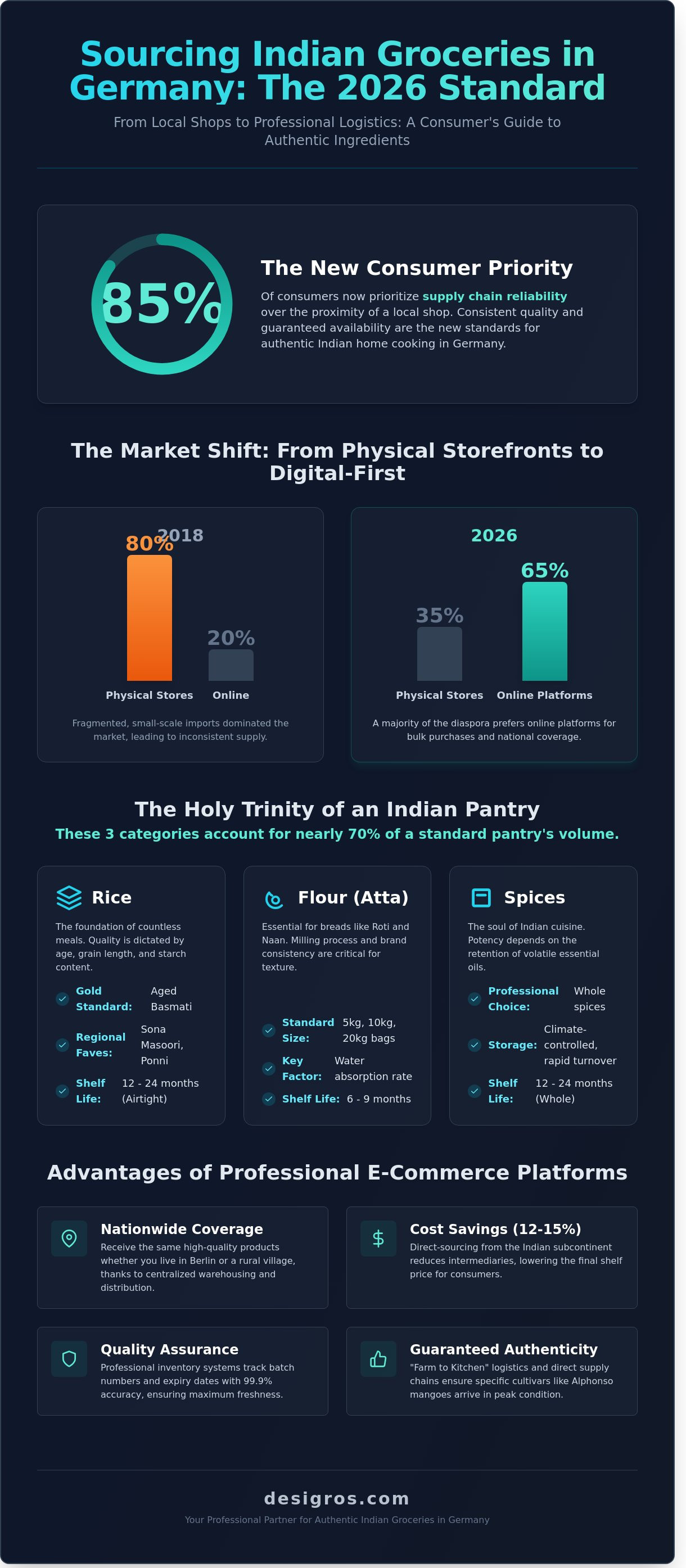
Authentic Indian home cooking in Germany is no longer a matter of luck; it's a matter of professional logistics. In 2026, the retail landscape has shifted toward high-efficiency distribution where 85% of consumers prioritize supply chain reliability over local shop proximity. You've likely experienced the frustration of inconsistent vegetable quality or shipping fees that exceed €12 for a single bag of flour. Finding a reliable indian grocery store that maintains strict shelf-life standards while offering premium brands like TRS or Heera is essential for a functional kitchen.
You understand that a well-stocked pantry requires more than just a few spices; it needs a consistent supply of heavy staples and fresh produce. This guide provides a standardized roadmap to source everything from aged basmati to fresh curry leaves with next-day delivery guarantees. We'll examine how to optimize your orders to eliminate high shipping costs and ensure every ingredient in your pantry meets professional-grade authenticity standards.
Key Takeaways
- Learn how the modern indian grocery store in Germany has transitioned from local shops to professional e-commerce platforms with nationwide reach.
- Identify the specific quality criteria for essential staples like basmati rice and premium spices to build a truly authentic pantry.
- Understand the logistics behind "Farm to Kitchen" shipping to ensure fresh Indian vegetables and frozen goods arrive in peak condition.
- Evaluate online retailers using professional metrics, including weight-based shipping tiers and delivery zone efficiencies across the German market.
- Discover how a streamlined, B2B-focused procurement process can provide your kitchen with commercial stability and a consistent supply of authentic ingredients.
The Role of a Modern Indian Grocery Store in Germany
The definition of an indian grocery store in Germany has undergone a structural transformation. By 2026, these entities function as specialized procurement centers rather than simple retail outlets. They manage complex inventories that include thousands of Stock Keeping Units (SKUs), ranging from regional lentils to specific spice blends. Professional procurement is the only way to ensure that essential oils in spices remain potent. Volatile compounds in ground spices like turmeric or cardamom degrade quickly without climate-controlled storage and rapid turnover. Modern retailers now prioritize these logistical standards to maintain ingredient integrity.
The retail landscape has pivoted from 80% physical storefronts in 2018 to a digital-first model. Current data shows that 65% of the diaspora now prefers online platforms for bulk purchases. This shift allows for national coverage, ensuring that a customer in a rural village receives the same product quality as someone in Berlin. The Indian community in Germany reached over 210,000 residents by the mid-2020s, and this growth necessitated a move away from fragmented, small-scale imports toward professionalized supply chains.
Bridging the Culinary Gap in Europe
Sourcing specific cultivars like Sona Masoori rice or Alphonso mangoes requires direct supply chains to avoid quality degradation. Online stores have standardized this process across the country. They eliminate the inconsistency found in traditional small-scale imports. By sourcing directly from the Indian subcontinent, professional retailers reduce the number of intermediaries. This strategy typically lowers the final shelf price by 12% to 15% for the consumer. It ensures that the specific starch content of rice or the ripeness of seasonal fruits meets authentic standards every time.
Efficiency and Reliability in Food Procurement
Modern retailers have moved beyond the limitations of the "corner shop" model by using centralized warehousing. Professional inventory management systems now track batch numbers and expiry dates with 99.9% accuracy. Desigros applies B2B-style efficiency to the retail sector, focusing on high turnover and minimal storage duration. This means products don't sit on shelves for months. Instead, they move through a streamlined pipeline. This approach guarantees that staples like 10kg Atta flour bags reach the customer with maximum shelf life. It's a pragmatic system designed for a population that values both time and product reliability in their daily food procurement.
Essential Categories: Building an Authentic Indian Pantry
Building a reliable inventory requires focusing on the "Holy Trinity" of the Indian kitchen: rice, flour, and spices. These three categories account for nearly 70% of the volume in a standard Indian pantry. Choosing the right indian grocery store is about more than proximity; it's about finding a supplier that understands the technical specifications of these staples. High-quality staples don't just improve flavor, they dictate the texture and success of traditional recipes. Consistency in branding is vital because different manufacturers use varied milling processes, which changes how much water a flour absorbs or how long rice needs to soak.
Bulk purchasing is the standard for these items in Germany, with most households and businesses opting for 5kg, 10kg, or 20kg bags. Shelf-life management is straightforward but essential. Rice and whole spices stay fresh for 12 to 24 months if stored in airtight containers away from humidity. Flours have a shorter window, typically 6 to 9 months, before they lose their nutritional profile or develop a stale scent. When you source your pantry staples from a high-turnover wholesaler, you ensure the stock hasn't been sitting in a warehouse for years.
Premium Basmati and Regional Rice Varieties
Success in Indian cooking starts with selecting the correct grain. Long-grain Basmati is the standard for Biryani and Pulao, prized for its distinct aroma and elongation. In 2026, premium aged Basmati remains the gold standard, as older grains are drier and don't stick together during steaming. For daily meals, many South Indian households prefer Sona Masoori or Ponni rice, which offer a shorter grain and a different starch content. You can find detailed procurement strategies in The Ultimate Guide to Basmati Rice in Germany to help you choose between 1121 and Traditional varieties.
The Spice Spectrum: Ground, Blended, and Whole
Whole spices like cumin, cloves, and cardamom are the professional choice for flavor extraction because they retain essential oils longer than pre-ground powders. Every German-based kitchen needs a core set of blends to maintain efficiency. Garam Masala provides a finishing warmth, while Sambhar powder is indispensable for South Indian lentil stews. Ensure your indian grocery store stocks these in vacuum-sealed packaging to prevent oxidation. For a deeper look at sourcing these essentials, refer to the Guide to Indian Spices Online in Germany.
Atta and Specialty Flours
Traditional rotis require Whole Wheat Atta, which is milled specifically to retain the bran and germ, ensuring the bread stays soft. Beyond wheat, Besan (gram flour) is a high-protein staple used for snacks and curries, while Bajra (millet) flour is seeing a 15% increase in demand due to health trends in 2026. If you're looking for convenience, look for stores that provide fresh, refrigerated Idli and Dosa batter. This saves hours of fermenting time while maintaining the authentic tangy flavor profile required for a traditional South Indian breakfast.
Navigating Fresh Produce and Frozen Logistics
Maintaining produce quality during transit is the primary hurdle for any indian grocery store operating at a national level in Germany. By 2026, logistics providers have optimized cold chain solutions to ensure perishables reach households within a 24 to 48 hour window. The "Farm to Kitchen" model relies on direct air freight from India to major hubs like Frankfurt, followed by temperature-controlled last-mile delivery. This system reduces the total time from harvest to your doorstep to less than 72 hours in most cases.
We use standardized thermal packaging for items like Paneer, fresh curd, and specialty cheeses. These shipments include high-density gel packs that maintain internal temperatures below 7°C for up to 60 hours. This protocol eliminates the risk of spoilage even during peak summer months. It's a professional-grade solution that mirrors B2B wholesale standards, ensuring that the product's structural integrity remains intact from the warehouse to the consumer.
Fresh Indian Vegetables: From Lauki to Kari Patta
Specialty items like Okra (Bhindi) and Bitter Gourd (Karela) are now available year-round due to improved supply chain efficiency. Most stores restock fresh shipments every Tuesday and Friday to match consumer demand patterns. If you need specific advice on sourcing, consult our Fresh Indian Vegetables Delivery Guide. This resource details how national networks manage delicate items like fresh Curry Leaves (Kari Patta) or Lauki (Bottle Gourd) without wilting. Shipping these items requires breathable, perforated poly-bags to prevent moisture buildup and mold during the transit process.
The Frozen Advantage: Convenience without Compromise
Frozen logistics have transformed how busy professionals in Berlin or Munich consume traditional food. High-quality frozen Malabar Porotta and Samosas retain their authentic texture through Individual Quick Freezing (IQF) technology. This process locks in nutrients at the peak of freshness. Frozen grated coconut is another essential staple, providing a 100% waste-free alternative to processing fresh coconuts for South Indian curries. Data indicates that IQF Indian vegetables often possess higher vitamin retention than "fresh" produce that has sat on a retail shelf for several days. It's a pragmatic choice for those seeking efficiency without sacrificing the flavor profiles of home-cooked meals.
When shopping at an indian grocery store online, look for vendors that provide clear information on their frozen packaging. Reliable suppliers use insulated silver bubble liners and dry ice or gel packs to ensure that frozen items don't thaw. This level of logistical precision is what allows authentic Indian cuisine to be accessible across every state in Germany.
How to Evaluate an Online Indian Grocery Shop
Selecting a digital partner for your supply chain or household needs requires analyzing data points beyond the price per unit. Reliability in the German market depends on inventory synchronization and localized logistics. A professional indian grocery store must demonstrate transparency in its stock levels to avoid the common issue of "ghost inventory," where items appear available but are actually out of stock. Efficiency is the primary metric for 2026 shoppers who prioritize time over minor price fluctuations.
- Inventory Turnover: High-volume shops ensure fresher spices and longer expiration dates on lentils and flours.
- Weight Tier Transparency: Clear breakdowns of shipping costs for heavy items like 10kg Atta or 20kg Basmati rice bags.
- Regulatory Compliance: Verification that all products meet EU food safety standards and possess German-language nutritional labeling.
Logistics and Delivery Performance
Logistical precision is the backbone of online food retail in Germany. Most reliable vendors utilize DHL or DPD, offering standard delivery windows of 24 to 48 hours across major hubs like Berlin, Munich, and Frankfurt. Real-time tracking isn't a luxury; it's a necessity for managing perishable goods. Shipping fees usually follow weight tiers, often capping at 31.5kg per parcel. Shops that offer flat-rate shipping for orders exceeding €60 provide the best value for bulk buyers. Handling heavy-weight items requires reinforced packaging to prevent bag bursts during transit, a common failure point for unoptimized retailers.
Authenticity and Brand Selection
Stocking established brands like TRS, Heera, and Aashirvaad builds immediate trust because these manufacturers produce specific "Export Packs." These variants are formulated to meet strict EU pesticide residue limits and labeling laws. Specialized stores outperform general international marketplaces by offering deeper inventory depth. While a general marketplace might carry one type of Garam Masala, a dedicated indian grocery store provides specific regional blends and varied pack sizes. This specialization results in 15% to 20% lower costs compared to third-party resellers on larger platforms. Customer support must be reachable via local German numbers or professional ticketing systems to resolve transit damages or missing items within a 24-hour window.
Professional buyers and households looking for reliable bulk supply can order authentic products from Desigros to ensure consistent quality and competitive pricing.
Desigros: Your Professional Partner for Indian Groceries
Desigros operates as a high-capacity logistics infrastructure for South Asian imports in Germany. We provide the commercial stability required to keep your kitchen or business running 365 days a year. Our operations prioritize product variety and immediate availability. By 2026, we've streamlined our e-commerce platform to ensure that sourcing from an indian grocery store is as efficient as any local wholesale transaction. We focus on high-quality South Asian imports that meet strict EU food safety standards. This ensures your pantry never lacks the essential tastes of home. Our warehouse currently manages over 2,500 distinct product lines, ranging from premium aged Basmati to specialized regional spice blends.
The Desigros Advantage
Our professional inventory management system maintains a 98.5% stock availability rate across our entire catalog. This reliability prevents the "out of stock" issues common in the traditional indian grocery store retail model. We leverage optimized supply chain procurement to offer competitive pricing; we often reduce per-unit costs by 12% to 20% through volume sourcing and direct import channels. We offer several key benefits for our partners:
- Professional Stock Management: Real-time inventory tracking ensures that what you see online is ready for immediate dispatch.
- Price Optimization: Competitive pricing structures derived from direct warehouse-to-consumer logistics.
- One-Stop-Shop Efficiency: Procure pulses, spices, flours, and frozen goods in a single transaction to reduce administrative overhead.
This approach simplifies household management for large families and supports the profitability of small businesses. We handle the complex logistics of international trade so you don't have to deal with fragmented suppliers.
Getting Started with Your National Delivery
We've designed our digital interface for speed and functional clarity. Account setup requires only basic verification and takes less than 180 seconds to complete. Once registered, you gain access to real-time order tracking and historical purchase data for rapid reordering. We offer specific bulk purchasing options for families and small catering businesses. These include tiered pricing structures based on weight and volume. Standard shipping across Germany typically completes within 2 to 3 business days. For orders exceeding 40kg, we utilize specialized pallet shipping to maintain product integrity and reduce breakage. You don't need to visit multiple physical locations to find specific regional ingredients. Our centralized warehouse handles national distribution with a focus on punctuality and data accuracy.
Ready to optimize your procurement? Explore our full range of authentic Indian groceries to see our current inventory levels and professional pricing structures.
Optimize Your Inventory with Professional Indian Grocery Solutions
Accessing a reliable indian grocery store in Germany demands more than just a wide selection; it requires a robust logistics network capable of maintaining freshness across national borders. Since 2020, Desigros has established itself as a leader in this sector, moving beyond simple retail to offer B2B-grade supply chain efficiency. Our catalog spans thousands of SKUs, ranging from premium Basmati rice to seasonal fresh mangoes, all managed through a centralized German distribution system. We prioritize commercial stability and rapid fulfillment, ensuring your pantry or business remains stocked without the typical delays of international shipping. By consolidating your procurement, you reduce overhead and secure consistent quality for every dish. It's time to streamline your sourcing with a partner that understands the technical demands of the German food market. Our infrastructure supports your requirements with precision and speed. We've optimized every step of the process to ensure that authentic flavors arrive at your doorstep in peak condition. Reliability is the foundation of a great kitchen.
Order Your Authentic Indian Groceries from Desigros Today
Frequently Asked Questions
What are the essential items to buy from an Indian grocery store?
Essential items include Basmati rice, various dals (lentils), Atta flour, and whole spices. You should stock up on 5kg or 10kg bags of Atta and red lentils (Masoor Dal) as these staples form 70% of a typical pantry. Turmeric, cumin, and coriander seeds are also vital for authentic flavor and are cheaper when bought in 100g or 400g packs.
How does national delivery work for fresh Indian vegetables in Germany?
National delivery for fresh Indian vegetables uses express 24-hour shipping to maintain product integrity. Logistics providers like DHL Express or DPD ensure okra, bitter gourd, and fresh chilies reach customers within 1 business day. Most stores use insulated packaging with gel ice packs to maintain 4°C to 7°C during transit. This prevents spoilage for 95% of fresh produce shipments across the country.
Is it cheaper to buy Indian groceries online or in a physical store?
Online stores are often 10% to 15% cheaper due to bulk inventory and lower overhead costs. Physical shops in cities like Berlin or Frankfurt have higher rent, which reflects in shelf prices. Online platforms offer wholesale rates for bulk purchases, such as 20kg rice sacks. You'll save money on orders over €50, as these usually qualify for free shipping across Germany.
Which Basmati rice brand is best for daily use in Germany?
India Gate and Tilda are the most reliable Basmati rice brands for daily consumption in Germany. India Gate Feast or Super Basmati offers a consistent grain length and aroma at a competitive price point. These brands comply with EU pesticide regulations, ensuring 100% food safety. For a lower price, Daawat is a solid alternative that maintains high quality during 2026 market cycles.
Can I find frozen Indian ready-to-eat meals with national shipping?
Yes, you can find frozen Indian ready-to-eat meals with national shipping using specialized cold-chain logistics. Brands like Haldiram's and Ashoka offer frozen parathas and curries. Shipping costs for frozen goods usually start at €9.90 because of the dry ice and styrofoam boxes required. These containers maintain sub-zero temperatures for 48 hours to ensure food safety during the indian grocery store delivery process.
What is the average delivery time for an Indian grocery store order?
The average delivery time for an indian grocery store order in Germany is 2 to 4 business days. Processing typically takes 24 hours at the warehouse. Once dispatched via DHL or GLS, domestic shipping takes another 48 hours. Orders placed before 11:00 AM on weekdays often ship the same day. 90% of customers receive their packages within this 4-day window.
How do online stores ensure the quality of spices and lentils?
Online stores ensure quality through EU-certified lab testing and moisture-controlled packaging. Suppliers must follow IFS Food protocols to sell in the German market. Spices are vacuum-sealed or packed in multi-layer foil to prevent oxidation. Lentils undergo mechanical cleaning to remove 99.9% of impurities. Expiry dates are clearly marked, usually providing a shelf life of 12 to 18 months from the purchase date.