

Over 65% of specialty grocers in Berlin and Munich reported a significant supply gap for tropical staples in late 2025. You've likely felt this frustration while searching for a firm, green plantain only to find bruised dessert bananas instead. It's difficult to maintain authentic culinary standards when the primary ingredient isn't readily available or correctly labeled in local German retail chains. We recognize that sourcing high-quality produce shouldn't be a gamble for your kitchen or your business.
Green Stage: The fruit is at its firmest. Starch content remains high, roughly 80% of the total composition, while sugar levels stay below 5%. This stage is functionally similar to a starchy potato. It doesn't yield to thumb pressure. Use green fruit for savory preparations like Tostones or chips where a rigid structure is required for deep frying. It holds its shape perfectly in stews and soups, and is a key ingredient in many Latin American cuisines, expertly prepared by restaurants like El Gringo Loco.
This guide provides a clear roadmap for 2026 to help you secure fresh deliveries anywhere in Germany, from Hamburg to Stuttgart, while mastering the nutritional science of resistant starch. You'll also find precise Kerala-style recipes that transform this starch-heavy fruit into a professional-grade dish. We're covering the logistics, health data, and traditional preparation methods you need to succeed in the current market. Whether you're looking for a reliable B2B partner or authentic cooking techniques, this overview delivers the facts without the fluff.
Key Takeaways
- Understand the botanical and culinary distinctions between the plantain and standard dessert bananas to optimize your professional food sourcing.
- Analyze the dense nutritional profile of this starchy vegetable, including high levels of Potassium and Vitamin A for sustained energy release.
- Explore authentic South Indian preparation methods for 'Nendran' varieties, covering every stage from savory green to sweet roasting stages.
- Apply our ripeness decision framework to ensure you select the correct texture and flavor profile for specific commercial kitchen applications.
- Discover how to overcome local sourcing challenges in Germany by leveraging specialized wholesale logistics for fresh tropical imports.
What is a Plantain? Understanding the Starchy Powerhouse
The Cooking banana (plantain), scientifically classified as Musa paradisiaca, serves as a primary caloric source for approximately 500 million people across Africa, Asia, and Latin America. Unlike the common Cavendish banana found in German supermarkets like Edeka or Rewe, the plantain functions as a starchy vegetable rather than a fruit. It remains firm even when fully ripe because its genetic makeup prioritizes starch storage over sugar accumulation. Raw consumption is virtually impossible due to high levels of tannins and resistant starch that leave a chalky residue on the palate. Applying heat is mandatory to break down these complex carbohydrates into digestible, flavorful components. In 2023, import data showed a steady increase in demand for these tropical starches in Central Europe, reflecting the growing diversity of German home cooking.
The Botanical Origin and Varieties
These plants originated in the tropical regions of Southeast Asia before migrating to the Indian subcontinent around 3,000 BCE. Modern cultivation distinguishes between two primary groups: French varieties and Horn varieties. French types produce large bunches with many smaller fruits, while Horn types yield fewer but significantly larger, curved fruits. Producers in South India, particularly in states like Kerala, utilize nutrient-rich alluvial soils to achieve a 25% higher mineral density compared to mass-market varieties. These regions benefit from 2,500mm of annual rainfall, creating the ideal humidity for premium starch development before the produce is shipped to European logistics hubs.
Plantain vs. Banana: A Comparative Overview
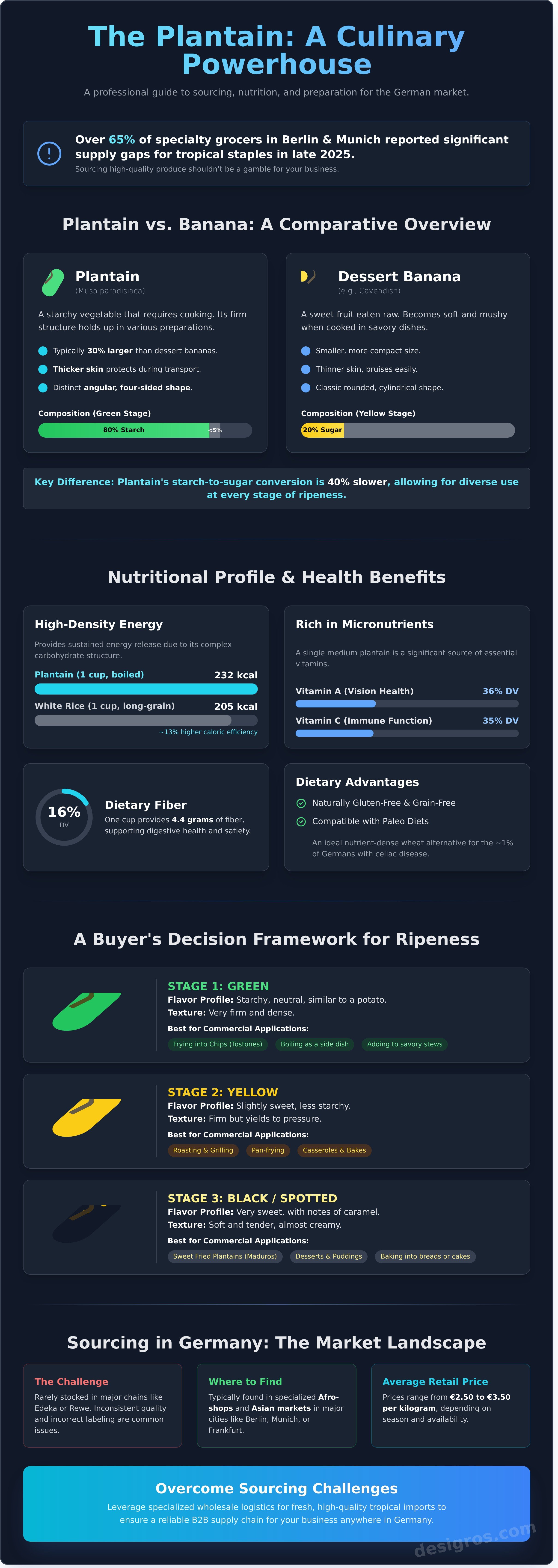
Identifying a plantain requires looking for specific physical markers. They're typically 30% larger than dessert bananas and possess a distinct angular, four-sided shape rather than a rounded cylinder. The skin is noticeably thicker, acting as a protective barrier during long-distance transport. This thickness ensures the fruit survives the 14-day shipping window from tropical climates to German ports like Hamburg without bruising the internal pulp.
The chemical composition defines the culinary application. A green cooking banana contains roughly 80% starch and less than 5% sugar. In contrast, a yellow dessert banana contains approximately 20% sugar at the same stage of maturity. During the ripening process, enzymes like amylase convert starch into sugar, but in cooking varieties, this conversion happens at a rate 40% slower than in standard bananas. This slow transition allows the fruit to be used at various stages of ripeness, from the potato-like green stage to the sweet, caramelized black stage.
You shouldn't substitute one for the other in your recipes. Using a dessert banana in a savory Caribbean stew results in a mushy, overly sweet mess that lacks the necessary structural integrity. Conversely, a green cooking banana won't soften in a fruit salad or smoothie. In Germany, retail prices for these starchy powerhouses often hover between €2.50 and €3.50 per kilogram depending on the season and local availability. German consumers usually find them in Afro-shops or specialized Asian markets in cities like Berlin, Munich, or Frankfurt, where they're sold by weight or in small bundles. Whether fried into chips or boiled as a side dish, they provide a reliable, gluten-free carbohydrate alternative for any professional or home kitchen.
Nutritional Profile and Health Benefits of Plantains
Plantains serve as a high-density energy source that outperforms many common grains in caloric efficiency. One cup of sliced, boiled plantain contains approximately 232 calories, which is roughly 13% higher than the 205 calories found in a cup of long-grain white rice. This energy isn't just a quick spike; it's released steadily due to the complex carbohydrate structure of the fruit. They're an efficient staple for individuals requiring sustained physical output throughout the day.
A single medium plantain provides roughly 35% of the Daily Value (DV) for Vitamin C and 36% of the DV for Vitamin A based on 2023 nutritional standards. These micronutrients are essential for immune function and vision health. Since they're naturally grain-free, they fit perfectly into gluten-free and paleo diets. This is particularly relevant in Germany, where approximately 1% of the population is diagnosed with celiac disease and seeks nutrient-dense wheat alternatives.
Dietary fiber is another critical component of this fruit's profile. One cup provides 4.4 grams of fiber, which represents about 16% of the recommended daily intake. High fiber content supports digestive transit and increases satiety, helping to prevent overeating. Business owners can source these nutrient-dense items via the Desigros wholesale platform to meet growing consumer demand for healthy starch alternatives.
The Power of Resistant Starch
Green stages of the fruit are particularly rich in resistant starch, a carbohydrate that resists digestion in the small intestine. It ferments in the large intestine, acting as a prebiotic that feeds beneficial gut bacteria. Studies from 2022 indicate that resistant starch helps stabilize blood glucose levels by slowing down sugar absorption. When you learn how to cook plantain, you'll find that boiling then cooling the fruit increases this starch content through retrogradation, making it an ideal ingredient for healthy meal prepping.
Heart Health and Blood Pressure Regulation
High potassium levels are critical for managing hypertension. A single fruit contains about 913 mg of potassium, which helps the body excrete excess sodium through urine and eases tension in blood vessel walls. Vitamin B6 plays a secondary role by regulating homocysteine levels, a protein linked to heart disease when found in high concentrations. By 2026, the high potassium levels in plantains will remain a primary dietary recommendation for individuals looking to naturally lower blood pressure and improve overall cardiovascular resilience.
- Potassium: 913 mg per cup (supports electrolyte balance).
- Vitamin C: 21.8 mg per cup (boosts collagen production).
- Magnesium: 57 mg per cup (aids muscle function).
Authentic Indian Culinary Applications: From Kerala to your Kitchen
The Nendran cultivar is the cornerstone of South Indian agriculture. In Kerala, this variety represents a significant portion of the local economy, with the state producing over 450,000 tonnes of these fruits annually. German retailers and home cooks can find these in specialty markets in cities like Berlin or Frankfurt for approximately €2.50 to €3.80 per kilogram. The cultural significance of this fruit is most visible during the Onam festival, where it's served in various forms on a traditional Sadya leaf. Indian cuisine utilizes the fruit at every stage of maturity. Green, starchy fruits are treated like vegetables. Yellow, ripe fruits offer a balanced sweetness for snacks. Black, overripe fruits provide the concentrated sugars necessary for heavy desserts.
Successful preparation depends on three essential pairings: cold-pressed coconut oil, black mustard seeds, and fresh curry leaves. These ingredients create the authentic flavor profile found in the Malabar region. Beyond the fruit, the leaves play a functional role in the kitchen. They serve as biodegradable plates and heat-resistant wrappers for 'Potli' or 'Pollichathu' cooking. When used for steaming, the leaf imparts a subtle, tea-like aroma to the food while retaining all moisture within the parcel.
Savory Delights: Thoran, Erissery, and Chips
Kerala plantain chips are a high-demand export product known for their distinct crunch. To replicate these at home, slice green fruits into 1mm rounds using a mandoline. Soak the slices in a solution of 500ml water, 5g turmeric, and 10g salt for 15 minutes. After drying them thoroughly, deep-fry the slices in 180°C coconut oil until the bubbling subsides. This specific process ensures a shelf life of 30 days in airtight packaging. For a daily meal, 'Vazhakka Mezhukkupuratti' is a standard stir-fry. Cube the green fruit into 1cm pieces and sauté with crushed garlic, turmeric, and bird's eye chilies. Indian cooking also follows a strict zero-waste philosophy. The inner core of the stem and the purple flower (Kudappan) are chopped and transformed into high-fiber 'Thoran' with grated coconut, ensuring 100% of the plant is utilized.
Sweet Preparations: Pazham Pori and Halwa
Pazham Pori, or plantain fritters, is the most common tea-time snack in South Indian households. The secret to the perfect texture lies in the batter ratio: 200g all-purpose flour to 50g rice flour. The rice flour provides the necessary crispness that lasts even after the fritter cools. Use fruits with yellow skins and a few black spots for the best sugar-to-starch balance. For those seeking a healthier alternative, steaming the whole fruit in its skin for 10 minutes is a traditional breakfast staple. This method preserves the dense fiber and micronutrients effectively. You can review the nutritional benefits of plantains to understand how steaming maintains higher potassium levels than boiling. When the fruit turns completely black, it's used for 'Pazham Halwa'. This involves mashing the pulp and slow-cooking it with ghee and jaggery for 45 minutes until it reaches a jelly-like consistency. This preparation is a shelf-stable way to use surplus stock that's too ripe for frying.
Plantain Ripeness Stages: A Buyer’s Decision Framework
Successful cooking starts with selecting the correct raw material. In the German market, where a kg of plantain typically retails between 2.50€ and 3.80€, choosing the wrong ripeness stage leads to food waste and poor texture. You must categorize your purchase into three distinct physiological phases based on starch-to-sugar conversion rates.
Green Stage: The fruit is at its firmest. Starch content remains high, roughly 80% of the total composition, while sugar levels stay below 5%. This stage is functionally similar to a starchy potato. It doesn't yield to thumb pressure. Use green fruit for savory preparations like Tostones or chips where a rigid structure is required for deep frying. It holds its shape perfectly in stews and soups.
Yellow Stage: As the peel transitions to yellow, enzymes begin breaking down starches into simple sugars. The texture softens significantly. Sugar content rises to approximately 10% or 15%. This stage offers a balanced profile, making it the standard choice for roasting or pan-searing. It provides a caramelized exterior while maintaining a semi-firm core.
Black Stage: Often mistaken for spoiled fruit by inexperienced buyers, a black peel indicates peak ripeness. The pulp is very soft and the sugar concentration exceeds 20%. This is the only stage suitable for traditional desserts or baking. The natural sweetness is so intense that additional sugar is rarely necessary in recipes. If the fruit feels mushy or smells fermented, it has moved past this stage into spoilage.
You can manage your inventory effectively by controlling the environment. To accelerate ripening, place the fruit in a paper bag with an apple at 22°C; the ethylene gas will speed up the process by 48 hours. To slow ripening, store the fruit in a cool, dark place around 13°C. Avoid standard refrigerators for ripening, as temperatures below 10°C cause chilling injuries that prevent the fruit from ever becoming sweet.
Cooking Techniques for Every Stage
Steaming is superior to boiling for nutrient retention. Laboratory tests show that steaming preserves 15% more Vitamin C and potassium than boiling in open water. For a modern approach, air-frying at 180°C for 12 minutes offers a 80% reduction in fat compared to traditional deep frying. If you're making Fufu or mashes, boil green fruit for 20 to 25 minutes until a fork easily pierces the center. This ensures the starch is fully gelatinized for a smooth, elastic texture.
Storage and Preservation Tips
Logistics matter when handling bulk quantities. Keep fruit at room temperature until it reaches your desired ripeness. Once it hits the black stage, you can refrigerate it for 3 to 5 days to prevent fermentation. For long-term solutions, peel and slice the fruit before freezing at -18°C. Frozen slices maintain their quality for 6 months. Another professional method involves dehydrating thin slices at 55°C for 10 hours. This creates a shelf-stable product that you can grind into gluten-free flour, a high-value ingredient in modern German kitchens.
Professional kitchens and retailers require a steady supply of high-quality tropical produce. Explore our wholesale plantain inventory to secure competitive pricing and reliable delivery for your business needs.
Sourcing Fresh Plantains in Germany: The Desigros Advantage
Finding a high-quality plantain in a standard German supermarket often results in disappointment. Most local retailers focus on Cavendish bananas, leaving tropical cooking staples as an afterthought. Desigros solves this by operating a direct import model. We cut out three layers of intermediaries to bring produce from the farm to our Frankfurt warehouse within 72 hours of arrival in Europe. This streamlined supply chain eliminates the typical shelf-life issues found in smaller ethnic grocery stores where turnover might be slower.
Our logistics network covers two distinct tiers to ensure maximum efficiency. Local customers in the Frankfurt am Main area benefit from our dedicated fleet for rapid delivery. For the rest of Germany, we utilize specialized shipping partners to reach Berlin, Munich, Hamburg, and beyond. Whether you need a single 1kg batch for a family dinner or an 18kg wholesale crate for a catering business, our inventory management ensures stock availability exceeds 95% year-round. We provide the following advantages to our partners:
- Volume-based pricing: Wholesale rates apply to bulk orders, reducing costs by 15% to 20% compared to retail.
- Direct Sourcing: We maintain relationships with growers to bypass traditional auction houses.
- Standardized Grading: Every shipment follows strict size and firmness specifications.
- Centralized Hub: Our Frankfurt location acts as a gateway for the entire DACH region.
How to Order Fresh Vegetables Online
The Desigros webshop functions as a high-speed procurement tool. You select your items, and our team initiates the picking process immediately. We use reinforced, insulated packaging for temperature-sensitive goods to withstand German weather conditions. Orders placed before 11:00 AM Monday through Thursday typically qualify for next-day dispatch. This speed preserves the starch content of the plantain, ensuring it arrives in the exact ripening stage you require for your specific recipes. We don't let produce sit in transit over weekends, maintaining a strict fresh-only policy.
The Desigros Commitment to Quality
Every shipment undergoes a three-point inspection before it leaves our facility. We check for skin integrity, pulp firmness, and core temperature. This rigor supports the 200,000 plus members of the Indian and African communities in Germany who rely on us for authentic flavors. It's our mission to provide the same quality you'd find in a tropical market. You can Explore our range of Fresh Indian Vegetables to find complementary ingredients like fresh ginger, bird's eye chilies, or okra. Our goal is a 0% waste policy at the warehouse level, achieved through precise demand forecasting and rapid stock rotation. Order your fresh plantains today for nationwide delivery and experience professional-grade sourcing that brings the world's best produce directly to your kitchen.
Optimize Your Plantain Supply Chain in 2026
Plantains are more than a dietary staple; they're a high-margin inventory item for professional kitchens and retailers across Germany. With 31 grams of carbohydrates and 490mg of potassium per 100g serving, this starchy powerhouse meets the growing demand for gluten-free, nutrient-dense ingredients. Success in the commercial sector depends on understanding the three ripeness stages to minimize food waste and maximize culinary utility. Whether you're preparing Kerala-style chips or sweet maduros, the quality of your raw material determines your final product's value.
Desigros provides the professional infrastructure required for sourcing authentic South Asian plantain varieties. We manage the complex logistics so you don't have to. Our fulfillment process includes temperature-controlled packaging to maintain a consistent 13°C during transit, effectively preventing premature ripening. We provide next-day national shipping for all orders processed by 12:00 PM; this ensures your stock remains fresh and shelf-ready upon arrival. It's the most efficient way to maintain a steady supply of exotic produce without the risk of local shortages.
Shop Fresh Plantains for Delivery Across Germany
Start scaling your inventory with a partner that prioritizes commercial stability and logistical precision.
Frequently Asked Questions
What is the difference between a plantain and a banana?
Plantains are larger, starchier, and lower in sugar than traditional dessert bananas. They possess thicker skins and maintain a firm texture during high-heat cooking processes. A typical plantain contains 31 grams of carbohydrates per 100 grams, while a Cavendish banana contains about 23 grams. You'll find them sold in the vegetable section because they function as a culinary starch rather than a sweet fruit.
Can you eat plantains raw?
You shouldn't eat raw plantains because their high starch levels make them bitter and difficult for the human body to digest. Unlike yellow bananas, the starches in a plantain don't fully convert to sugars until the fruit is extremely ripe or exposed to heat. Cooking breaks down these complex carbohydrates, which transforms the texture and makes the nutrients bioavailable for 100% safe consumption.
How do I know when a plantain is ripe enough to cook?
You can cook a plantain at any stage of ripeness depending on your specific recipe requirements. Green plantains are very firm and savory, making them the best choice for fried chips or tostones. When the skin is 80% black, the fruit is sweet and soft, which is perfect for caramelizing. A ripe plantain feels slightly soft when you press the skin, similar to a mature avocado.
Where can I buy fresh plantains in Germany?
You can purchase fresh plantains at international grocery stores or through professional wholesale platforms like Desigros. In the German market, prices typically fluctuate between 2.50 € and 4.00 € per kilogram based on current import costs and seasonal availability. Most Asian and African specialty markets in major hubs like Frankfurt or Hamburg maintain a consistent year-round stock for local consumers and businesses.
Are plantains healthier than potatoes?
Plantains provide more fiber and higher concentrations of vitamins A and C than standard white potatoes. A 100 gram serving of plantain delivers 2.3 grams of fiber, whereas the same amount of potato offers roughly 2.1 grams. They also contain 499 mg of potassium per 100 grams, which outperforms the 421 mg found in potatoes. Both options serve as excellent gluten-free complex carbohydrates for balanced diets.
How do I store plantains to keep them from ripening too fast?
Store your plantains in a cool, dry environment at a temperature of 12 to 14 degrees Celsius to effectively slow the ripening cycle. If you place them in the refrigerator, the skin will darken quickly, but the internal flesh remains firm for up to 7 days. For long-term inventory management, peel and slice the fruit before freezing the pieces in airtight bags for up to 90 days.
What are the best Indian spices to use with plantains?
Turmeric, cumin, and black mustard seeds are the most effective spices for enhancing the earthy flavor of plantains. In traditional South Indian preparations, cooks use 1 teaspoon of chili powder and 0.5 teaspoons of turmeric for every two fruits. Adding fresh curry leaves and a small pinch of asafoetida during the frying process creates a professional flavor profile that complements the dense starch perfectly.
Does Desigros deliver fresh vegetables to Berlin and Munich?
Yes, Desigros operates a robust logistics network that delivers fresh produce to Berlin, Munich, and all other major German metropolitan areas. Our wholesale distribution system ensures that orders reach your business location within 24 to 48 hours of placement. We prioritize consistent supply chains to ensure that professional kitchens and retailers have immediate access to tropical imports and essential bulk ingredients at competitive prices.