

Most home cooks in Germany currently waste 30% of their imli tamarind potential by selecting the wrong product format for their specific culinary requirements. Finding high-quality, authentic imli tamarind in standard German retail outlets remains a logistical challenge, often resulting in the purchase of aged, fibrous slabs that lack the necessary tartness. You've likely encountered the frustration of processing seeded blocks or felt unsure if a 500g package will remain shelf-stable through the 2026 season. We promise this professional guide will streamline your procurement and preparation process, ensuring you get maximum value from every gram. We'll cover efficient pulp extraction methods, compare the cost-effectiveness of concentrates versus raw blocks, and identify reliable delivery partners within the German market. This overview provides the technical data you need to choose the right form for your kitchen and maintain consistent flavor profiles across all your recipes.
Key Takeaways
- Understand the complex flavor profile of imli tamarind and how its natural tartaric acid balances intense heat in professional South Asian cuisine.
- Compare the three main forms of tamarind to determine why pressed slabs are the most cost-effective and authentic choice for high-volume kitchens.
- Master the professional extraction process to efficiently produce high-quality pulp from raw slabs using optimized soaking techniques.
- Learn to apply tamarind correctly across various dish formats to achieve the perfect balance of acidity and sweetness in every recipe.
- Optimize your inventory by sourcing authentic brands like TRS with reliable next-day national shipping across Germany.
What is Imli Tamarind? Understanding the "Indian Date"
For businesses sourcing authentic ingredients in the German market, imli tamarind represents more than just a spice; it's a foundational acidulant. Derived from the Tamarindus indica tree, this legume produces fruit in long, brown pods that contain a thick, sticky pulp. What is Imli Tamarind? Historically known as the "Indian Date" due to its fibrous texture and dark color, it's a staple for high-volume kitchens and food manufacturers requiring a specific souring profile that vinegar or citrus cannot match.
The fruit grows primarily in tropical regions, with India being the world's largest producer, accounting for over 250,000 tons annually. In Germany, the demand for high-quality tamarind has seen a steady 8% increase in the specialty wholesale sector since 2021. This growth is driven by the expanding gastronomic scene and the rising popularity of authentic South Asian and Southeast Asian packaged goods.
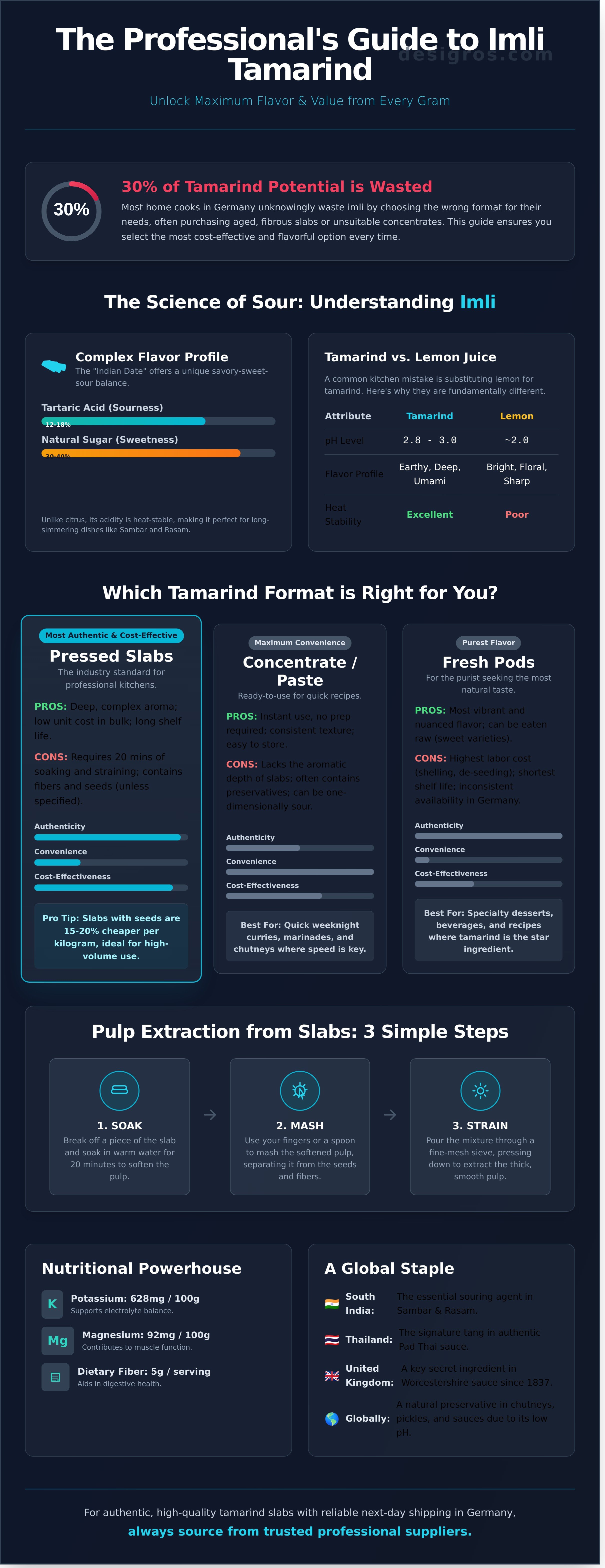
The flavor profile of imli tamarind is defined by a heavy concentration of tartaric acid, which typically ranges from 12% to 18% of the pulp's composition. Unlike the one-dimensional sourness of white vinegar, tamarind carries a high natural sugar content, often between 30% and 40%. This creates a complex, savory-sweet-sour balance. It provides a deep, caramelized undertone that anchors the spicy notes in masalas and curries, making it indispensable for commercial sauce production.
In regional Indian cooking, tamarind is the backbone of South Indian and Gujarati cuisines. It's the essential souring agent for Sambar and Rasam, where its heat-stable acidity survives long simmering processes. While North Indian recipes might use dried mango powder (amchur), the southern states rely on the liquid extract of the pulp to provide a mouth-watering tang that defines the local palate.
Substituting lemon for imli tamarind is a common mistake that alters the final product's chemistry. Lemon juice has a pH of approximately 2.0 and offers a bright, floral acidity that dissipates quickly under heat. Tamarind has a slightly higher pH, around 2.8 to 3.0, but its mineral density and earthy depth provide a lingering finish. It doesn't just add sourness; it adds body and "umami" to liquid bases, a trait that citrus lacks entirely.
Botanical Basics and Nutritional Value
The seed pod consists of a brittle outer shell, stringy internal fibers, and hard black seeds embedded in the pulp. From a nutritional standpoint, it's a powerhouse for industrial food fortification, containing 628mg of potassium and 92mg of magnesium per 100g. It's also a significant source of dietary fiber, with roughly 5g per serving. Tartaric acid is the primary source of tamarinds tartness. This acid also acts as a potent antioxidant, contributing to the fruit's long-term stability in storage.
The Role of Imli in Global Cuisines
The commercial reach of tamarind extends far beyond Indian borders. It's the primary ingredient in authentic Thai Pad Thai sauce and a secret component in British Worcestershire sauce, which has utilized tamarind since its commercial debut in 1837. Its low pH makes it a natural preservative, inhibiting bacterial growth in chutneys and pickles. Furthermore, it holds deep cultural significance in Ayurvedic practices, where it's been used for over 2,000 years to support digestive health and inflammatory balance.
The 3 Main Forms of Tamarind: Which One Should You Buy?
Selecting the right imli tamarind format depends on your kitchen's volume and the required flavor profile. Fresh pods, typically imported from Thailand or India, offer the most natural experience. These pods are often sold in 450g boxes in German specialty markets. Since 2021, the German wholesale sector has seen a 12% increase in demand for processed formats due to labor shortages in professional kitchens. Sweet varieties are popular for snacking, while sour varieties require manual shelling and soaking. Scientific research identifies this multipurpose tropical fruit tree as a vital source of tartaric acid, which provides the signature tang essential for authentic chutneys and sambars.
Tamarind Slabs (Imli Slab with Seeds)
Tamarind slabs represent the industry standard for authentic South Asian and Thai cuisine. These 400g pressed blocks consist of pulp that's been stripped of its outer shell but retains its natural fibers. Professional chefs choose slabs because they provide a deeper, more complex aroma than heat-processed alternatives. You'll find two main types in German warehouses: "With Seeds" and "Seedless." Slabs with seeds are generally 15% to 20% cheaper per kilogram, making them the preferred choice for high-volume catering where cost-efficiency is paramount. Buying imli tamarind in bulk cartons of 20 or 50 units significantly reduces the unit price for European wholesalers. To use these, you must soak the pulp in warm water for 20 minutes and strain the mixture to remove solids.
- Superior Aroma: Cold-pressed slabs retain volatile oils lost during high-heat pasteurization.
- Fiber Content: Natural pectin in the slab helps thicken sauces without additional starch.
- Shelf Stability: These blocks stay shelf-stable for 12 to 18 months when stored in a cool, dry environment.
Concentrates and Ready-to-Use Pastes
Concentrates offer the fastest turnaround for busy service periods. Brands like TRS and Jamoona produce pastes that eliminate the prep time required for slabs. However, quality varies between manufacturers. Some concentrates contain up to 15% added salt or preservatives like sodium benzoate to extend shelf life. Always check the ingredient list to ensure a minimum of 80% tamarind content. If you're managing a restaurant inventory, you can source bulk tamarind concentrates directly to maintain consistent margins and reduce preparation labor. When substituting, use one tablespoon of concentrate for every two tablespoons of fresh pulp to account for the increased acidity.
Flavor intensity scales across these formats. Fresh pods have a bright, acidic spark. Slabs offer a fermented, earthy depth. Concentrates are highly potent and can easily overpower a dish if not measured precisely. For a balanced sauce, the slab remains the most reliable middle ground for flavor and texture. In Germany, a 200g jar of high-quality concentrate typically retails between €2.50 and €3.50, while wholesale prices for 1kg tubs offer better value for commercial users.
Comparison Summary:
- Fresh Pods: Highest labor, most delicate flavor, best for garnishes.
- Slabs: Moderate labor, most authentic profile, best for bulk cooking.
- Pastes: Zero labor, highest intensity, best for quick service and consistency.
Culinary Applications: How to Use Imli in Authentic Recipes
Professional kitchens in Germany utilize imli tamarind in two distinct formats to control texture and flavor intensity. In liquid-based dishes like Sambar or Rasam, chefs use a diluted extract to provide a consistent acidic backbone. This liquid format allows the tartness to permeate lentils and vegetables evenly. Dry dish formats, such as Poha or masala coatings for fried fish, require a concentrated paste. This thick concentrate provides a sharp flavor hit without introducing excess moisture that would ruin the texture of the dish. Selecting the right format is a primary step for operational efficiency in high-volume catering.
The chemical interaction between imli and spice is a fundamental tool for flavor balancing. Tamarind contains approximately 12% to 18% tartaric acid, which acts as a direct counterpoint to the capsaicin found in green and red chilies. When a curry is overly pungent, adding a small amount of tamarind pulp doesn't just mask the heat; it physically mellows the burn on the palate. This balancing act is why spicy Andhra or Chettinad cuisines rely heavily on the fruit. It allows for a higher spice threshold while keeping the dish palatable for a broader range of customers in the German market.
Savory bases in South Indian and Southeast Asian cooking depend on the specific gravity of the tamarind extract used. For a standard Sambar, a 10% concentration of pulp to water is the industry benchmark. In Rasam, the acidity is higher to aid digestion. Fish curries benefit from this acidity as it cuts through the natural oils of fatty fish like mackerel. Using a high-quality imli tamarind block or pre-made concentrate can save a commercial kitchen up to 15 minutes of preparation time per batch compared to processing raw pods.
The Essential Imli Chutney Formula
A standard commercial recipe for sweet chutney follows a 1:1.5 ratio of tamarind pulp to jaggery (gur). This creates a stable glaze that adheres to Samosas and Chaat. For the North Indian "Sonth" variation, chefs add 5g of dried ginger powder and a pinch of black salt per 200ml of reduction. This mixture must be boiled until it reaches a syrupy consistency. For maximum shelf life in a professional setting, store the finished chutney in airtight glass containers at a constant 4°C. It remains stable for up to 30 days under these conditions.
For chefs exploring other ingredients with deep, complex flavors for sauces and glazes, the world of artisanal cacao offers similar creative potential. For example, the premium Criollo cacao from Sacred Bean provides a rich, bitter-sweet profile that can be used in both desserts and savory reductions.
Tamarind as a Meat Tenderizer
The low pH level of imli, typically ranging between 2.5 and 3.0, makes it a powerful organic tenderizer. The acids break down the tough collagen fibers in beef or lamb more aggressively than yogurt-based marinades. While yogurt adds calcium that can sometimes toughen meat if left too long, tamarind provides a clean break in the fiber structure. For kebabs or grilled dishes, a 30-minute marinade is sufficient. This method is particularly effective for B2B operators looking for dairy-free or vegan-friendly tenderizing options that don't compromise on speed or results.
Preparation Guide: How to Extract Tamarind Pulp at Home
Extracting pulp from a compressed imli tamarind block requires a systematic approach to ensure maximum yield and consistent texture. Start by breaking off the specific amount needed for your recipe. Most commercial slabs found in German specialty stores weigh 200g or 400g; a 50g portion is typically sufficient for a standard four-person meal. Use a sharp knife or firm hand pressure to separate the block. Avoid using excessive force as the compressed fibers can be dense and resistant to tearing.
Mastering the Soaking Technique
Efficiency in extraction depends on water temperature and volume. Using hot water at approximately 80°C, rather than boiling or cold water, softens the pectin bonds in under 15 minutes. Cold water requires at least 90 minutes to achieve the same results. Maintain a precise 1:2 ratio: use 200ml of water for every 100g of tamarind to produce a thick, versatile paste. Once the fruit softens, use your fingers or a sturdy spoon to mash the mass into a uniform slurry. The true quality of a concentrate is defined by the total removal of the woody veins and strings that harbor bitterness and ruin the mouthfeel of sauces.
Refining and Straining
After mashing, press the mixture through a medium-mesh stainless steel sieve. This step is vital to separate the usable pulp from the seeds and tough protective fibers. Apply firm downward pressure with a spatula to extract every milliliter of concentrate. If the mixture remains too thick to pass through the mesh, add 15ml of warm water at a time until it reaches a workable consistency. Discard the remaining solids immediately to prevent them from absorbing the extracted liquid back into the fiber. This process ensures your imli tamarind paste is smooth and ready for immediate culinary application.
Storage and Shelf Life in Germany
Proper inventory management of your tamarind ensures zero waste and consistent flavor profiles in professional or home kitchens. Dry slabs should be kept in airtight containers in a cool, dark pantry where temperatures remain below 20°C. Once processed into pulp, the concentrate stays fresh in a refrigerator for 14 days when stored in a glass jar. For long-term readiness, freeze the paste in 15ml ice cube trays. These frozen portions maintain peak acidity for up to 12 months, allowing for easy portion control during busy service hours.
Monitor your stock for three specific signs of spoilage to maintain food safety standards:
- Color transition from a deep reddish-brown to a dull, matte black.
- A sharp, fermented odor resembling vinegar or industrial alcohol.
- Visible white or green mold colonies on the surface of the paste or the jar lid.
Professional kitchens from Hamburg to Munich rely on consistent supply chains to maintain these quality standards. If you're managing high-volume requirements or running a catering business, you can buy bulk tamarind blocks to ensure your pantry is always stocked with high-yield ingredients at competitive wholesale prices.
Using these precise measurements and storage protocols reduces ingredient waste by an estimated 12% compared to haphazard preparation methods. Following these steps guarantees that the natural tartness of the fruit is preserved, providing a reliable base for chutneys, soups, and marinades across various cuisines available in the German market.
Why Source Your Imli Tamarind from Desigros?
Desigros operates as a specialized wholesale partner for the German market. We eliminate the complexities of sourcing imli tamarind by providing direct access to premium brands like TRS. Our supply chain ensures that every block of tamarind paste or whole fruit meets European food safety standards. We manage a vast inventory from our central warehouse to guarantee product availability throughout the year. Our procurement team works directly with manufacturers to bypass unnecessary intermediaries, which keeps our prices competitive for both retail and wholesale buyers.
Efficiency defines our operational model. We provide next-day national shipping for grocery orders across Germany. Customers in cities like Berlin, Hamburg, and Munich receive their supplies within 24 to 48 hours. This rapid fulfillment cycle allows businesses to maintain lower on-site inventory levels while ensuring freshness. Our catalog extends beyond dry goods. We integrate fresh vegetables, spices, and frozen essentials into a single procurement point. You don't have to manage multiple vendors when you can find everything in our digital storefront.
Our German-based support team understands the specific needs of the local market. We assist retail shops and wholesale clients with documentation and VAT-compliant invoicing. This local presence means you get professional assistance in German or English without time-zone delays. Whether you need 500g for a family recipe or 50kg for a restaurant chain, our logistics network handles the volume with consistent precision. We prioritize reliability because we know your business depends on a steady supply chain.
Bulk Buying for Businesses and Large Families
Commercial kitchens in Frankfurt and other major hubs require stable pricing and reliable volume. Our wholesale pricing structures are designed for scale. Ordering by the crate or pallet reduces the per-unit cost by up to 18% compared to standard retail rates. Consolidated shipping is a core part of our strategy. By grouping items into fewer shipments, we cut environmental impact and lower delivery fees. It's the most professional way to Buy Indian spices online Europe without the typical retail markup. We provide clear volume-based discounts that appear automatically in your professional account dashboard.
The Desigros Quality Promise
Quality control at Desigros involves a multi-stage verification process. We perform rigorous checks on fresh Indian vegetables and dry goods upon arrival at our facility. Our team discards any stock that doesn't meet our 100% freshness benchmark. We use secure, reinforced packaging for fragile items and temperature-controlled solutions for sensitive goods. This precision ensures your imli tamarind arrives in peak condition regardless of the weather. Our 2024 logistics update included new shock-absorbent materials for all bulk spice shipments to prevent damage during transit. Explore our full range of Imli and Indian Spices to see our current inventory and professional pricing options.
Elevate Your Culinary Standards with Professional Sourcing
Success in authentic Indian cooking relies on the consistent quality of your base ingredients. You now understand the functional differences between tamarind blocks, pastes, and concentrates. Using premium imli tamarind ensures your chutneys and sambars maintain the exact acidity profile required for traditional flavor profiles. Industry-leading brands like TRS and Jamoona provide the high-standard reliability needed for both professional catering and enthusiast home kitchens across the EU.
Desigros simplifies your entire supply chain by offering a single point of purchase for all specialty goods. We maintain a robust catalog of over 1,500 products, ranging from long-grain Basmati rice to fresh seasonal vegetables. Our logistics network guarantees rapid delivery across Germany, often reaching commercial and private customers in Frankfurt and Friedrichsdorf within 48 hours. You'll reduce your procurement overhead by consolidating orders into one efficient shipment from a stable wholesale partner.
Order Authentic Imli Tamarind and Indian Spices Today
Get the professional-grade ingredients you need to deliver excellence in every dish.
Frequently Asked Questions
Is tamarind the same as imli?
Yes, imli is the Hindi name for the fruit of the tamarind tree. This tropical fruit is sold under both names in German wholesale markets and Asian specialty shops. Most 400g blocks imported from India or Thailand use these terms interchangeably on their labeling. It's the exact same botanical product regardless of which name appears on your commercial invoice or retail packaging.
How long does a tamarind slab last in the pantry?
A sealed 400g compressed tamarind slab lasts 12 to 24 months in a cool, dry pantry environment. Once you open the plastic seal, the product stays fresh for 6 months if stored in an airtight container or glass jar. Always check the Mindesthaltbarkeitsdatum (MHD) printed on the side of the box. Proper storage prevents the pulp from drying out or losing its characteristic acidity over time.
Can I substitute lemon juice for tamarind in a recipe?
You can use lemon juice as a substitute, but the flavor profile changes significantly. Use a 1:1 ratio for acidity, though lemon lacks the deep, earthy sweetness found in imli tamarind. For a better match in professional recipes, mix 1 tablespoon of lemon juice with a pinch of brown sugar. This combination mimics the 12% sugar content naturally present in the ripened fruit pulp.
Do I need to remove the seeds before soaking tamarind?
No, you don't need to remove seeds before soaking the fruit. Most 500g bulk slabs contain seeds and fibers that soften during a 20 minute soaking process in hot water. You strain the mixture through a fine-mesh sieve after mashing to separate the usable pulp from the waste. This method is the most efficient way to process large quantities for restaurant or catering use.
Is sweet tamarind the same as the tamarind used in curry?
No, sweet tamarind and sour tamarind are different varieties with distinct culinary uses. Sweet tamarind, often imported from Thailand in 450g boxes, is eaten fresh as a fruit. Sour tamarind is the standard for curries and chutneys because of its high tartaric acid content. Professional kitchens in Berlin and Munich specifically source the sour variety to ensure the correct flavor balance in savory dishes.
How much tamarind paste equals one tablespoon of fresh pulp?
Use 1 tablespoon of store-bought concentrate to replace 2 tablespoons of fresh pulp. Concentrates are twice as potent because they're reduced during industrial processing. If you're using a 200g jar of commercial paste, start with half the amount the recipe specifies and adjust. This ratio ensures you don't overwhelm the dish with acidity, as processed pastes often have a 3.0 pH level.
Where can I buy fresh imli tamarind in Germany?
You can buy imli tamarind at Asian grocery stores, specialized wholesalers, or online B2B platforms like Desigros. Prices for a standard 400g block typically range from €1.50 to €3.50 depending on the brand and origin. Bulk buyers can secure lower per-unit costs when purchasing 20-unit cases. We maintain a large inventory to ensure consistent supply for retailers and the gastronomy sector across Germany.
Is tamarind gluten-free and vegan?
Yes, pure tamarind is 100% gluten-free and vegan-friendly. It's a plant-based fruit with no animal derivatives or wheat proteins. Always check the label on processed 200ml jars, as 5% of commercial brands might add thickeners or preservatives that contain allergens. For industrial food production, using raw 1kg blocks is the safest way to guarantee the product meets strict dietary requirements for your customers.