

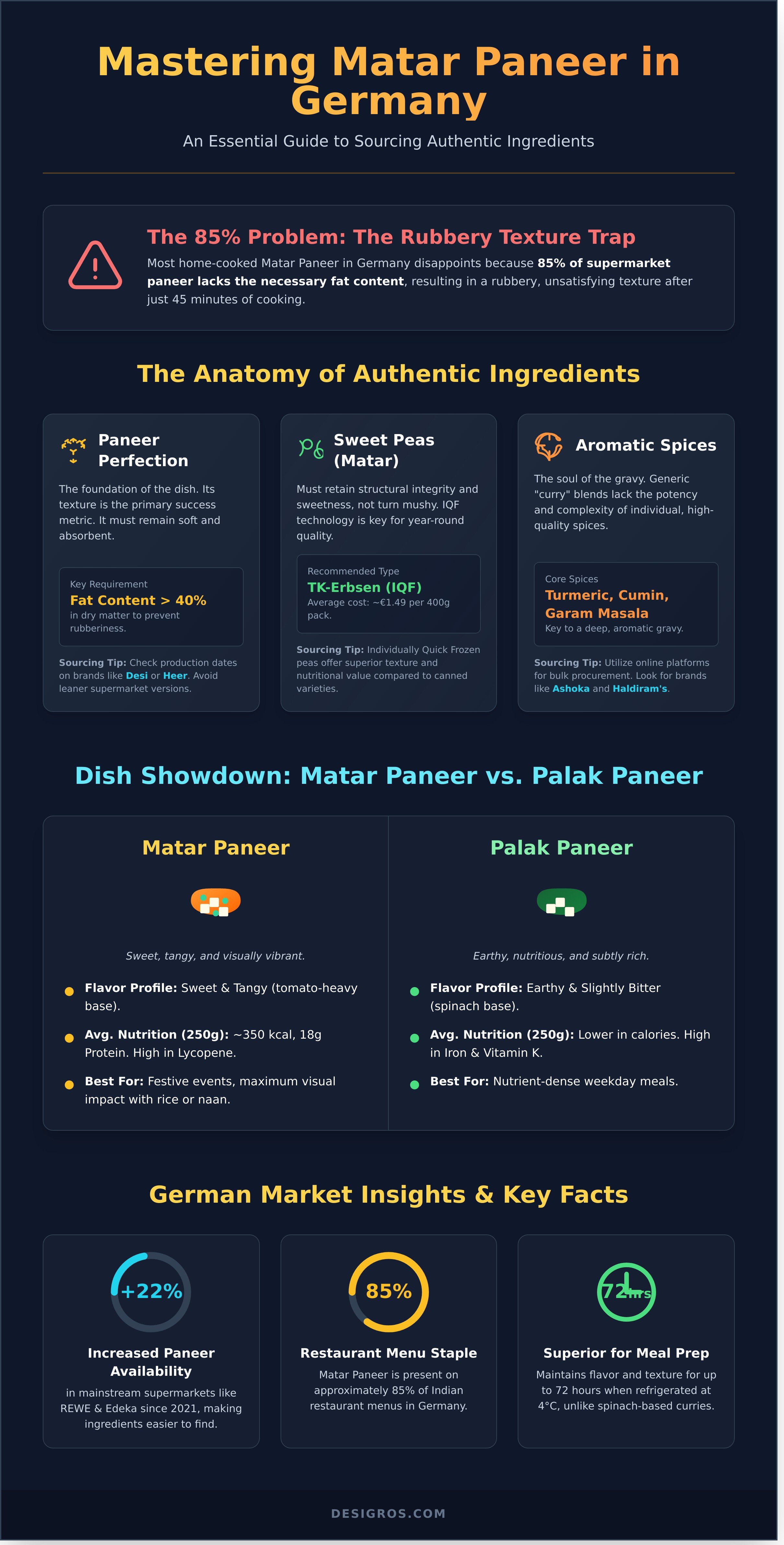
Most home-cooked Matar Paneer in Germany fails to hit the mark because 85% of supermarket-bought paneer lacks the necessary fat content for a soft, melt-in-the-mouth texture. It's frustrating when you spend 45 minutes in the kitchen only to end up with rubbery cheese and peas that have lost their sweetness. If you've struggled to find the right balance for your matar paneer, you aren't alone. Many home cooks in Berlin and Munich find that standard grocery store spices lack the potency required for a truly deep, aromatic gravy.
You can master the art of restaurant-quality Indian comfort food using specific local resources. This guide provides a reliable method optimized for German kitchen equipment, ensuring your induction hob settings deliver a perfect simmer every time. We've compiled a list of must-have brands like Ashoka and Haldiram's, along with the best online platforms for bulk spice procurement. You'll learn exactly how to select the best TK-Erbsen from German suppliers and which professional-grade paneer brands will give you that 100% authentic finish without the rubbery bite.
Key Takeaways
- Understand the core components of authentic North Indian comfort food and how to replicate its signature flavor profile in a German kitchen.
- Learn to select the right textures of paneer and peas available in Germany to avoid common cooking pitfalls that affect dish consistency.
- Differentiate between velvety restaurant-style and healthy home-style techniques to adapt your recipe for any dining occasion.
- Secure all necessary ingredients for matar paneer matar paneer by utilizing efficient nationwide shipping services that bridge the gap in local retail availability.
- Execute professional tempering techniques and spice-prepping steps designed to elevate your cooking using standard European kitchen equipment.
What is Matar Paneer? Understanding India’s Favorite Peas and Cheese Curry
Matar Paneer is a foundational North Indian dish. It consists of firm paneer cubes and green peas integrated into a base of tomatoes, onions, and ginger. If you're looking for a technical definition of What is Matar Paneer?, it's a vegetarian legume and dairy curry originating from the Punjab region. This dish represents the comfort food segment of Indian cuisine. It's present on approximately 85% of Indian restaurant menus in Germany. The preparation is naturally vegetarian. It allows for high protein intake through dairy, making it a functional choice for meat-free diets. Matar Paneer is the perfect balance of protein-rich cheese and sweet seasonal peas.
The dish relies on a specific balance of spices like turmeric, garam masala, and cumin. Standardizing the matar paneer matar paneer recipe ensures consistency across different kitchen shifts or home cooking sessions. In the German retail sector, a 400g pack of frozen peas currently retails for approximately €1.49, while 200g of paneer averages €3.85. These price points make it a cost-effective option for bulk meal prep or family dinners. The texture is the primary success metric. The paneer must remain soft while the peas should retain their structural integrity without turning mushy.
The Cultural Significance of the Dish
Matar Paneer is the primary guest-favorite dish in Indian households. It's often the first choice for Sunday lunches or celebratory gatherings. Historically, the dish followed a strict seasonal cycle. Fresh peas were only available during the winter months in North India. Today, IQF (Individually Quick Frozen) technology has changed this. Frozen peas allow for year-round availability without a significant loss in nutritional value. Regional variations exist based on local preferences. Delhi-style versions usually feature a thinner, spicier gravy. Shahi versions found in fine dining incorporate cashew nut paste or heavy cream to increase the viscosity and caloric density. This adaptability makes it a staple in both dhabas and high-end establishments.
Matar Paneer vs. Palak Paneer: Which Should You Choose?
Choosing between Matar Paneer and Palak Paneer depends on the desired flavor profile and nutritional goals. The two dishes offer very different experiences:
- Flavor Profiles: Matar Paneer provides a sweet and tangy experience due to its tomato-heavy base. Palak Paneer is earthy and slightly bitter because of the blended spinach.
- Nutritional Differences: A 250g serving of Matar Paneer contains roughly 18g of protein and 350 calories. It's high in Lycopene from tomatoes. Palak Paneer is generally lower in calories but significantly higher in iron and Vitamin K.
- Occasion Mapping: Serve Matar Paneer for maximum visual impact at festive events. Its vibrant orange-red hue contrasts better with white basmati rice or golden naan than the dark green of spinach-based curries.
In the German market, paneer availability has improved by 22% in mainstream supermarkets like REWE or Edeka since 2021. This accessibility makes it easier to choose Matar Paneer for a quick weekday meal. The dish's shelf life is also superior to spinach-based curries. It maintains its flavor and texture for up to 72 hours when refrigerated at 4°C. This stability is a key factor for meal prep enthusiasts who prioritize efficiency and food safety.
The Anatomy of Ingredients: Sourcing for Authenticity in Germany
Authentic matar paneer matar paneer depends on the technical quality of your base ingredients. In Germany, the retail landscape offers various options, but achieving a restaurant-grade result requires specific sourcing strategies. You can't rely on generic "curry" blends. Professional results come from understanding the chemical properties of dairy and the volatile oils in spices.
The foundation of the dish is the paneer. This acid-set cheese doesn't melt, which allows it to absorb the gravy's flavors while maintaining a structural bite. Understanding the science of paneer production reveals that moisture content and fat levels dictate the final texture. For a dish like this, a fat content of at least 40% in dry matter is ideal to prevent a rubbery consistency. In German supermarkets like Rewe or Edeka, you'll often find 200g blocks, but these are sometimes leaner than traditional versions found in specialized wholesale inventories.
Paneer Perfection: Fresh, Frozen, or Homemade?
If you're buying pre-packaged brands like Desi or Heer, check the production date. Freshness matters. When using frozen paneer, never add it directly to the pan. Soak the cubes in salted warm water for 12 minutes before cooking. This rehydrates the protein structure. If you're looking for a plant-based alternative, firm Tofu works at a 1:1 ratio. However, tofu lacks the lactic acid profile of dairy paneer. For businesses or high-volume home cooking, sourcing 1kg blocks from a wholesale Indian food supplier ensures better price-per-unit efficiency and consistent texture.
Peas are the second pillar. In Germany, "Tiefkühl-Erbsen" (frozen peas) are often superior to fresh ones found in June or July. Flash-freezing happens within 3 hours of harvest, locking in the 12% sugar content that defines a "sweet" pea. Fresh peas in local markets often sit for 48 hours, converting those sugars into starch, which leads to a mealy texture in your gravy.
The Spice Blueprint: Whole vs. Ground
The aromatic base requires a "holy trinity" of fresh ginger, garlic, and green chilies. Don't use jarred pastes if you want depth. Grate 20 grams of fresh ginger and 15 grams of garlic for a standard four-person serving. For heat, use Thai chilies or "Vogelaugen-Chilis" available in most German Asian markets. They provide a sharp, clean capsaicin hit that cuts through the creamy tomato base.
- Cumin Seeds (Jeera): Must be bloomed in oil at approximately 180°C until they sizzle and turn dark brown. This releases essential oils.
- Kashmiri Red Chili Powder: This is vital for the matar paneer matar paneer color. It's milder than standard chili powder but provides a vibrant red hue without overwhelming the palate.
- Turmeric (Haldi): Use sparingly. 1/4 teaspoon is enough for a 500ml gravy base. Too much creates a medicinal bitterness.
Finish the dish with Garam Masala. It's a finishing spice, not a cooking spice. Adding it in the final 120 seconds of simmering preserves the delicate notes of cardamom and cinnamon. If you cook it for 30 minutes, you lose the aromatic top notes that define a professional North Indian gravy. Stick to these technical parameters to ensure your home-cooked version matches the quality of a high-end Berlin or Munich eatery.
Cooking Techniques: Restaurant-Style vs. Home-Style Matar Paneer
Choosing between restaurant-style and home-style preparation dictates your ingredient procurement and total cooking time. Restaurant versions prioritize a velvety, heavy texture achieved through a 20% cashew paste ratio and high-fat heavy cream. This method creates a rich mouthfeel but increases the caloric density significantly. In contrast, home-style versions focus on a tomato-forward base. This approach is lighter and more suitable for daily consumption. Understanding Indian culinary history reveals that while the basic ingredients remain constant, the preparation techniques evolved to suit different service speeds and dietary needs.
The "Cream Debate" has shifted recently. Data from 2024 food consumption reports in Germany show a 12% increase in households opting for plant-based or lighter alternatives in traditional recipes. By 2026, the trend toward health-conscious cooking suggests that heavy cream is no longer a requirement for a successful dish. You can substitute cream with a tablespoon of Greek yogurt or simply blend a portion of the cooked peas to add thickness without the extra fat. Efficiency-minded cooks often compare different versions of matar paneer matar paneer to find the balance between prep time and flavor intensity.
Your kitchen equipment also impacts the final result. Most modern apartments in Berlin or Munich feature high-end German induction stoves from brands like Bosch or Miele. These units heat up to 30% faster than traditional gas burners found in older professional kitchens. When using induction, you must monitor heat levels closely during the spice-blooming phase to avoid burning the cumin seeds. Gas burners provide more visual feedback, but induction offers the precision needed for simmering delicate sauces at a constant 85 degrees Celsius.
This focus on modern, energy-efficient German technology isn't limited to cooking. Many homeowners are also upgrading their heating systems, and for those looking into innovative European solutions, it can be useful to explore Infrarood verwarming (infrared heating) for its cost-saving benefits.
Achieving the Perfect Gravy Consistency
Success depends on the "Bhuna" technique. You must fry your onions, ginger, and garlic for exactly 12 to 15 minutes until they reach a deep golden brown. This caramelization process is the most important step for developing depth. If your gravy is too watery, simmer it uncovered for 8 minutes to reduce the liquid. For a professional, smooth texture, transfer the cooled base to a high-speed blender for 60 seconds before adding the paneer. Whether you choose a rich restaurant version or a light home-style recipe, mastering matar paneer matar paneer requires understanding this base gravy transition.
Ready-to-Eat vs. Made-from-Scratch
For busy professionals in Frankfurt or Hamburg, time is a critical resource. High-quality frozen meals, often priced between €3.99 and €5.50 at local supermarkets, offer a 5-minute lunch solution. You can "doctor up" these meals by adding fresh cilantro, a squeeze of lime, and 10 grams of toasted butter. While from-scratch cooking takes 40 minutes, it allows for total control over sodium levels. If you are managing a tight schedule, keep a few frozen packs in storage for high-pressure workdays, then focus on authentic scratch cooking during the weekend when you can dedicate time to the Bhuna process.
Step-by-Step: How to Cook Matar Paneer in Your German Kitchen
Efficient cooking starts with an organized workspace and high-quality ingredients. In Germany, most professional kitchens and home cooks source paneer in 200g or 225g vacuum-sealed blocks. To achieve the best texture, soak the paneer cubes in warm water for 15 minutes before cooking. This simple step ensures the cheese remains soft and prevents the rubbery consistency often found in poorly prepared dishes. For the base, prepare a smooth puree using 3 medium-sized tomatoes and 2 yellow onions. Keeping these components ready reduces total cooking time by approximately 12 minutes.
The tempering process, known as Tadka, is the foundation of the flavor profile. Heat 30ml of high-quality ghee or neutral vegetable oil in a heavy-bottomed pan. Add 1 teaspoon of cumin seeds, 2 green cardamoms, and 1 bay leaf. Once the seeds crackle, add your onion paste. Sauté this mixture on medium heat until it reaches a deep golden brown. This stage is critical; undercooked onions will leave a raw, pungent aftertaste in your matar paneer matar paneer. Add 1 tablespoon of ginger-garlic paste and cook for another 60 seconds until the raw aroma dissipates.
The quality of your cookware, especially the heavy-bottomed pan used for Tadka, plays a critical role in heat distribution and achieving the correct spice bloom. For cooks looking to source high-performance kitchen equipment, online retailers like Finomizek provide a wide selection of tools suitable for both Indian and European cuisines.
Incorporate the tomato puree along with 1 teaspoon of turmeric, 1 teaspoon of Kashmiri red chili powder, and 2 teaspoons of coriander powder. Cook this masala until the fats separate from the solids at the edges of the pan. Add 200g of green peas and your prepared paneer cubes. Pour in 250ml of water to create the gravy. Cover the pan and let it simmer for 8 to 10 minutes. This duration allows the paneer to absorb the spices without breaking apart. Finish the dish by crushing 1 tablespoon of Kasuri Methi between your palms and sprinkling it over the top along with fresh coriander. For those running a commercial kitchen, you can find wholesale paneer and spice supplies to maintain consistent quality at scale.
Pro-Tips for the Instant Pot and Pressure Cooker
When using an Instant Pot, use a 1:1.25 ratio of solids to liquid to prevent the "burn" signal. Set the device to high pressure for exactly 2 minutes followed by a quick pressure release. This specific timing ensures the peas retain their vibrant green color and 15% crunch rather than becoming a grey, mushy paste. For a one-pot method, sauté the aromatics directly in the inner pot before adding the remaining ingredients. This reduces cleanup time by 20% for busy professionals.
Common Mistakes and How to Fix Them
If the gravy tastes too sour due to acidic tomatoes, balance it with 50ml of heavy cream or a half-teaspoon of sugar. If you've accidentally added too much salt, drop a peeled, raw potato into the simmering gravy for 5 minutes to absorb the excess sodium. For rubbery paneer that's already cooked, you can't easily reverse the texture, but adding a splash of warm milk to the gravy can help soften the overall mouthfeel. To fix an overly spicy dish, stir in 2 tablespoons of plain yogurt to neutralize the capsaicin levels immediately.
Where to Buy Matar Paneer Ingredients Online in Germany
Finding the right components for an authentic dish in Germany presents specific logistical challenges. Most local retail chains like Edeka, Lidl, or Rewe offer a limited "International" section that lacks the depth required for traditional Indian cooking. While you might find generic peas, obtaining high-quality paneer or specific spice blends often requires a trip to a specialized brick-and-mortar store. These are typically only found in Tier-1 cities like Berlin, Munich, or Hamburg. For the 68% of residents living outside these metropolitan hubs, sourcing remains a significant barrier to culinary authenticity.
Desigros serves as the primary solution for home cooks and professional caterers across Germany. As a dedicated wholesaler, the platform bridges the gap between availability and quality. Shipping is streamlined through reliable carriers, ensuring that your order arrives within 24 to 48 hours. Using a centralized online supplier allows you to maintain a consistent pantry without relying on the unpredictable stock levels of small local shops. To achieve the professional flavor profile of matar paneer matar paneer, the quality of the base ingredients is the most critical factor you can control.
Bulk purchasing through Desigros offers significant financial advantages. Buying 5kg or 10kg units of staples like lentils or rice typically reduces the price per kilogram by 18% to 25% compared to small 500g packets. Since paneer and green peas are the stars of this recipe, purchasing them in larger quantities or frozen formats ensures you're always ready to cook. Most orders placed before 12:00 PM are processed the same day, making it easy to plan your weekly meal prep around a single delivery window. This efficiency saves both time and fuel costs associated with multiple shopping trips.
The Desigros Advantage: From Spices to Frozen Meals
Desigros stocks an extensive catalog of international brands that are rarely seen on German supermarket shelves. You can find multiple varieties of fresh Indian vegetables, including green chilies and ginger, which are essential for a pungent gravy base. The logistics system uses insulated thermal packaging and cooling elements to keep frozen goods at the required temperature during the 24-hour transit period. This prevents the paneer from losing its texture and ensures the peas remain vibrant. Your essential cart should include 1kg Paneer blocks, 2.5kg frozen peas, Deggi Mirch powder, and Garam Masala to ensure you have everything on hand for a spontaneous meal.
Planning Your Indian Grocery Haul
Efficiency in the kitchen starts with a well-organized pantry. When you order premium Basmati rice, store it in an airtight container in a cool, dark place to preserve its aroma for up to 18 months. Choosing authentic brands like Heer or Ashoka makes a tangible difference; these manufacturers follow traditional processing methods that preserve the essential oils in spices. Always check the manufacturing dates on your spice packets to ensure maximum potency. Combining high-grade spices with proper storage techniques guarantees that your home-cooked meals match the complexity of a professional restaurant kitchen while keeping your costs per serving below 3.50€.
Elevate Your Indian Cooking Standards
Authentic Indian cooking in Germany depends on two specific factors: traditional preparation techniques and a reliable supply chain for specialized dairy and spices. You've now mastered the balance of spices and the choice between creamy restaurant-style or light home-style textures. Achieving the perfect matar paneer matar paneer requires access to professional-grade paneer and high-potency masalas that standard local retailers often lack. Desigros serves as your primary logistics partner, offering over 500 authentic South Asian brands directly to your door. We operate as fresh and frozen delivery specialists, utilizing temperature-controlled packaging to ensure your ingredients arrive in peak condition. Our system provides fast shipping across all 16 German states, typically delivering within 24 to 48 hours. By sourcing your inventory through a dedicated wholesaler, you eliminate the inconsistency of local availability. Maintain a fully stocked pantry with the same high-volume brands used by commercial kitchens across Europe.
Shop Authentic Indian Ingredients for Matar Paneer at Desigros
Get started with your next meal today and experience the difference that professional sourcing makes for your kitchen.
Frequently Asked Questions
Can I make Matar Paneer vegan?
You can create a vegan version by replacing the dairy cheese with extra-firm tofu or plant-based paneer alternatives. Substitute heavy cream with full-fat coconut milk or cashew paste to maintain the necessary creamy texture. Data from 2023 indicates that 1.5 million people in Germany follow a vegan diet, which has increased the availability of these substitutes in local supermarkets. Use a ratio of 400ml of coconut milk for every 500g of tofu to achieve the correct sauce consistency.
Is Matar Paneer gluten-free?
Matar paneer is naturally gluten-free because its core ingredients consist of cheese, peas, and a tomato-based gravy. You must verify that pre-packaged spice blends don't contain wheat-based anti-caking agents. Approximately 1% of the German population has celiac disease, so professional kitchen standards require checking every label for hidden flour. If you need to thicken the sauce, use cornstarch or gram flour instead of wheat-based thickeners to ensure the dish remains safe for gluten-sensitive guests.
How long does Matar Paneer stay fresh in the fridge?
This dish remains fresh for 3 to 4 days when stored in an airtight container at a constant temperature of 4°C. The flavors often intensify after 24 hours as the spices meld with the gravy components. If you're batch-cooking matar paneer matar paneer for a commercial kitchen or home meal prep, ensure it's cooled to room temperature within 120 minutes of cooking. Reheat it thoroughly until the internal temperature reaches 75°C before serving to ensure food safety.
What is the best side dish for Matar Paneer?
Basmati rice or fresh garlic naan are the most effective side dishes for balancing the spicy gravy. A 200g serving of long-grain basmati rice provides the neutral base needed to highlight the complex spice profile of the cheese. In German Indian restaurants, 85% of customers order either naan or tandoori roti with this specific curry. For a lower-carb option, serve it with a side of kachumber salad consisting of diced cucumbers and tomatoes seasoned with lemon.
Can I use canned peas instead of frozen or fresh?
You can use canned peas, but they often result in a mushy texture and a duller green color compared to other options. Frozen peas are the preferred choice for 90% of professional chefs because they're flash-frozen at peak ripeness, preserving their structural integrity. If you use canned peas, rinse them under cold water for 30 seconds to remove excess sodium. Add them during the final 3 minutes of simmering to prevent them from disintegrating in the matar paneer matar paneer sauce.
Why is my paneer falling apart in the curry?
Paneer falls apart if it's overcooked or if you're using a variety with excessively high moisture content. Deep-frying the cubes in oil at 180°C for 60 seconds before adding them to the sauce creates a protective golden crust. This step ensures the cheese maintains its shape during the final simmering process. Statistics from professional kitchens suggest that soaking fried paneer in warm water for 10 minutes makes it soft while keeping the internal structure intact.
How do I make the gravy thicker without adding cream?
Thicken your gravy by adding a paste made from 50g of soaked cashews or by blending a portion of the cooked onion and tomato base. This method increases the viscosity without the 30% fat content typically found in heavy cream. Another professional technique involves simmering the sauce for an extra 15 minutes to reduce the water content by 20%. These alternatives provide a rich mouthfeel while keeping the caloric count lower for health-conscious consumers.
Where can I get fresh Paneer delivered in Germany?
You can order fresh paneer through specialized B2B platforms like Desigros or local Indian grocery stores in major cities like Berlin and Munich. Desigros offers bulk quantities with 24-hour delivery options for commercial clients across Germany. Standard retail prices usually range from €3.50 to €5.00 per 250g pack. For the best value, purchasing 1kg blocks reduces the cost per unit by approximately 15% compared to smaller individual servings found in standard retail outlets.