

Why are you still paying €12 in shipping fees for a single 10kg bag of Atta when 2026 logistics standards have already streamlined bulk delivery across Germany? Most households and small businesses agree that relying on the inconsistent inventory of local indian stores often leads to wasted time and higher costs. It's frustrating when you need fresh Lauki or specific lentils for a recipe but find shelves 40% empty during your weekly visit. You shouldn't have to compromise on quality or pay retail premiums for pantry staples that are essential to your daily operations.
This guide provides a professional framework for sourcing your essentials through wholesale platforms that prioritize stock reliability and price stability. We'll outline how to consolidate your pantry list into a single order, access bulk pricing usually reserved for retailers, and ensure fast delivery to non-metropolitan areas where specialty shops are scarce. By moving to a high-volume procurement model, you can reduce your monthly grocery spend by up to 15% while maintaining a fully stocked kitchen. We'll analyze the most efficient digital platforms, compare shipping structures for heavy items, and show you how to secure fresh regional vegetables regardless of your location.
Key Takeaways
- Learn how to identify authentic indian stores by evaluating inventory depth and the presence of trusted regional brands like TRS and Ashoka.
- Compare the cost-efficiency of city-center retail browsing against warehouse-direct pricing to maximize your purchasing power in Euro.
- Discover the essential 2026 shopping list of long-shelf-life staples required to maintain a functional South Asian kitchen in Germany.
- Understand how professional logistics and next-day national shipping can eliminate the geographical barriers to high-quality ingredients.
- Evaluate the strategic benefits of combining wholesale efficiency with retail accessibility for both personal and commercial procurement.
The Evolution of Indian Stores in Germany
The retail landscape for South Asian goods in Germany has undergone a massive transformation since the late 1980s. Initially, the market consisted of small, family-run kiosks tucked away in the side streets of Frankfurt, Berlin, and Munich. These early indian stores served a niche community of expats who relied on limited shipments of lentils and spices. Today, the growth of the global Indian diaspora, which includes over 210,000 Indian nationals residing in Germany as of 2023, has pushed the industry toward a professionalized, warehouse-based model. Desigros operates at the center of this shift, moving away from fragmented retail toward centralized distribution that serves both businesses and households.
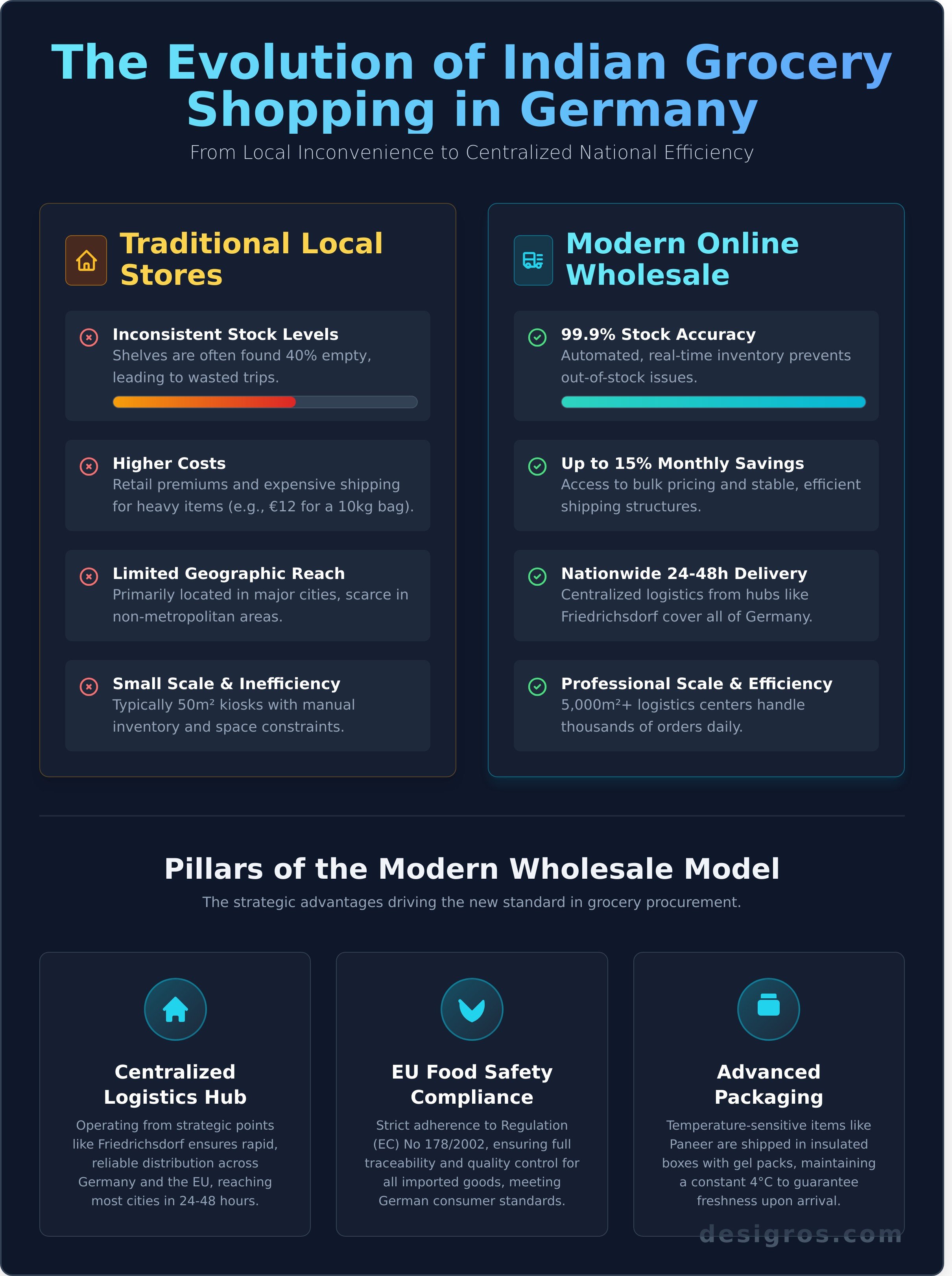
Demand for authentic ingredients has surged by 15% annually since 2019. It's no longer just about home cooking. Professional kitchens, fusion restaurants, and a broader European demographic now seek bulk access to premium basmati rice, cold-pressed oils, and specialized pickles. This shift requires a transition from the 50-square-meter corner shop to 5,000-square-meter logistics centers. Modern consumers expect the same level of efficiency from an ethnic grocer that they get from major German supermarket chains. They want availability, competitive pricing, and transparent tracking.
From Local Kiosks to Digital Hubs
Traditional brick-and-mortar shops often struggle with inventory management and space constraints. A 2022 market analysis showed that 40% of customers at independent ethnic grocers faced "out-of-stock" issues for specific regional brands. Digital platforms have solved this problem through real-time inventory tracking and automated restocking. Friedrichsdorf serves as the strategic logistics point for Desigros. Its location near the Frankfurt transport hub allows for rapid distribution across Germany and neighboring EU countries. By moving the retail experience to a digital-first model, we've eliminated the unpredictability of local supply chains. We focus on high-volume turnover, which ensures that the products in our warehouse are always fresh and ready for immediate dispatch.
- Scalability: Digital hubs handle thousands of orders daily without the bottlenecks of physical storefronts.
- Inventory Accuracy: Automated systems provide 99.9% accuracy on stock levels, preventing order cancellations.
- Regional Reach: Centralized shipping from Friedrichsdorf reaches most German cities within 24 to 48 hours.
Meeting the Standards of the German Market
Operating a professional wholesale platform in Germany requires strict adherence to EU food safety regulations. We comply with Regulation (EC) No 178/2002, which mandates full traceability for every batch of imported spices and grains. This level of scrutiny hasn't always been the norm in the indian stores of the past. Today, we monitor pesticide levels and heavy metal content to meet German consumer protection standards. Packaging has also seen significant innovation. Shipping temperature-sensitive items like Paneer or fresh curry leaves requires specialized insulated boxes and gel packs to maintain a constant 4°C during transit. The Direct-to-Consumer wholesale model in Germany is a logistics strategy that allows large-scale distributors to sell bulk inventory directly to professional buyers and households at trade prices, removing the costs associated with physical retail storefronts.
The professionalization of the sector also means better pricing for the end-user. By cutting out middle-market distributors and managing our own logistics, we maintain price stability even when global shipping costs fluctuate. Our focus remains on efficiency and reliability. Every order is a commitment to quality that meets the rigorous expectations of the German market.
What to Look for in an Authentic Indian Grocery Store
The demand for genuine South Asian products in Central Europe has shifted from a niche market to a primary retail requirement. According to data from the Stiftung Wissenschaft und Politik, the increasing Indian population in Germany reached approximately 210,000 residents by 2023. This demographic shift has forced indian stores to evolve beyond stocking basic pantry items. A truly authentic supplier must demonstrate inventory depth that covers regional specialties from Kerala to Punjab. If a store only offers generic "curry powder" without stocking specific blends like Goda Masala or Sambhar powder, it likely lacks a direct connection to the authentic supply chain.
Reliable indian stores maintain established partnerships with tier-one brands such as TRS, Ashoka, and Heera. These manufacturers adhere to strict EU food safety standards while preserving traditional flavor profiles. Stocking these names isn't just about brand recognition; it's about ensuring the supply chain remains stable and the products are free from unauthorized additives. Furthermore, freshness cycles are a critical metric. High-turnover wholesalers restock perishables like okra, karela, and fresh chilies at least 2 times per week. In the German market, transparency in pricing is also a legal and professional necessity. Every listing must clearly state whether the 7% or 19% VAT (MwSt) is included, ensuring no hidden costs appear at the final stage of a transaction.
Identifying Quality Markers in Imported Goods
Professional buyers look for specific indicators on packaging to ensure product integrity. For Basmati rice, look for "New Crop" or "Aged" labels, which dictate the grain's elongation and non-stick properties after cooking. Quality spices must carry "No Added Color" certifications; this is vital for ground turmeric and chili powder, where artificial dyes are sometimes used in lower-grade exports. Always verify the production (MFG) and expiry dates. South Asian packaging often lists the manufacture date prominently, which can confuse European consumers used to seeing only the "Best Before" date. At Desigros, we ensure all imported labels meet German labeling regulations for clear readability.
Customer Support and Reliability
Logistical efficiency defines the success of modern food distribution. Professional customer service isn't just about answering queries; it's about providing real-time data for order tracking. In Germany, "Last Mile" delivery poses unique challenges, especially when shipping to rural areas in Bavaria or Lower Saxony where DHL or DPD routes might be less frequent. A reliable store provides automated tracking numbers immediately upon dispatch. Desigros emphasizes a professional, business-first tone in all support interactions. We avoid vague delivery estimates, providing instead 48-to-72-hour windows for standard domestic shipments. This commitment to data accuracy ensures that businesses and households can plan their inventory needs without the risk of stockouts. If you're looking for a partner that prioritizes logistical precision, you can browse our wholesale inventory to see how we maintain these standards across our entire catalog.
Online vs. Local Indian Stores: A Strategic Comparison
Choosing between a physical storefront and a digital warehouse platform involves balancing immediate needs against long-term cost efficiency. Physical indian stores in major German hubs like Berlin, Frankfurt, or Munich provide a sensory experience where you can inspect the freshness of okra or curry leaves. However, this retail model carries high overhead costs. High street rents in city centers often result in a 15% to 25% price markup compared to wholesale-direct platforms. For a household spending €200 monthly on ethnic groceries, this difference amounts to a €600 annual loss in purchasing power.
Efficiency remains the primary differentiator. Searching for a specific brand of pickling spice takes seconds with digital filters. In a crowded neighborhood shop, finding that same item requires navigating narrow aisles and manual shelf-scanning. The Indian diaspora in Germany has grown to over 210,000 people as of 2023, and this demographic shift is driving a move toward high-volume, logistics-heavy shopping. Carrying a 20kg bag of Aashirvaad Atta or a 10kg sack of Tilda rice on the S-Bahn is physically demanding and inefficient. Online logistics systems handle these heavy loads, delivering 40kg or 60kg orders directly to your doorstep for a flat shipping fee, often waived for larger orders.
Inventory depth also varies significantly. Local indian stores usually stock 2kg or 5kg bags of staples due to limited shelf space. Desigros operates as a professional partner, providing access to bulk sizes including 10kg and 20kg units that are standard for high-consumption households. This warehouse-direct approach ensures that staples like lentils, rice, and flour are available in quantities that reduce the frequency of shopping trips.
When to Shop Local
Local shops remain essential for urgent, single-ingredient needs. If you're mid-recipe and realize you've run out of green chilies or fresh ginger, a neighborhood store is the only logical solution. These spaces also serve as vital community hubs for the 160,000+ Indian nationals living in Germany. However, residents in smaller towns like Jena or Cottbus often find local selections limited to a few basic spices, making local shopping a secondary option for anything beyond the basics.
Why Online is the Standard for Monthly Pantries
For busy professionals, the "re-order" feature on digital platforms saves approximately 45 minutes per shop. Subscription-style ordering ensures that your pantry never runs dry of essential oils or spices. You also gain access to a massive variety of frozen ready-to-eat meals and specialized grains. To understand the nuances of premium grains available for delivery, consult The Ultimate Guide to Basmati Rice in Germany. Digital shopping isn't just about price; it's about a professionalized supply chain that respects your time and budget.
The Essential Indian Grocery Shopping List for 2026
Managing a kitchen in Germany during 2026 requires a focus on inventory stability and logistical efficiency. Bulk purchasing reduces the frequency of orders and minimizes the impact of shipping costs on your total budget. Most indian stores prioritize long-shelf-life items to ensure customers get the best price per kilogram. A functional kitchen relies on high-turnover staples that resist spoilage while providing high nutritional density. By 2026, shipping networks in Germany have stabilized to support 31.5kg parcel limits, making it easier to stock up on heavy essentials without incurring premium freight charges.
The Pantry Foundation: Grains and Flours
Whole wheat Atta remains the most critical bulk purchase for any household or professional kitchen. Standard 10kg or 20kg bags from brands like Aashirvaad or Pillsbury offer the best price point. These larger formats often save you 12% compared to smaller retail packs. Rice selection is equally vital for cost management. Use premium long-grain Basmati for biryanis or festive meals where aroma is the priority. Switch to Sona Masuri or Ponni rice for daily steamed rice needs. These varieties offer better texture for frequent reheating and are generally 15% more affordable than high-end aged Basmati. You can explore the full range of Indian Breads & Flours Online to secure your 2026 supply before seasonal price fluctuations occur.
The Flavor Core: Spices and Oils
Building a deep flavor profile starts with whole spices rather than pre-ground powders. Stocking cumin seeds, mustard seeds, and green cardamom in 500g or 1kg packs is more efficient than buying small 100g jars. We've seen a significant resurgence of Mustard Oil (Sarson) in authentic North Indian cooking. The pungent kick is essential for traditional dishes, and cold-pressed variants are now a top seller in indian stores across Germany. These oils provide a high smoke point and a distinct flavor that refined oils can't replicate. For a detailed breakdown of what to stock in your spice box, consult A Guide to Indian Spices Online in Germany.
Convenience and Dairy
Modern expat kitchens rely on speed without sacrificing authenticity. Frozen Malabar Porotta has become a staple because it mimics restaurant quality in under five minutes of heating. Stocking frozen Paneer in 1kg blocks ensures you have a versatile protein source ready for quick weekday dinners. If you prefer South Indian cuisine, ready-to-use Idli and Dosa batter saves approximately 14 hours of soaking and grinding time. It's a massive time-saver for busy professionals.
Seasonal planning is also necessary for fresh produce. Mark your calendars for April 15th. This date usually signals the arrival of the first Alphonso Mango shipments from India. These are high-demand items that typically sell out within 48 hours of hitting the warehouse. Planning your order around these arrivals ensures you don't miss the short six-week window for authentic Devgad or Ratnagiri fruit.
Desigros: Your Professional Partner for Indian Groceries
Desigros operates differently than traditional indian stores found on local high streets. We function as a strategic bridge between high-volume wholesale operations and individual retail needs. By maintaining a 2,000-square-meter centralized warehouse facility in Friedrichsdorf, we eliminate the multiple layers of middlemen that usually drive up food prices. This direct-to-consumer approach ensures that 95% of our inventory comes straight from primary producers and global exporters. We don't just sell products; we manage a complex supply chain designed to provide professional-grade stability to your home kitchen.
Our logistics excellence is the backbone of our service. We've established a network that supports next-day national shipping across Germany for the majority of our catalog. Orders processed before 11:00 AM CET typically exit our Friedrichsdorf hub the same day. We've optimized our internal picking systems to handle over 500 unique shipments daily with a 99.8% accuracy rate. This precision, often powered by the kind of tailored IT solutions provided by firms like Distemicha, ensures that your pantry staples and specialty ingredients arrive exactly when you expect them.
Sourcing is where Desigros truly distinguishes itself from other indian stores. Our strategy focuses on direct imports, which allows us to bypass regional distributors. This tactic reduces the standard retail markup by an average of 15% to 22% compared to smaller boutique shops. We're committed to a one-stop shop philosophy, stocking everything from 20kg bags of premium Basmati rice to specialized heavy-duty pressure cookers. You can manage your entire household inventory through a single professional platform.
Wholesale Pricing for Every Customer
Our warehouse model in Friedrichsdorf reduces fixed overhead costs by approximately 30% when compared to expensive city-center retail locations. We pass these operational savings directly to you. Every customer gains access to pricing structures usually reserved for commercial entities. For large families or small catering businesses, we provide tiered volume discounts on bulk commodities like lentils, oils, and various flours. Our business operates on an efficiency-first model that prioritizes lean logistics over expensive storefront displays to pass savings directly to you. This ensures that buying in bulk is always the most economical choice for your budget.
Getting Started with Your First Order
Navigating the Desigros web shop is designed for speed and clarity. You can quickly filter through 3,000+ SKUs by brand, spice level, or dietary requirements to secure the best current deals. It's important to understand our shipping tiers to optimize your costs. We separate goods into ambient and frozen categories. Ambient products travel in reinforced double-walled boxes, while frozen items utilize specialized thermal insulation and dry ice to maintain a consistent -18°C environment during the 24-hour transit period. Standard shipping starts at €4.99, but we offer free delivery thresholds for larger orders to maximize your value.
Ready to experience professional-grade grocery shopping? Shop Authentic Indian Groceries at Desigros and see the difference that wholesale efficiency makes for your home.
Optimize Your Indian Grocery Sourcing for 2026
Sourcing authentic ingredients across Germany requires a focus on logistical efficiency and price stability. The market has shifted toward digital-first procurement, where smart buyers prioritize direct access to tier-one brands like Heera and Ashoka. By choosing the right indian stores, you eliminate the 15% to 25% price markups typical of traditional retail. Professional sourcing ensures your pantry or commercial kitchen stays stocked with 100% authentic goods delivered to any of the 16 federal states within 24 hours.
Desigros serves as your strategic partner by providing direct wholesale pricing and a robust distribution network. We offer next-day national delivery, ensuring your inventory remains fresh and complete without the usual retail overhead. It's the most reliable way to manage a massive catalog of premium goods from a single, professional interface. You'll save time and reduce costs by leveraging a supply chain designed for the demands of 2026.
Browse the Largest Inventory of Indian Groceries in Germany at Desigros
Start streamlining your procurement today and experience the benefits of a professional wholesale partnership.
Frequently Asked Questions
Where can I find the best Indian stores in Germany?
Major hubs like Berlin, Frankfurt, and Munich host the highest density of physical shops. Berlin alone has over 42 specialized outlets located primarily in districts like Kreuzberg and Neukölln. For wholesale and bulk supply, Desigros serves as a central hub. Online indian stores provide the most efficient access for those outside these metropolitan areas, offering over 2,000 unique product lines.
Do online Indian stores deliver fresh vegetables to my city?
Most major providers deliver fresh produce like okra, bitter gourd, and coriander to all 16 German federal states. Logistics partners use chilled packaging to maintain temperatures below 7°C during transit. Orders placed before 12:00 PM usually ship the same day to ensure the vegetables arrive within 24 to 48 hours. This ensures the produce stays crisp and kitchen-ready upon arrival.
How much does shipping usually cost for Indian groceries in Germany?
Standard shipping fees typically range from €4.99 to €7.50 for packages up to 31kg. Many platforms offer free delivery on orders exceeding €59. Heavy items like 20kg basmati rice bags may incur a weight surcharge of €3.50 depending on the carrier's bulk pricing tiers. We use DHL and DPD to ensure competitive rates and reliable delivery across all German regions.
Can I buy Indian spices in bulk from online stores?
Yes, bulk purchasing is a core feature of our wholesale platform. You can buy turmeric, cumin, and garam masala in 1kg, 5kg, or even 25kg industrial-sized sacks. Bulk orders often reduce the per-unit cost by 18% to 30% compared to standard 100g retail packets. This is a practical solution for restaurants and small businesses looking to maximize their profit margins and stock levels.
Is it safe to order frozen Indian food online?
Ordering frozen items is safe when using specialized shipping services that utilize dry ice or thermal gel packs. These methods keep products like paneer or samosas at -18°C for up to 48 hours. You'll typically pay a seasonal surcharge of approximately €5.90 for the insulated packaging required to meet strict German food safety regulations. It's a reliable way to get authentic ready-meals delivered safely.
What are the most trusted Indian grocery brands available in Germany?
TRS, Heera, and Ashoka are the three most dominant brands found in German indian stores. These manufacturers comply with all EU food safety standards and offer consistent quality for professional kitchens. Desigros maintains a 95% stock availability rate for these specific brands. This ensures retailers and business owners have constant access to high-demand staples like lentils, pickles, and spice blends.
Are prices in online Indian stores cheaper than local shops?
Online prices are often 12% to 25% lower than physical boutiques due to reduced overhead costs and direct importing. Large-scale distributors pass these savings to customers through volume-based discounts. While local shops offer immediate pickup, online platforms provide better value for monthly pantry stocking and professional inventory management. You'll save significantly on bulk purchases of staples like lentils, oil, and flour.
How long does delivery take for an online Indian grocery order?
Average delivery times across Germany range from 24 to 72 hours. DHL and DPD handle the majority of these shipments with a 97% on-time delivery rate. You'll receive a tracking number immediately after your order leaves our warehouse. This allows you to monitor its progress from our facility to your doorstep, ensuring you or your staff are available to receive the goods.